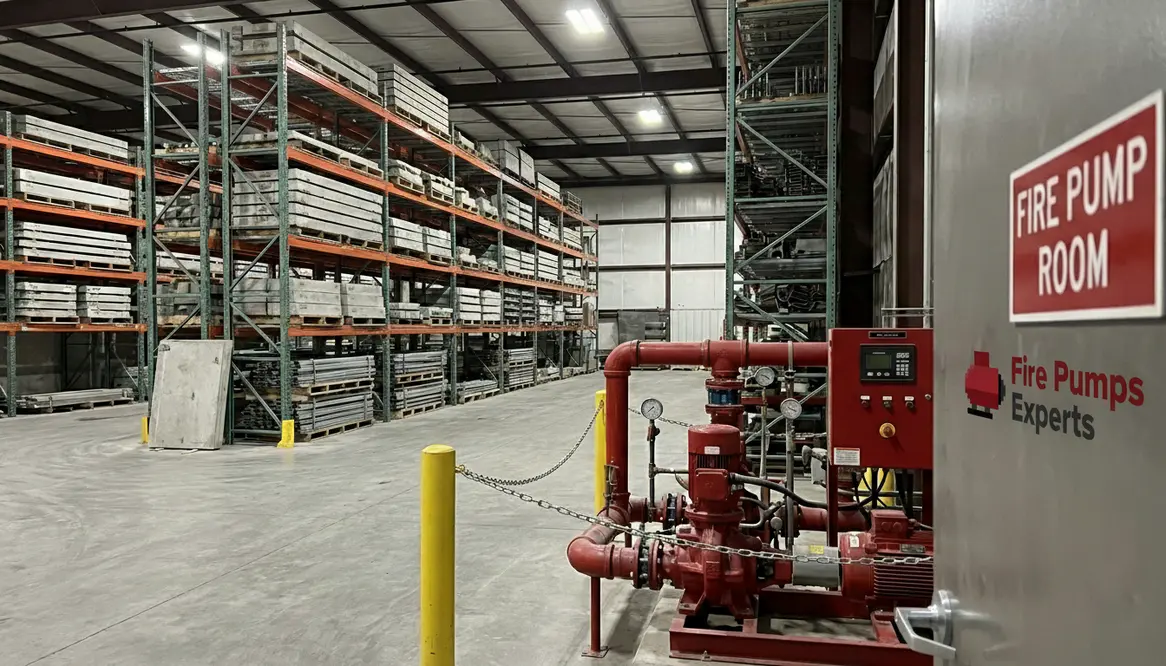
Fire Pumps for Noncombustible Warehouses
I have walked through enough warehouses to know this quiet truth: just because a building stores noncombustible goods does not mean it is immune to fire. In fact, When low-risk storage still needs fire pumps, it often surprises the very people responsible for safety. Concrete walls and steel racks might look like they could shrug off danger, but fire does not care about appearances. It cares about opportunity. And if water does not move fast and with force, that opportunity grows.
So today, I am going to walk you through why fire pump systems still matter in noncombustible warehouse environments and how to approach them without overengineering or underestimating the risk. Think of this as less of a lecture and more of a guided tour, with a few light moments along the way. Even serious systems deserve a little personality.
Why noncombustible warehouses still demand serious fire protection
At first glance, a warehouse filled with metal parts or concrete products feels like the safest kid in class. No cardboard mountains. No plastic jungles. Nothing that screams fuel. However, I have learned that fire risk hides in the details.
Electrical systems, forklifts, packaging materials, and even dust accumulation can introduce ignition sources. Moreover, modern warehouses rely heavily on automated systems. With that automation comes heat, friction, and complexity. Therefore, while the stored materials may not burn easily, the environment still presents real hazards.
And here is the kicker. Fire protection codes do not just look at what you store. They look at how fire could spread, how quickly responders can act, and how reliable your suppression system is under pressure. That is where fire pumps quietly step into the spotlight.
When low-risk storage still needs fire pumps
I get this question more often than you might expect, usually phrased something like this: “Do I really need a fire pump if my warehouse stores noncombustible materials?”
Short answer: sometimes, yes.
Long answer: it depends on your water supply and system demand. If your municipal water cannot meet the required flow and pressure for your sprinkler system, then a fire pump becomes essential. It is not about the materials alone. It is about delivering water where and when it matters.
Additionally, large footprint warehouses often stretch water distribution systems thin. As distance increases, pressure drops. Consequently, even a low hazard classification can still require mechanical assistance to meet performance standards.
It is a bit like having a sports car with no fuel. Looks impressive, but it is not going anywhere when you need it most.
This is exactly the scenario that makes people realize that When low-risk storage still needs fire pumps, it is really a conversation about water performance, not warehouse marketing labels.
How fire pump systems support large industrial layouts
When I design or evaluate systems for industrial facilities, I focus on reliability and reach. Fire pumps act as the backbone of that reliability.
They ensure consistent pressure across vast spaces. They also support specialized suppression systems, including in rack storage areas or zones with higher hazard processes.
What I prioritize
- Stable pressure across long pipe runs
- Redundancy for critical operations
- Integration with existing water infrastructure
What I avoid
- Oversizing that wastes energy
- Complex layouts that delay maintenance
- Systems that rely on inconsistent water sources
Because at the end of the day, a fire pump should not be flashy. It should be dependable. Like that one employee who never calls in sick and somehow knows where everything is.
Choosing the right fire pump for a noncombustible facility
Not all fire pumps are created equal, and not every warehouse needs the same setup. I usually start with three core factors.
Match the pump to real-world conditions
Water supply conditions come first. If the incoming pressure fluctuates, I lean toward more robust pump configurations. Next, I consider system demand, which includes sprinkler design density and coverage area. Finally, I look at facility operations. A 24 hour logistics hub will need a different level of reliability than a lightly used storage building.
Electric pumps often suit facilities with stable power. Diesel pumps, on the other hand, provide independence during outages. And yes, picking between them can feel like choosing between Batman and Iron Man. Both get the job done, just in different ways.
What matters most is aligning the system with real world conditions, not just theoretical ones. When low-risk storage still needs fire pumps, that alignment is usually where things either go very right or very wrong.
Maintenance and testing keep systems honest
Even the best fire pump system will lose its edge without proper care. I have seen pristine installations fail simply because no one tested them regularly.
Weekly churn tests, annual flow tests, and routine inspections are not just checkboxes. They confirm that the system will perform under stress. Furthermore, they help identify small issues before they become expensive problems.
And let me be clear. A fire pump that has not been tested is like a parachute you have never opened. It might work. Or it might make for a very bad day.
Consistent maintenance also supports compliance with fire codes and insurance requirements. In commercial and industrial environments, that compliance is not optional. It is part of doing business responsibly.
Conclusion: Build confidence into your fire protection strategy
If you manage or design a noncombustible warehouse, do not let the label fool you into complacency. Fire risk may be lower, but it is never zero. A properly designed fire pump system ensures your facility stays protected, compliant, and ready for the unexpected. When low-risk storage still needs fire pumps, the real opportunity is to turn that requirement into a long-term advantage for resilience and insurance confidence.
If you want expert guidance tailored to your operation, connect with professionals who specialize in commercial and industrial fire pump systems and take control of your protection strategy today. A good starting point is reviewing resources at https://firepumps.org/ and then matching that insight with the conditions on your own site.