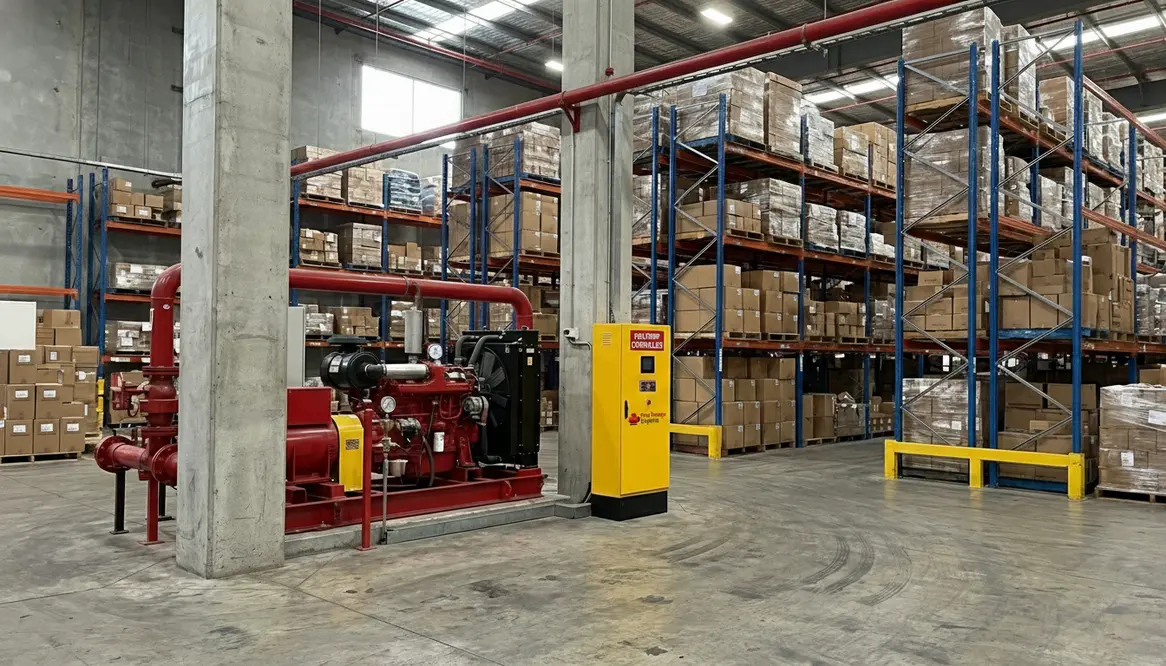
Fire Protection for Higher Hazard Inventory Pumps
I have walked through enough industrial yards to know one truth. When combustible materials stack high, the margin for error drops fast. That is where Fire protection for higher hazard inventory steps in, not as a luxury, but as a requirement that stands between a small incident and a headline. In combustible storage facilities, fire pumps are not just equipment. They are the quiet guardians that wait patiently until everything goes wrong. And when they do act, they must perform without hesitation, like a seasoned actor hitting their mark on the first take.
What fire pump requirements apply to combustible storage facilities?
Let me answer this plainly. Facilities storing combustible goods must meet strict fire pump standards set by NFPA 20, along with hazard specific guidance from NFPA 13 and FM Global. These rules define how much water you need, how fast it must flow, and how reliable your system must be under pressure.
More importantly, these requirements scale with risk. A warehouse holding paper goods is not treated the same as one storing plastics or flammable liquids. As hazard levels increase, so does the demand placed on your fire pump system. Therefore, sizing is not guesswork. It is calculated based on flow rate, pressure demand, and duration.
And yes, cutting corners here is about as wise as bringing a squirt gun to a five alarm fire. It simply does not end well.
Fire protection for higher hazard inventory in modern storage design
Today’s storage facilities push limits. Higher racks, denser storage, and faster operations all raise fire risk. As a result, fire pump systems must keep pace.
I always look at three core elements. First is water supply reliability. A fire pump must compensate for weak municipal supply or supplement private tanks. Second is pressure consistency. Sprinkler systems in tall storage need steady force to reach upper tiers. Third is redundancy. Because in high hazard environments, failure is not an option.
Additionally, modern codes often require electric or diesel driven pumps depending on site conditions. Electric pumps offer efficiency, while diesel units provide independence during power loss. Choosing between them is not a style preference. It is a strategic decision based on risk exposure.
Think of it like assembling a heist crew in a movie. You need the right specialists in the right roles. Except here, the stakes are far less cinematic and far more real.
Key Requirement
- Accurate hazard classification
- Proper pump sizing
- Reliable water source
- Backup power options
- Routine testing schedules
Why It Matters
- Prevents undersized systems
- Ensures effective suppression
- Avoids water supply failure
- Maintains operation during outages
- Confirms readiness at all times
How do I size a fire pump for high hazard storage?
This is where precision matters. I start with the required sprinkler demand, measured in gallons per minute. Then I factor in system losses, elevation changes, and safety margins.
For combustible storage, demand often ranges from 1500 to over 4000 gallons per minute. That number is not pulled from thin air. It comes from hydraulic calculations tied to commodity type, storage height, and sprinkler design.
After that, I determine the required pressure at the most remote sprinkler head. The pump must deliver enough force to overcome friction loss and elevation. If it cannot, the system underperforms exactly when it matters most.
And no, bigger is not always better. Oversizing can lead to system instability and unnecessary wear. Like ordering a truck to deliver a pizza, it works, but it is wildly inefficient.
System reliability and testing expectations
A fire pump system is only as good as its maintenance. I cannot stress this enough. Regular testing is not optional. It is mandated.
Weekly churn tests ensure the pump starts correctly. Monthly inspections check components like valves and controllers. Annual flow tests confirm the system meets its rated performance.
Moreover, documentation matters. Inspectors and insurers expect detailed records. Missing logs can raise red flags, even if your system performs perfectly.
And here is the reality. Most failures happen not because of design flaws, but because of neglect. A valve left closed. A battery left unchecked. Small oversights that lead to big consequences.
Fire protection for higher hazard inventory and compliance strategy
Compliance is not just about passing inspections. It is about building a system that performs under real world stress. I approach this with a layered mindset.
First, I align with NFPA and local codes. Then, I evaluate insurer requirements, which are often stricter. Finally, I consider operational realities, such as expansion plans or changes in stored materials.
Because facilities evolve. Inventory shifts. Risk profiles change. Your fire pump system must adapt accordingly.
And if you are thinking, “We installed it ten years ago, we are fine,” I would gently suggest that fire risk does not share your optimism.
Common pitfalls I see in industrial facilities
I have seen patterns repeat across sites. Undersized pumps, outdated hazard classifications, and neglected maintenance programs top the list.
Another frequent issue is relying too heavily on municipal supply without verifying capacity. During peak demand or emergencies, that supply can fall short.
Finally, poor system integration can create weak points. Fire pumps must work seamlessly with sprinklers, alarms, and backup systems. If one piece fails, the whole system suffers.
It is a bit like a band where the drummer ignores the tempo. Everything falls apart, and nobody enjoys the performance.
Why Fire protection for higher hazard inventory is non-negotiable
Fire protection for higher hazard inventory is not a paperwork exercise or a checkbox for auditors. It is the calculated response to stacking large quantities of combustible materials in tight, efficient spaces where fire can accelerate faster than people can react.
As storage heights increase and commodities become more complex, the gap between a standard system and a properly engineered one widens. That is why Fire protection for higher hazard inventory focuses on matching water supply, pressure, and reliability directly to the risk sitting on those racks.
From a practical standpoint, investing in solid Fire protection for higher hazard inventory also protects business continuity. It is not just the fire that shuts down an operation; it is the cleanup, investigations, code upgrades, and insurance negotiations that follow an underperforming system.
FAQ
Conclusion
When I look at combustible storage facilities, I do not just see inventory. I see risk waiting for a trigger. A properly designed fire pump system turns that risk into something manageable. If your facility handles high hazard materials, now is the time to review your system, verify compliance, and strengthen reliability. Because when fire strikes, preparation is not just valuable. It is everything. Take action today and make sure your protection performs when it counts.