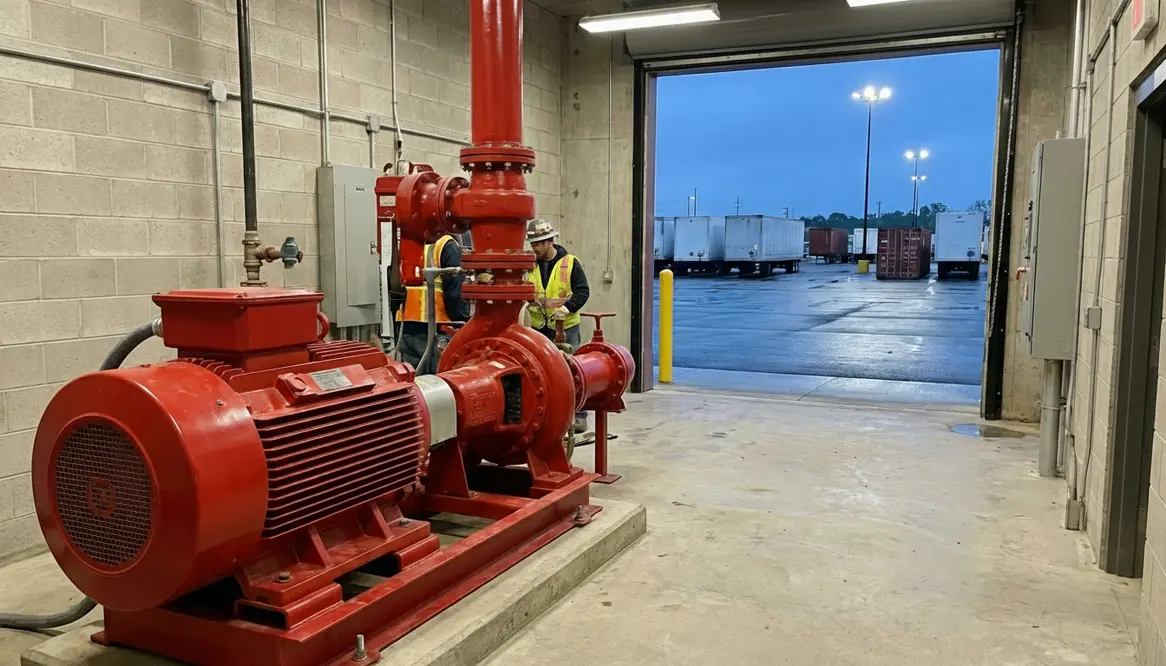
Fire Pump Systems for Fleet and Freight Safety
I have spent enough time around busy truck terminals to know one thing for certain. When engines idle and freight moves, risk never clocks out. That is why Fire safety for fleet and freight operations is not just a checklist item. It is a living system that protects people, cargo, and infrastructure. And right at the heart of that system sits a quiet hero, the fire pump. It does not ask for applause. It just waits for the moment when everything depends on it. Kind of like that one character in every action movie who saves the day without a speech.
Why fire pump systems matter in truck terminals
Truck terminals operate like small cities. Fuel storage, maintenance bays, electrical systems, and constant vehicle movement create a layered risk environment. Because of this, a standard water supply often cannot meet the pressure and volume needed during an emergency. That is where fire pumps step in.
I see fire pumps as the backbone of any serious fire protection system. They boost water pressure so sprinklers and hydrants perform at full strength. Without them, even the best designed system can fall short. And in a terminal packed with assets, falling short is not an option.
Moreover, compliance is not just about passing inspections. It is about ensuring continuity. A single fire event can halt operations for days or weeks. Therefore, investing in a properly engineered pump system is not just safety planning. It is business protection.
How do I choose the right fire pump for a truck terminal?
I get this question a lot, and the answer is never one size fits all. However, the decision always begins with understanding demand.
First, I evaluate the size of the facility and the hazard classification. Terminals with fuel handling or maintenance operations require higher flow rates. Then, I consider water supply reliability. If municipal pressure fluctuates, a stronger pump system becomes essential.
There are three common pump types I recommend for large scale facilities.
- Electric fire pumps for consistent and efficient performance
- Diesel fire pumps for backup reliability during power loss
- Vertical turbine pumps when drawing from underground or static water sources
Additionally, I always factor in future expansion. A terminal rarely stays the same size. Planning ahead saves both money and headaches later. And trust me, no one enjoys retrofitting a fire system under pressure. That is the kind of sequel nobody asked for.
Designing for Fire safety for fleet and freight operations
Integrating protection systems
Design is where everything comes together. I approach it like directing a film. Every component has a role, and timing matters.
First, I ensure proper system integration. Fire pumps must align with sprinkler systems, hydrant networks, and alarm controls. If these elements do not communicate effectively, response time suffers.
Redundancy and access
Next, I focus on redundancy. In high value environments, a single point of failure is unacceptable. Backup pumps, dual power sources, and automated controls create resilience.
Then comes accessibility. Fire pump rooms must allow for easy inspection and maintenance. A cramped setup might save space, but it complicates service. And when seconds matter, simplicity wins.
Codes and long-term resilience
Finally, I align everything with national and local codes. Compliance is not a hurdle. It is a framework that ensures performance under real world conditions and strengthens Fire safety for fleet and freight operations as facilities expand or change.
Key components that make or break performance
Controller systems
These act as the brain. They start the pump automatically when pressure drops and monitor system health.
Pressure relief valves
They prevent over pressurization, protecting pipes and equipment from damage.
Test headers
They allow routine testing without disrupting operations, which is critical for compliance.
Fuel systems for diesel pumps
Reliable fuel storage ensures operation during power outages.
Jockey pumps
These maintain system pressure and reduce unnecessary starts of the main pump.
Monitoring technology
Modern systems provide real time data, helping teams respond faster and smarter.
When these components work in harmony, the system becomes more than equipment. It becomes assurance and reinforces Fire safety for fleet and freight operations at every level of the terminal.
Maintenance strategies that actually work
Testing and documentation
I like to say that a fire pump without maintenance is like a gym membership you never use. It looks good on paper, but it will not help when you need it.
Routine testing is essential. Weekly churn tests, monthly inspections, and annual flow tests keep the system ready. Moreover, documenting these activities ensures compliance and accountability.
Attention and expertise
However, maintenance is not just about schedules. It is about attention. Listening for unusual sounds, checking for leaks, and monitoring performance trends can reveal issues early.
Partnering with experienced service providers also makes a difference. In commercial and industrial environments, expertise is not optional. It is required to protect Fire safety for fleet and freight operations when the unexpected happens.
Future ready fire pump solutions
Technology continues to reshape how I approach fire protection. Smart monitoring systems now allow remote diagnostics and predictive maintenance. This means issues can be addressed before they become failures.
Energy efficiency is also gaining attention. Modern pump systems are designed to reduce power consumption without sacrificing performance. That is good for both budgets and sustainability goals.
And as terminals grow more complex, integration with building management systems becomes standard. Everything talks to everything. It is almost like a well rehearsed orchestra, minus the dramatic conductor. When done right, this level of coordination raises the standard of Fire safety for fleet and freight operations far beyond the basics.
FAQ
What is the purpose of a fire pump in a truck terminal?
It boosts water pressure to ensure fire suppression systems operate effectively during emergencies.
How often should fire pumps be tested?
Weekly and monthly checks are standard, with a full annual performance test required.
Are diesel fire pumps better than electric ones?
Not necessarily. Diesel offers backup reliability, while electric provides efficiency. Many facilities use both.
What codes govern fire pump systems?
Standards like NFPA 20 guide design, installation, and maintenance.
Can fire pump systems scale with facility growth?
Yes, when designed properly, they can accommodate expansion without major redesign.
Conclusion
When I look at a truck terminal, I do not just see movement. I see responsibility. A well designed fire pump system protects that responsibility every second of the day. If you are managing a large commercial or industrial facility, now is the time to evaluate your setup, upgrade where needed, and ensure everything performs under pressure. Because when it comes to fire protection, preparation is not optional. It is the difference between disruption and resilience. Let’s make sure you stay on the right side of that line.
If you are looking for more detailed guidance and resources on pump selection, maintenance, and standards, you can explore additional material at https://firepumps.org as part of building a safer and more reliable terminal.