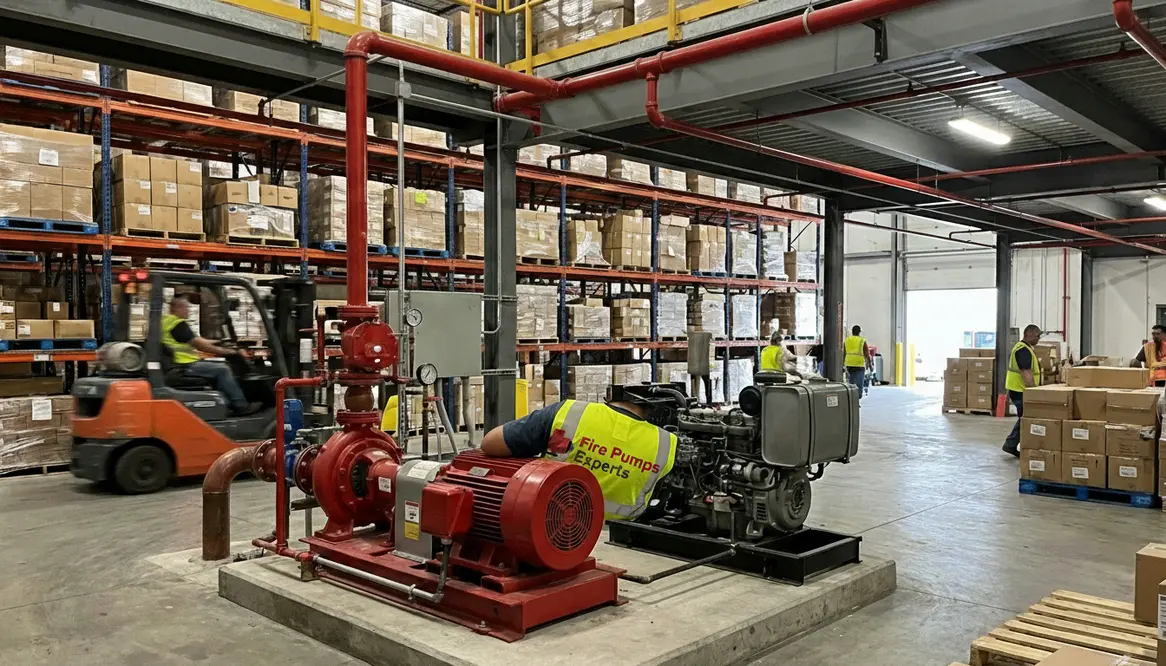
Fire Pump Design for Air Freight Storage Warehouses
Fire pump systems for cargo warehouses
I have spent years around large facilities, and I can tell you this with calm certainty: when fire shows up, it does not knock first. That is why a reliable Fire pump design for air freight storage matters in the opening minutes, when pressure and flow decide everything. In cargo warehouses, where goods move fast and stakes run high, the right system is not just equipment. It is insurance, control, and a quiet kind of confidence that hums in the background. And yes, like a good movie score, you only notice it when it is missing.
Why this matters in the first five minutes
Those first minutes decide whether you are telling a story about a controlled incident or explaining a total loss. If the fire pump system cannot deliver design pressure and flow instantly, sprinkler and hose performance collapses into guesswork. That is not a story anyone wants to narrate after the fact.
In short, the system has one job: make water show up with authority. Everything else is noise.
How I approach fire pump design for air freight storage
Start with the fire load, not the catalog
I start with the load. Not the electrical kind, but the fire load. Pallets, packaging, stacked goods, and sometimes hazardous materials all change how water must move. Then I look at ceiling height, rack layout, and the speed of operations. Because of that, I size pumps to meet peak demand, not average comfort.
Next, I align with code and real world use. Sprinkler density, hose demand, and duration must work together. Therefore, I select pumps that deliver stable pressure across the system, even when multiple zones open at once. No drama, no surprises.
Redundancy, because plot twists belong in films
Finally, I plan for redundancy. A single point of failure is a plot twist nobody wants. So I pair primary electric pumps with diesel backup when power reliability is uncertain. It is not flashy, but it is dependable, like a seasoned actor who always hits the mark.
When I look at Fire pump design for air freight storage in particular, I expect volatile demand, hard schedules, and little patience for downtime. That means redundancy is not a luxury; it is how operations keep flying while protection stays ready.
What components actually matter inside a warehouse fire pump system
It is tempting to think a pump alone does the job. However, the system is a team, and every player counts. I choose components that work together under stress, not just on paper.
Core supply and drive hardware
Column A
- Fire pump unit sized for demand and pressure stability
- Controller with clear logic and fail safe operation
- Reliable power source, often dual feed or diesel backup
- Suction supply that avoids cavitation and loss
Distribution, control, and visibility
Column B
- Discharge piping designed to limit friction loss
- Test header for safe flow verification
- Pressure relief where overpressure could occur
- Monitoring that reports status in real time
Because each part has a job, the system behaves predictably. And predictability, in fire protection, is the closest thing to peace of mind you will get.
Why cargo warehouses need stronger, smarter systems
The reality on the warehouse floor
Warehouses are not gentle environments. Forklifts move fast, aisles shift, and storage heights grow. As a result, sprinkler activation can be intense and sudden. Therefore, I design for high demand events where multiple heads open across large areas.
Additionally, I account for expansion. Facilities evolve, and systems must keep up. So I leave room for future capacity, whether that means pump upsizing potential or space for parallel units. It is a bit like casting a sequel before the first film wraps.
Water supply, the plot everyone forgets
Moreover, I consider water supply reliability. Municipal sources can fluctuate. Consequently, on site storage and dedicated tanks often become part of the plan. This ensures flow remains steady when it matters most.
When Fire pump design for air freight storage is done without this piece, the rest of the system is an expensive decoration. With it, the pump becomes a trusted lead character instead of a fragile extra.
How do I balance compliance, cost, and performance?
Standards first, then smart tuning
I do not chase the cheapest option, and I do not overspend for the sake of it. Instead, I align with standards and then optimize. Because of that, I select equipment with proven performance curves and straightforward maintenance.
Then, I reduce lifecycle cost. Efficient pumps, smart controllers, and clear access for testing save money over time. In addition, I avoid overcomplication. A system that requires a PhD to operate will fail at the worst moment. Simple, robust, and well documented wins every time.
Keeping inspectors calm and operators confident
And yes, I keep inspectors happy. Compliance is not a hurdle, it is a baseline. Once that is met, I refine for the realities of a busy cargo environment.
Fire pump design for air freight storage that scales with operations
Designing for constant change
Air freight storage moves at a different tempo. Shipments turn quickly, and layouts can change overnight. Therefore, I design zones that can adapt without major shutdowns. Valving, sectional isolation, and clear mapping make adjustments possible.
Furthermore, I integrate monitoring with facility systems. When a pump starts, the building should know. When pressure dips, alarms should be clear and actionable. Because of this, operators can respond early, not after the fact.
Testing like the worst day is tomorrow
Finally, I test like I expect failure. Regular flow tests, controller checks, and simulated events keep the system honest. It is a bit like rehearsals before opening night. You do not want surprises when the curtain rises.
The whole idea of Fire pump design for air freight storage is not just to pass a review once. It is to keep passing real world tests, year after year, while planes land, cargo turns, and nobody thinks about the pump until they absolutely have to.
Key considerations for modern fire pump projects
Integration with wider safety strategy
A pump is one part of a broader life safety plan. Detection, alarms, egress, and emergency response all tie into that hardware. When I work on Fire pump design for air freight storage projects, I look at how fast information moves, not just how fast water moves.
Data, diagnostics, and remote insight
Modern controllers can track trends: number of starts, run hours, pressure profiles during tests, and alarm histories. Used well, that data lets teams catch problems before a real event exposes them. Early warning beats forensic analysis every single time.
If you want to go deeper into technical foundations, https://firepumps.org hosts solid reference material that pairs well with site specific engineering judgment.
FAQ
Conclusion
I design systems that stand ready when everything else goes wrong. If you operate a large cargo warehouse or a major commercial facility, I can help you build a fire pump system that performs under pressure and grows with your operation. Let us turn uncertainty into control, with clear design, reliable components, and testing that proves it works. Reach out, and we will map a solution that fits your site and your risk profile.
In the end, Fire pump design for air freight storage is about quiet reliability. No grand speeches, no theatrics, just a system that does its work so well that your only story is this: a fire started, the protection system responded, and operations moved on.