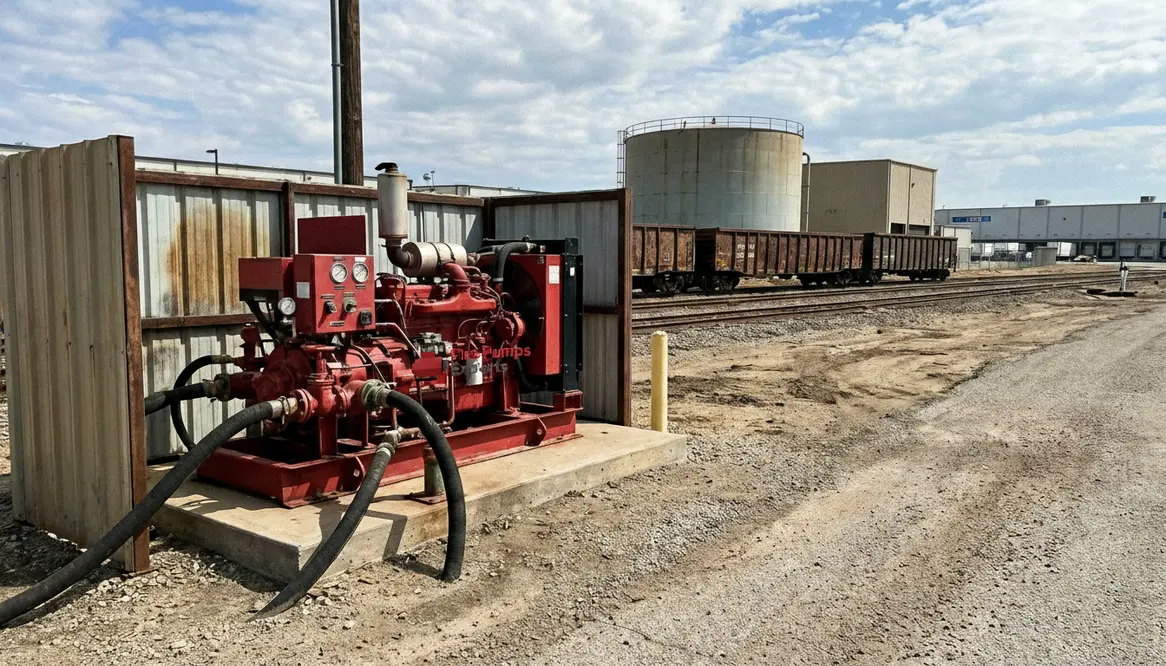
Fire Pump Design for Rail Served Properties
I have spent years walking through rail yards, pump rooms, and control houses, and one thing always stands out. Fire safety in these environments is not optional, it is mission critical. When I talk about Fire pump considerations for rail-served properties, I am talking about systems that must perform without hesitation in large, complex, and often unforgiving industrial spaces. Rail logistics facilities are not your average buildings. They stretch wide, move fast, and carry risks that demand precision. So, let us take a steady walk through what really matters here, with just enough humor to keep us awake between the pump curves and pressure ratings.
What makes rail logistics fire protection different?
Rail facilities operate on scale and speed. Trains do not politely wait while your fire system catches up. Therefore, the fire protection strategy must account for long travel distances, open yard exposure, and hazardous cargo. I always start by evaluating water supply reliability because everything else builds on that foundation.
In addition, these sites often include fuel storage, chemical handling, and high value cargo. That combination raises both the risk level and the performance expectations of the fire pump system. While a typical commercial building may rely on predictable layouts, rail served properties demand flexibility and redundancy. Think of it like planning security for a concert versus a small coffee shop. Same idea, very different scale.
Why scale changes everything
In long rail corridors, even a few psi of pressure loss over a thousand feet can be the difference between a confident sprinkler discharge and a disappointing mist. Fire pump considerations for rail-served properties must account for friction loss, elevation changes, and the way future expansions alter hydraulics over time.
These are not plug-and-play systems. They are more like an evolving infrastructure backbone that has to keep pace with changing cargo, new sidings, and added structures, all without missing a beat when an alarm hits.
Fire pump considerations for rail-served properties in system design
When I design or assess a system, I focus on pressure consistency across large distances. Rail yards can stretch far beyond what a standard fire pump setup can comfortably handle. Therefore, I often recommend high capacity pumps paired with zoning strategies to maintain reliable pressure.
Moreover, redundancy is not a luxury here. I prefer installing backup pumps or diesel driven units to ensure operation during power loss. After all, a fire does not care if the grid is down. It shows up anyway.
Another key factor is water supply type. Municipal supply alone is rarely enough. I frequently integrate on site water storage tanks to guarantee sustained flow. This approach not only stabilizes performance but also aligns with industrial fire code expectations.
I also consider future operational shifts. Rail hubs are rarely static. Tracks move, buildings appear, and hazards evolve. Fire pump considerations for rail-served properties must leave room in the system architecture for expansion, additional loops, and supplemental fixed systems like monitors, foam, or deluge where needed.
Key Design Priorities
- Consistent pressure across long pipe runs
- High capacity pump selection
- Redundant power sources
- Durable components for harsh environments
Operational Challenges
- Wide open yard exposure
- Variable hazard levels
- Limited municipal water support
- Complex layout changes over time
How do I choose the right fire pump for a rail facility?
I start with hazard classification because not all rail cargo behaves the same. Flammable liquids, chemicals, and general freight each influence the required flow and pressure. From there, I calculate demand based on the most demanding scenario, not the average day.
Next, I look at pump type. Electric pumps work well when power reliability is strong. However, I often lean toward diesel driven pumps for rail logistics sites because they offer independence. It is the fire protection equivalent of bringing your own flashlight into a cave. You simply do not rely on someone else to keep the lights on.
Finally, I match the pump curve to real world conditions. Oversizing wastes energy, while undersizing risks failure. There is no room for guessing here.
Balancing flexibility and performance
Because cargo mixes and operational priorities shift, I avoid razor-thin margins. Fire pump considerations for rail-served properties should incorporate a sensible safety factor without drifting into fantasy-land sizing. The pump, driver, and controller all need to be sized and arranged to handle your worst credible day, not just look impressive on paper.
Installation realities in active rail environments
Installing fire pumps in rail served properties requires coordination with ongoing operations. You cannot just shut down a logistics hub for a week and call it a day. Therefore, I plan installations in phases and ensure minimal disruption to rail movement.
Additionally, vibration and environmental conditions play a role. Rail activity generates constant movement, and that vibration can impact equipment over time. I use reinforced mounting and flexible connections to protect system integrity.
Access is another big deal. Fire pump rooms must remain accessible for maintenance, even when rail cars are moving nearby. I always design with clear pathways and safety in mind.
Environmental and safety interfaces
Outdoor or partially enclosed pump houses at rail sites face temperature swings, dust, and sometimes corrosive atmospheres. I factor in enclosures, heating, ventilation, drainage, and clear separation from fuel and cargo paths. Fire pump considerations for rail-served properties are never just hydraulic; they are also about survivability of the system in the real environment it is bolted into.
Maintenance strategies that actually work
A fire pump system is only as reliable as its maintenance plan. I have seen beautifully designed systems fail because no one checked them regularly. That is like owning a sports car and never changing the oil. It looks great right up until it does not.
I recommend routine testing under real load conditions. Weekly churn tests are important, but periodic full flow testing tells the real story. In addition, I ensure that trained personnel understand the system. Automation helps, but human awareness still matters.
Documentation also plays a role. Clear records of inspections, repairs, and performance trends help identify issues before they become problems. It is not glamorous, but it is effective.
Building a culture of readiness
The best technical design can still be let down by poor habits. For rail operations teams, integrating pump checks into routine site walks, training new staff on what “normal” sounds and looks like, and scheduling annual full-scale tests creates a culture where the fire pump is treated like critical rolling stock, not background noise.
Fire pump considerations for rail-served properties and compliance
Compliance is not just about passing inspections. It is about aligning with standards that protect life and assets. I always reference NFPA requirements, local codes, and insurance guidelines when designing or evaluating systems.
Furthermore, rail facilities often fall under multiple regulatory bodies. That means coordination is key. I make sure that every component, from pump selection to control panels, meets the strictest applicable standard. It is easier to design it right the first time than to retrofit later.
Documentation, testing, and third-party lenses
Third-party reviews from insurers, AHJs, and corporate risk teams can feel tedious, but they often highlight blind spots: missing signage, weak emergency power strategies, or gaps between design intent and as-built reality. Treat those reviews as part of your toolkit. Align test frequencies, reporting formats, and impairment procedures with code and insurance requirements so your fire pump documentation can stand up to scrutiny when it matters most.
Frequently asked questions
Conclusion
If you manage or design a rail logistics facility, I encourage you to take fire protection seriously and act early. The right system protects lives, cargo, and operations without compromise. At https://firepumps.org, we specialize in solutions built for complex industrial environments. Reach out today and let us help you design a system that performs when it matters most. Because when the pressure rises, your fire pump should not blink.