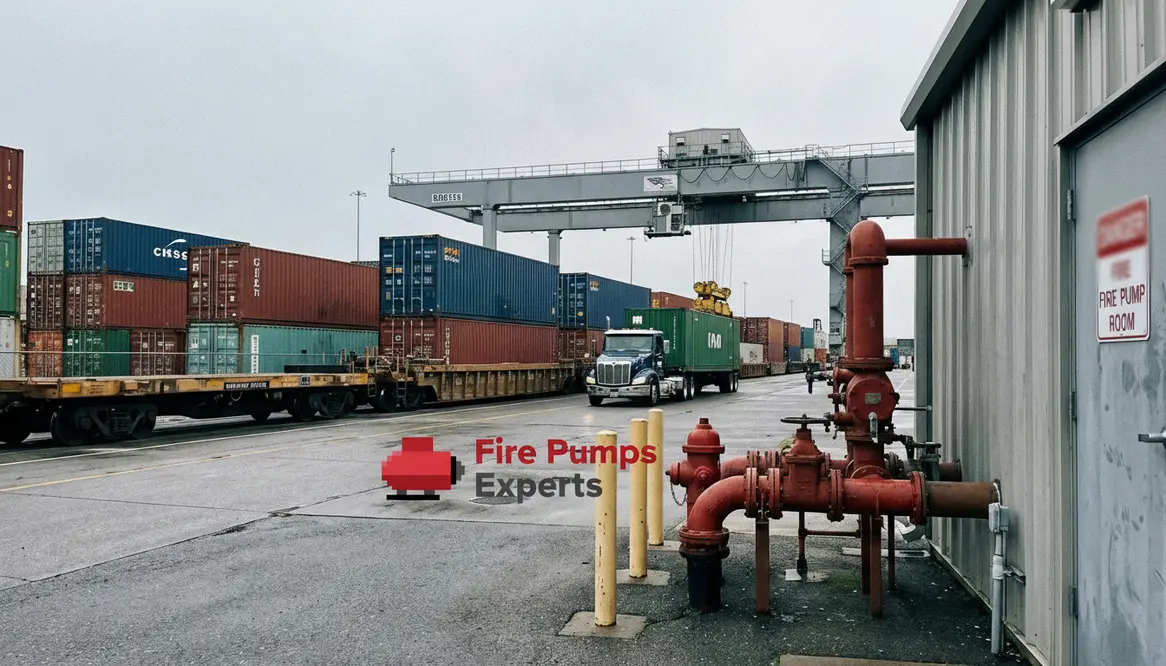
Fire Pump Systems for Multi Modal Freight Hubs
I have spent years around complex facilities where steel, timing, and precision rule the day. Intermodal hubs are no different. They move cargo like a living organism, shifting between rail, truck, and sometimes sea. Yet beneath that choreography sits a quiet truth. Without Fire safety for multi modal freight hubs, everything stops. Fire pump systems are not just equipment. They are the heartbeat that keeps risk in check and operations alive.
Why fire pump systems matter in intermodal facilities
In these environments, scale changes everything. Containers stack high, fuel sources vary, and response time must be immediate. I have seen how a small delay can ripple into major loss. Therefore, fire pumps step in where municipal pressure falls short.
They deliver consistent water flow across wide yards and towering storage zones. Moreover, they support sprinklers, hydrants, and foam systems all at once. That kind of coordination is not flashy, but it is powerful.
And let us be honest. A fire does not care about your shipping schedule. It shows up uninvited, like a plot twist in a blockbuster you did not ask for. The difference here is that fire pumps help you control the ending.
How do fire pumps support large scale cargo operations?
They work by boosting water pressure exactly where and when it is needed. I like to think of them as the quiet stage crew behind a big production. You never see them, but without them, the show collapses.
In intermodal facilities, coverage must stretch across rail lines, loading cranes, fuel storage, and warehouses. As a result, fire pumps ensure:
Consistent pressure across long distances
Reliable supply during peak demand or system strain
Immediate activation when alarms trigger suppression systems
Additionally, these systems integrate with backup power, which means they stay active even when everything else goes dark. That reliability is what defines strong Fire safety for multi modal freight hubs.
Designing fire pump systems for complex freight hubs
I approach design like a chess game. Every move must anticipate the next risk. Intermodal facilities demand that same mindset.
First, I consider hazard types. Flammable liquids, electrical equipment, and dense cargo all behave differently under fire conditions. Then, I match pump capacity and system layout to those risks.
Next comes redundancy. Because in a facility that runs around the clock, failure is not an option. I often recommend multiple pumps, including diesel driven backups, to ensure continuous operation.
Finally, placement matters. Pumps must sit where they can serve the entire site without delay. It sounds simple, but in a sprawling yard, distance can quietly sabotage performance.
Key design priorities
Strong water supply access
Correct pump sizing for peak demand
Integration with suppression systems
Backup power readiness
Common pitfalls to avoid
Undersized pumps for future expansion
Poor system zoning
Limited maintenance access
Ignoring real world response time
Maintenance keeps systems ready, not just installed
I have seen top tier systems fail for one simple reason. Neglect. A fire pump is not a set it and forget it tool. It demands routine care.
Weekly testing confirms startup reliability. Monthly inspections catch wear before it becomes failure. Annual performance testing ensures the system still meets its design intent.
Moreover, trained technicians should handle these checks, especially in large commercial and industrial environments. Intermodal hubs cannot afford guesswork.
Think of it like owning a high performance car. You would not skip oil changes and expect it to win a race. The same logic applies here, except the stakes are much higher.
Fire safety for multi-modal freight hubs in modern infrastructure planning
Today, I see a shift toward smarter infrastructure. Facilities now use data, sensors, and automation to monitor risk in real time. Fire pump systems are part of that evolution.
They connect with alarm systems, building controls, and remote monitoring platforms. As a result, operators gain visibility into system health and response readiness.
Additionally, planning now accounts for expansion. Intermodal hubs rarely stay the same size. A well designed fire pump system grows with the facility, rather than holding it back.
This forward thinking approach strengthens Fire safety for multi-modal freight hubs while supporting long term operational goals.
Choosing the right fire protection partner
I always say this part matters as much as the equipment itself. The right partner understands large scale commercial and industrial properties. They do not guess. They assess, design, install, and maintain with precision.
Look for teams that specialize in fire pump systems for complex environments. They should offer testing, compliance support, and long term service plans.
Because at the end of the day, you are not just buying a system. You are investing in continuity, safety, and peace of mind. For more on specialized support, visit https://firepumps.org.
FAQ
Conclusion
When I look at intermodal facilities, I see more than movement and machinery. I see responsibility. A strong fire pump system protects people, cargo, and continuity all at once. If you are serious about performance and safety, now is the time to act. Partner with experts who understand large scale protection and build a system that stands ready, no matter what arrives next. In the bigger picture of Fire safety for multi-modal freight hubs, that decision becomes one of the most practical investments you can make.