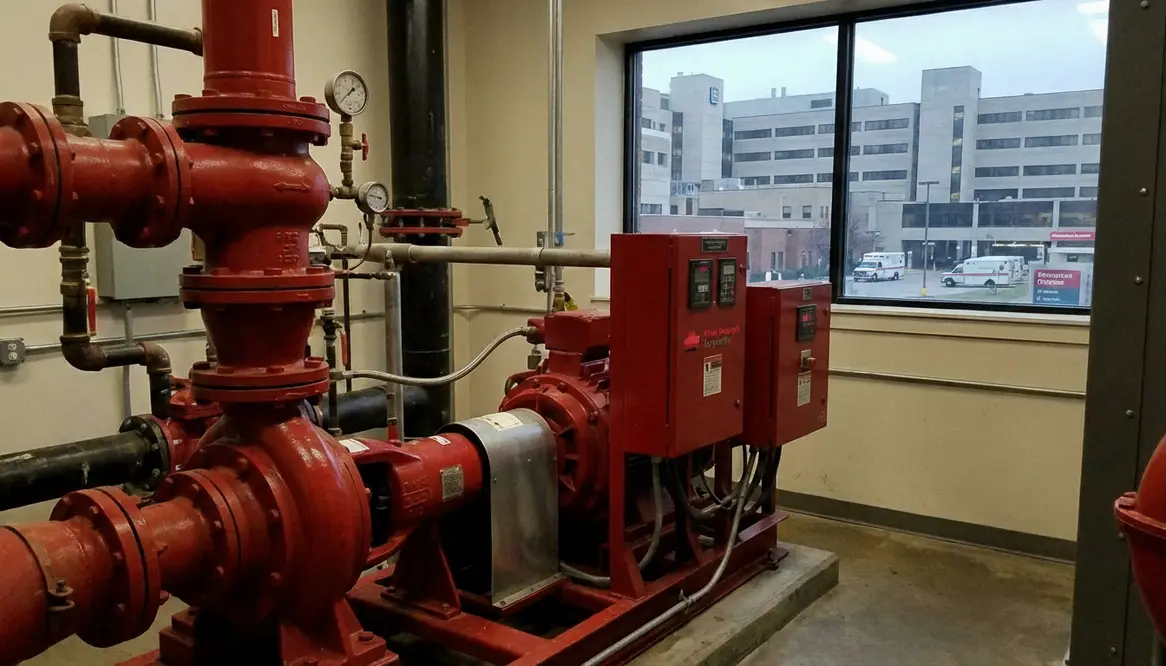
Fire Pump Systems for Medical Centers Guide
I have walked through many large healthcare campuses, and I can tell you this much: they are cities within cities. Lives begin, lives are saved, and sometimes, lives hang in the balance. In that delicate space, Fire Pump Systems for Medical Centers are not just equipment. They are quiet guardians, standing ready when seconds matter most. And while no one visits a hospital hoping to admire its fire protection strategy, the truth is simple. Without it, nothing else works quite as it should.
Why Fire Protection in Healthcare Campuses Demands More Than Basics
Hospitals do not get to “pause” during an emergency. Patients cannot simply walk out. Some cannot move at all. So, while a small office building might rely on evacuation alone, healthcare campuses require layered protection. I am talking about suppression, containment, and continuity working together.
Moreover, these facilities operate 24 hours a day. That means systems must perform under constant demand. Electrical loads fluctuate. Water usage spikes. Yet, fire protection must remain steady, like a jazz bassist holding the groove while everything else improvises.
Because of that, advanced fire suppression infrastructure becomes essential. And yes, this is where properly engineered pump systems step into the spotlight, even if they never ask for applause.
What Makes Fire Pump Systems for Medical Centers Different
Let me answer this the way most people would ask it into a search bar: what makes these systems so specialized? In short, reliability under pressure, literally and figuratively.
Unlike standard commercial setups, healthcare campuses often span multiple buildings with varying elevations. Therefore, maintaining consistent water pressure across the entire property is no small feat. Add to that the need for redundancy, and suddenly you are not dealing with a single pump, but a coordinated system designed to never fail.
Additionally, these systems must integrate with backup power. When the grid goes down, and it will at some point, the fire pump cannot shrug and say, “Not my problem.” It must keep running. No excuses.
Designing for Scale Without Losing Precision
Large campuses bring a unique challenge. On one hand, you need масштаб level coverage. On the other, every wing, lab, and surgical suite has its own risk profile. Therefore, design becomes a balancing act.
First, engineers map out hazard classifications across the campus. Then, they align sprinkler density and flow requirements accordingly. However, none of that matters if water cannot reach the farthest point with enough force. That is where centralized and zoned pumping strategies come into play.
Interestingly, modern systems also incorporate smart monitoring. So, instead of waiting for a failure, teams can detect pressure drops or irregular flow in real time. Think of it as a fitness tracker, but for infrastructure. And unlike most of us, it never skips a workout.
Key Components That Keep Everything Running Smoothly
Core Elements
- Primary fire pumps built for continuous demand
- Backup pumps for redundancy
- Dedicated water storage or municipal connections
- Control panels with real time diagnostics
Support Systems
- Emergency power integration
- Pressure maintenance devices
- Alarm and monitoring interfaces
- Routine testing and inspection protocols
Each piece plays a role. Remove one, and the whole system starts to feel like a band missing its drummer. Technically still music, but not something you want to rely on in a crisis.
How Do I Ensure Compliance and Long Term Performance?
This question comes up often, and for good reason. Regulations in healthcare environments are strict. And they should be. Compliance is not just about passing inspections. It is about ensuring that systems perform exactly as intended when needed.
To achieve this, I always emphasize regular testing. Weekly churn tests, monthly inspections, and annual performance evaluations are not optional. They are essential. Furthermore, documentation must be clear and accessible. Inspectors appreciate it, and more importantly, it keeps teams accountable.
Equally important is working with specialists who understand large scale commercial properties. Not every contractor is equipped to handle the complexity of a healthcare campus. And in this field, guessing is not a strategy. It is a liability.
Future Trends in Fire Pump Systems for Medical Centers
Now, let us look ahead. Technology is reshaping how we approach fire protection. Smart sensors, predictive analytics, and remote monitoring are becoming standard. As a result, facility managers can identify issues before they escalate.
At the same time, energy efficiency is gaining attention. Modern pump systems are designed to reduce power consumption without sacrificing performance. So, you get reliability and sustainability working hand in hand. A rare duo, like Batman and Superman actually agreeing on something.
In addition, integration with building management systems allows for a more coordinated response during emergencies. Fire protection no longer operates in isolation. It communicates, adapts, and responds as part of a larger ecosystem.
Why Fire Pump Systems for Medical Centers Sit At The Core Of Campus Safety
Across large properties, Fire Pump Systems for Medical Centers tie together sprinklers, standpipes, specialty suppression, and emergency response protocols. They bridge the gap between design intent and real-world performance when alarms sound at 3 a.m. on a stormy night.
From cancer centers and surgical towers to outpatient clinics and research buildings, these pumping solutions carry the same responsibility: hold pressure, hold flow, and protect people who often have no way to self-evacuate. That is the quiet contract every fire pump signs the day it is commissioned.
If you want deeper technical guidance, NFPA standards, local codes, and resources like https://firepumps.org all reinforce one reality: Fire Pump Systems for Medical Centers must be treated as mission-critical infrastructure, not background plumbing.
Conclusion
When I think about fire protection in healthcare campuses, I see more than systems and standards. I see responsibility. If you manage or develop large medical properties, now is the time to invest in dependable solutions. Partner with experts who understand scale, compliance, and performance. Explore advanced Fire Pump Systems for Medical Centers that match your facility’s demands. Because in this world, preparation is not optional. It is the difference between control and chaos.