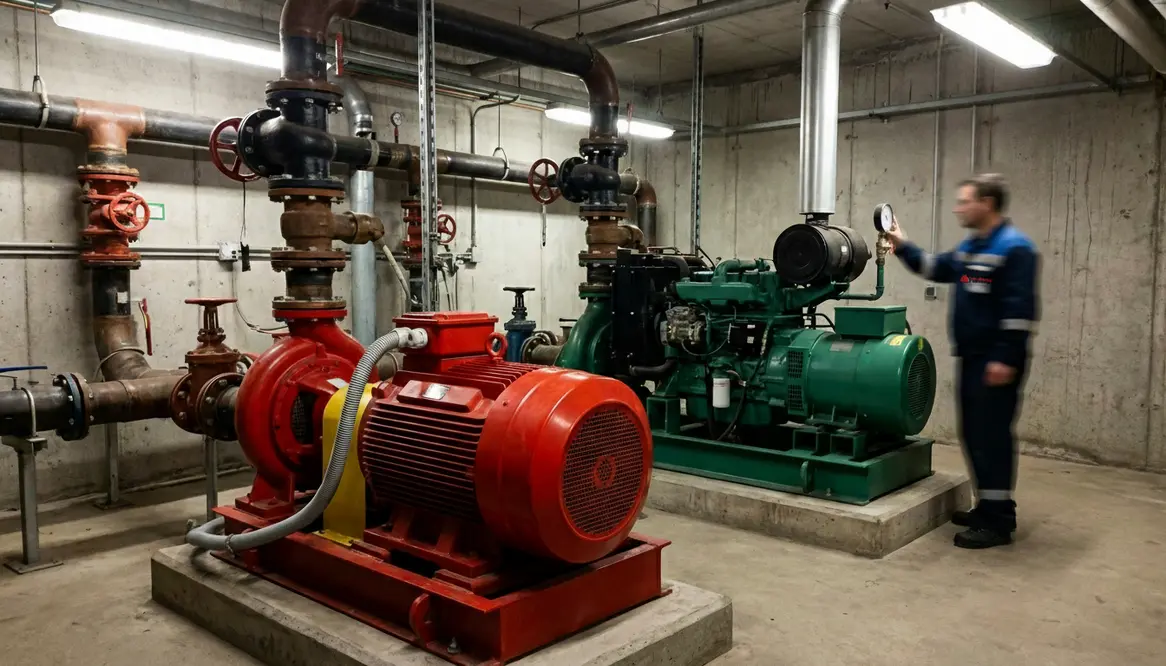
Fire Pump Requirements for Resorts Explained
I have walked through enough sprawling resorts to know one thing for sure. When the lights glow, the fountains dance, and guests sip something overpriced by the pool, nobody is thinking about fire protection. And yet, behind the scenes, everything depends on it. That is where Fire Pump Requirements for Resorts come into play. In large hospitality campuses, fire pumps are not just equipment. They are the quiet guardians that make sure a small spark never becomes tomorrow’s headline.
So let me take you behind the curtain. Because while fire pumps may not get the applause, they absolutely deserve a standing ovation.
Understanding Fire Pump Requirements for Resorts at Scale
When I look at a large resort, I do not just see buildings. I see a network. Towers, villas, kitchens, spas, parking decks, and sometimes even entire shopping districts. Therefore, the fire pump system has to serve all of it without hesitation.
Unlike smaller properties, resorts demand higher flow rates and consistent pressure across long distances. In other words, you cannot afford weak spots. If one wing gets water while another gets a polite drizzle, you have a problem.
Additionally, redundancy becomes essential. I always recommend backup pumps and reliable power sources because outages do not RSVP before showing up. As a result, diesel driven pumps or secondary electrical feeds are often part of the plan.
And yes, codes matter. NFPA standards are not light reading, but they are the rulebook. Ignore them, and you are basically playing a high stakes game without knowing the rules. Spoiler alert. That never ends well.
What size fire pump does a large resort actually need
I get this question a lot, and the answer is not one size fits all. Still, I can give you a clear direction.
First, I calculate total demand. This includes sprinklers, standpipes, and any special hazard systems like kitchen suppression or outdoor features. Then, I factor in elevation changes because water does not enjoy climbing hills unless you push it.
Moreover, I look at peak occupancy. A half full resort is one thing. A fully booked holiday weekend is another. The system must handle the worst case scenario, not the average Tuesday afternoon.
Typically, large hospitality campuses require pumps ranging from 1000 to 3000 gallons per minute, sometimes more. However, what matters most is matching the system to the property’s layout. Otherwise, you are either overspending or under protecting, and neither is a good look.
Designing for Reliability Across Expansive Properties
Now, let us talk about reliability, because in this world, failure is not an option.
Primary Considerations
- Consistent pressure across zones
- Backup power integration
- Corrosion resistant materials
- Accessible pump rooms
Operational Enhancements
- Remote monitoring systems
- Automated testing schedules
- Clear maintenance access routes
- Integration with alarm systems
While that may sound technical, it all comes down to peace of mind. I want a system that works at 2 AM during a storm just as well as it does during a sunny afternoon inspection.
Furthermore, smart monitoring has changed the game. I can now track performance in real time, which means fewer surprises and faster response times. And honestly, fewer surprises is something we can all appreciate.
Fire Pump Requirements for Resorts and Compliance Realities
Let me be clear. Compliance is not optional. It is the foundation.
Fire pump installations in large resorts must meet strict inspection and testing standards. Weekly churn tests, annual flow tests, and detailed documentation all play a role. As a result, the system stays ready, not just installed.
Additionally, local authorities often add their own requirements on top of national codes. Therefore, I always coordinate with inspectors early in the process. It saves time, money, and a whole lot of headaches later.
And yes, paperwork matters. I know it is not glamorous, but neither is explaining to an auditor why records are missing. Trust me, that conversation is less fun than it sounds.
How do I future proof a fire pump system for resort expansions
Resorts love to grow. New wings, upgraded amenities, expanded conference spaces. It is part of the business. So I design with that in mind.
First, I allow room for capacity increases. This might mean selecting pumps that can handle higher loads or leaving space for additional units. Then, I ensure the piping infrastructure can support expansion without major overhauls.
Moreover, modular designs make upgrades easier. Instead of tearing everything apart, you build on what already works. It is like adding seasons to a successful show instead of rebooting it entirely.
Because let’s face it, nobody wants a fire protection system that becomes obsolete faster than last year’s smartphone.
Putting Fire Pump Requirements for Resorts Into Perspective
Across sprawling properties, Fire Pump Requirements for Resorts shape everything from pump sizing to redundancy and monitoring. They influence how easily a team can maintain systems, how confidently owners can plan expansions, and how quickly first responders get the water they need. When those requirements are taken seriously, risk shrinks and operations stay smooth.
The same principles apply whether the resort is wrapped around a golf course, stacked in high-rise towers, or stretched along a waterfront. Fire Pump Requirements for Resorts are ultimately about matching real-world hazards and layouts with a system that quietly does its job every single day, not just during rare emergencies.
Conclusion
If you manage or develop a large hospitality campus, investing in the right fire pump system is not just a technical decision. It is a commitment to safety, reliability, and operational excellence. I encourage you to take a closer look at your current setup, identify gaps, and plan for growth. When you get it right, everything runs quietly in the background, just as it should. Fire Pump Requirements for Resorts may not show up in glossy brochures, but they underpin every smooth check-in, every late checkout, and every event that begins and ends without incident.
And if you need expert guidance, now is the time to act. Start asking pointed questions about test records, backup power, capacity for expansion, and integration with your broader life safety strategy. The resorts that stay ahead are the ones that treat fire protection as infrastructure, not an afterthought.