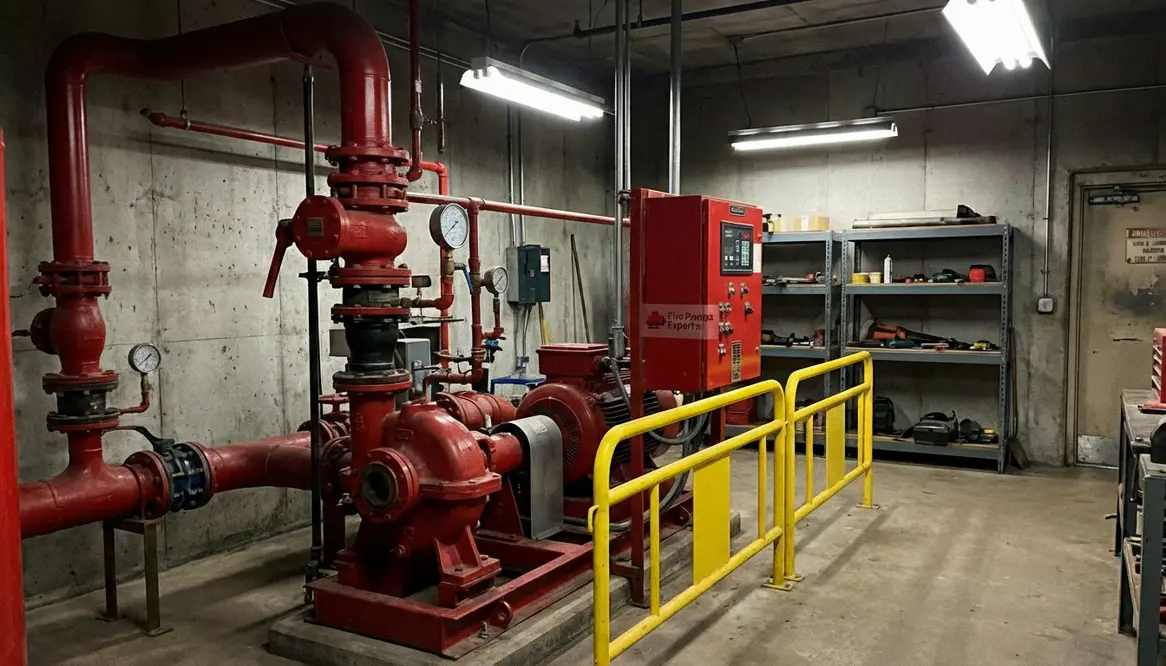
Fire Pump Systems for Public Works Buildings Guide
I have spent years around municipal service operations, and I can tell you this much with a calm certainty. Fire protection is not just a line item on a budget. It is the quiet guardian of continuity, safety, and public trust. When I talk about Fire Pump Systems for Public Works Buildings, I am talking about the backbone that keeps critical infrastructure standing when everything else starts to fall apart. And yes, while fire pumps may not get the same spotlight as a blockbuster hero, they are the steady protagonists working behind the scenes. Think less superhero cape, more steady narrator guiding the moment everything goes right because someone planned ahead.
Why Fire Protection in Municipal Facilities Demands Precision
I have seen how municipal buildings operate. Water treatment plants, transit hubs, maintenance depots, and administrative centers all carry unique risks. Therefore, fire protection here cannot be generic. It must be tailored, deliberate, and built to last.
Because these facilities often run around the clock, any disruption can ripple across an entire city. A small fire in a public works building can delay emergency response, interrupt water supply, or stall essential repairs. So, I always emphasize layered protection. Detection, suppression, and reliable water delivery must work together without hesitation.
And here is the truth. Fire does not wait for business hours. It shows up uninvited, like a plot twist in a late season drama. That is why planning must feel almost boring in its consistency. Boring, in this case, is beautiful.
How Fire Pump Systems for Public Works Buildings Support Critical Infrastructure
Let me answer this the way most people would ask it in a search bar. How do fire pump systems actually protect municipal operations?
They ensure that water flows with the right pressure exactly when it is needed. Sprinkler systems and standpipes rely on that pressure. Without it, even the best designed system becomes a fancy decoration.
In large scale public works facilities, municipal water pressure alone often falls short. That is where specialized fire pump solutions come in. They step in, boost performance, and keep suppression systems effective even in high demand situations.
Moreover, these systems are designed for durability. They are built to operate under stress, during emergencies, and sometimes in less than ideal environments. In my experience, a properly installed system does not just meet code. It exceeds expectations quietly, day after day.
What Makes a Reliable Fire Pump Setup in Public Works Buildings
I like to think of reliability as a three part harmony. When all parts work together, the result is smooth and dependable.
Design Integrity
First, the system must match the building’s specific risk profile. That includes size, layout, and operational hazards.
Quality Components
Second, every component matters. Pumps, controllers, and valves must perform without compromise.
Consistent Testing
Third, routine testing ensures the system works when called upon. Skipping this step is like owning a car and never checking the brakes.
Professional Installation
Finally, expertise during installation ties everything together. Even the best equipment fails if installed poorly.
When these elements align, the system becomes something you can trust. And trust, in this field, is everything.
Common Risks in Municipal Operations and How I Address Them
Municipal facilities face a range of fire risks, and each one requires a thoughtful response. Electrical systems, fuel storage, heavy machinery, and chemical handling all introduce potential hazards.
However, I do not believe in overcomplicating solutions. I focus on clarity and purpose. For example, high hazard areas demand stronger suppression capabilities and dependable water flow. That often leads back to robust fire pump configurations.
Additionally, I always consider redundancy. If one component fails, another must carry the load. It is a bit like having a backup singer who can take the lead without missing a beat. Nobody notices until it matters, and then it matters a lot.
How I Future Proof Fire Pump Systems for Public Works Buildings
Technology evolves, and so do risks. Therefore, I approach fire protection with an eye on the future. Modern fire pump systems integrate monitoring tools that provide real time data. This allows teams to detect issues before they become failures.
Furthermore, I plan for expansion. Municipal facilities rarely stay the same size or function forever. A scalable system ensures that growth does not outpace protection.
And let me add a bit of perspective. Investing in forward thinking fire protection may not feel exciting today. Yet when a crisis hits, it becomes the best decision anyone ever made. Not flashy, not dramatic, just effective. And sometimes, that is the highest compliment.
If you want to see how specialized providers approach Fire Pump Systems for Public Works Buildings, you can review resources at https://firepumps.org and compare them to your current setup.
Strategic Role of Fire Pump Systems for Public Works Buildings
Fire Pump Systems for Public Works Buildings do more than satisfy inspection reports. They protect water treatment operations from contamination events, keep maintenance yards operational after an incident, and safeguard data centers and control rooms that coordinate city services. When they are designed with intent and tested with discipline, they turn worst case scenarios into manageable events instead of full blown disasters.
Practical Steps to Strengthen Your Fire Protection Strategy
When I walk through a municipal facility, I mentally trace the path of water from the supply all the way to the last sprinkler head. I look for the weak links. Aging pumps that have not been tested under load. Controllers that sit in dusty rooms. Valves nobody has labeled. This is where careful planning meets daily reality, and where Fire Pump Systems for Public Works Buildings either shine or stumble.
- Verify that the existing system matches current building usage, not just the original design intent.
- Confirm that test results are recorded, trended over time, and actually reviewed by someone who understands what they mean.
- Identify single points of failure and determine where redundancy would be worth the investment.
- Plan upgrades during periods of lower operational risk instead of waiting for an emergency shutdown.
FAQ: Fire Protection for Municipal Service Operations
Conclusion
When I think about fire protection in municipal operations, I see more than equipment. I see continuity, safety, and responsibility woven together. If you manage or oversee a major facility, now is the time to evaluate your systems and strengthen your defenses. Explore advanced solutions, invest in reliability, and ensure your infrastructure stands ready. Because when the unexpected arrives, preparation is not just helpful. It is everything.