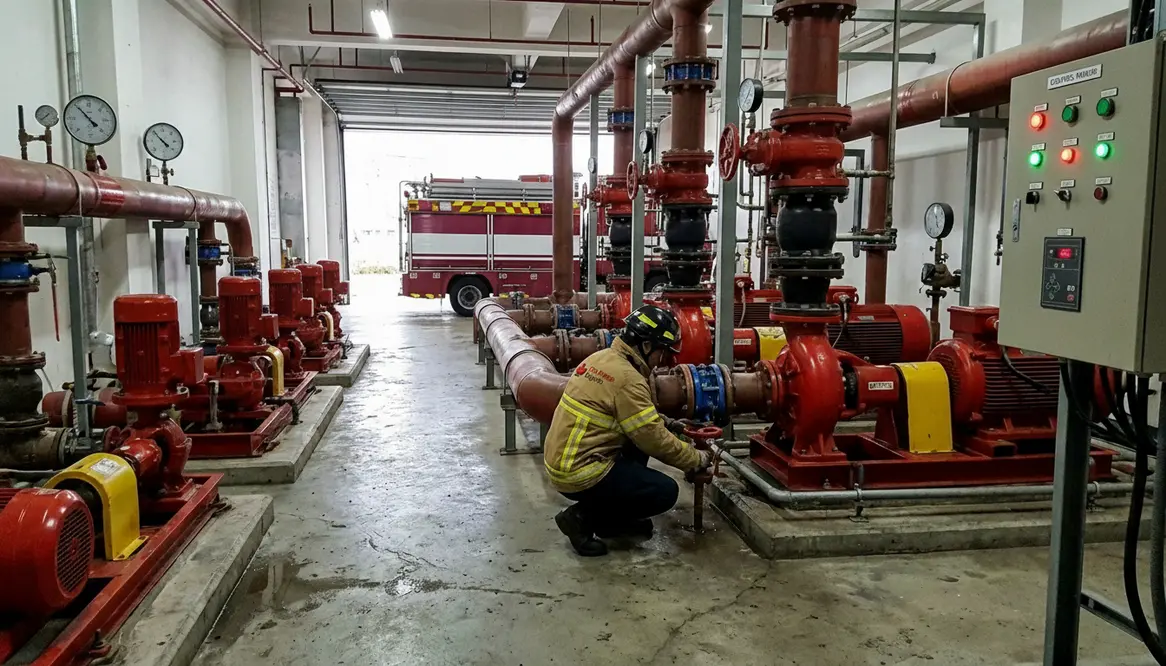
Fire Pump Requirements for Fire Stations Guide
I’ve spent years around critical infrastructure, and one truth never changes. When alarms sound in essential emergency response buildings, everything must work without hesitation. That includes systems shaped by Fire Pump Requirements for Fire Stations, which often serve as a benchmark for high performance fire protection in commercial and industrial facilities. Within the first moments of a fire event, water pressure, system reliability, and response coordination matter more than any heroic last minute scramble. So today, I’ll walk you through how fire safety truly works in these buildings, with a steady hand and maybe a light grin along the way.
Why Fire Safety in Emergency Buildings Demands More Than “Code Minimum”
Most people assume meeting code is enough. However, in emergency response buildings, “enough” is rarely enough. These structures house the very teams we rely on during crises. If their facility fails, the ripple effect can stall entire operations.
Because of this, I always recommend designing systems that exceed baseline standards. For example, redundancy is not a luxury. It is a necessity. Backup power, dual water supplies, and layered detection systems ensure that one failure does not bring everything down.
Additionally, these buildings operate 24 hours a day. That constant use increases wear on systems. Therefore, maintenance schedules must be tighter, inspections more frequent, and upgrades more proactive. Think of it like maintaining a superhero’s suit. You do not wait for a tear mid battle.
How Do Fire Protection Systems Stay Reliable Under Pressure?
The short answer is discipline in design and maintenance. The longer answer gets more interesting.
First, fire pumps carry the burden of delivering water where and when it is needed. Systems inspired by Fire Pump Requirements for Fire Stations often include higher capacity pumps, quick start mechanisms, and dependable power sources. These are not optional upgrades. They are mission critical components.
Then, there is system integration. Fire alarms, sprinklers, and pumps must communicate seamlessly. When one activates, the others follow without delay. This coordination is what separates a controlled event from a chaotic one.
And yes, testing matters. Regular flow tests and pressure checks ensure everything performs as expected. Skipping them is like skipping leg day. Eventually, something gives out, and it is never at a convenient time.
Design Priorities That Actually Make a Difference
When I approach fire safety design for major facilities, I focus on what truly impacts performance during an emergency.
Core Structural Elements
- Fire rated walls and compartmentalization
- Strategic placement of stairwells and exits
- Smoke control systems that limit spread
Operational Systems
- High capacity fire pumps with backup power
- Advanced detection and alarm integration
- Dedicated water storage for extended events
While both sides matter, the magic happens when they work together. A well built structure buys time. A well designed system uses that time wisely.
Maintenance Is Where Most Buildings Quietly Fail
Here is the uncomfortable truth. Many systems fail not because they were poorly designed, but because they were poorly maintained.
Over time, valves get stuck, sensors drift, and pumps lose efficiency. Without regular inspections, these small issues stack up. Eventually, they become big problems.
That is why I emphasize scheduled testing and documentation. Every inspection tells a story. If you track trends, you can spot trouble before it becomes a headline.
Moreover, trained personnel make a difference. You would not hand a Formula One car to someone who just got their license. The same logic applies here. Skilled technicians ensure systems remain ready for real world demands.
Fire Pump Requirements for Fire Stations and What Commercial Facilities Can Learn
Emergency response buildings often set the gold standard. Their fire pump systems are designed for rapid response, sustained performance, and minimal downtime. Commercial and industrial facilities can learn a great deal from this approach.
For instance, pump sizing should reflect worst case scenarios, not average conditions. Additionally, reliable power sources such as generators ensure operation during outages. These features, inspired by Fire Pump Requirements for Fire Stations, elevate system resilience across large scale properties.
Another lesson is accessibility. Equipment must be easy to inspect, test, and repair. If reaching a pump feels like navigating a maze from a fantasy movie, maintenance will suffer. And trust me, no one wants their fire safety plan to depend on a quest.
If you want to explore more technical context around Fire Pump Requirements for Fire Stations, resources at https://www.firepumps.org can offer deeper technical guidance that complements practical facility planning.
Smart Technology Is Changing the Game
Technology has quietly transformed fire safety. Modern systems now include real time monitoring, remote diagnostics, and predictive maintenance tools.
Because of these advances, facility managers can detect issues early. A drop in pressure or unusual vibration can trigger alerts before failure occurs. This proactive approach reduces downtime and improves reliability.
Additionally, data helps refine system performance. Over time, patterns emerge. These insights allow adjustments that keep systems aligned with actual building needs. It is less guesswork and more precision.
Bringing these tools into planning for Fire Pump Requirements for Fire Stations gives designers and operators a feedback loop that keeps protection aligned with how the building is truly used, not just how it looked on paper at commissioning.
FAQ: Fire Safety in Emergency Response Buildings
Conclusion
Fire safety in essential emergency response buildings is not just about compliance. It is about confidence when it matters most. If you manage a commercial or industrial facility, now is the time to elevate your systems. Take cues from proven standards, invest in reliable infrastructure, and stay ahead of potential failures. When everything is on the line, preparation is not optional. It is the difference between control and chaos. Let’s make sure your building is ready.