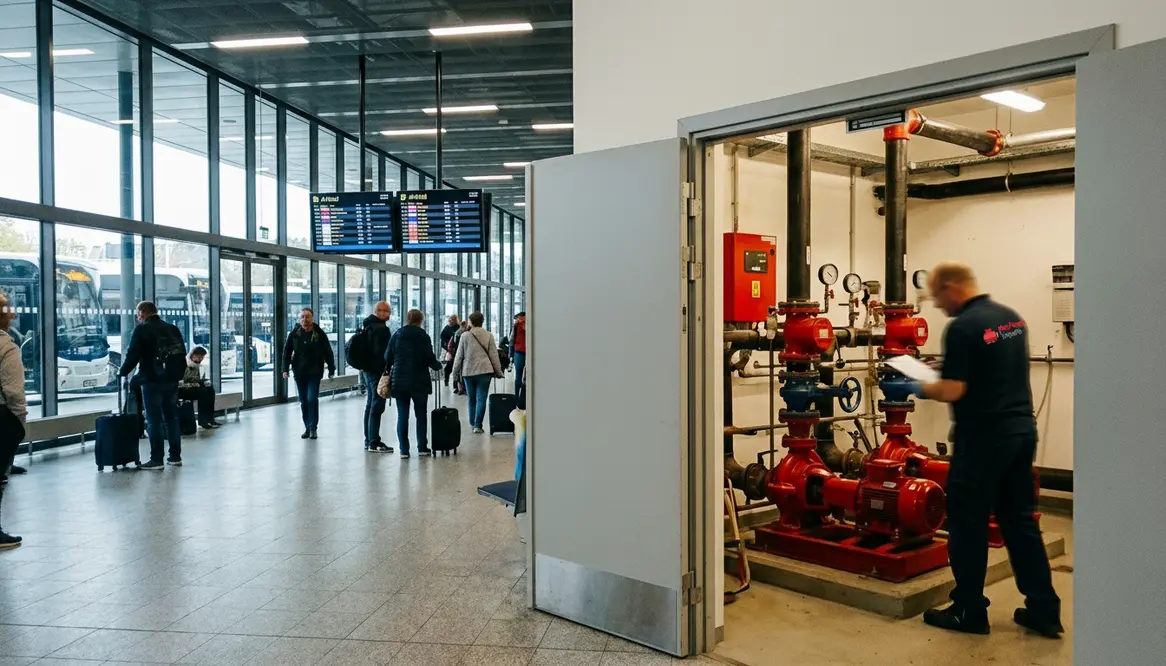
Fire Pump Systems for Bus Terminals Safety Guide
A practical guide to designing reliable fire safety in busy passenger transfer buildings, with a spotlight on the quiet workhorses that keep everything running when it matters most.
I have spent enough time walking through large passenger transfer buildings to know one truth. When everything works, no one notices. When it doesn’t, everyone does. That is especially true for fire safety. In facilities that move thousands of people each day, the margin for error is thin. That is why I always emphasize the role of Fire Pump Systems for Bus Terminals early in any discussion. These systems sit quietly in the background, yet they carry the weight of the entire emergency response. Think of them as the unsung hero. Not flashy like a superhero, but far more reliable when things get serious.
Why quiet systems matter
In a busy terminal, passengers remember delays, not the thousands of safe, uneventful trips that came before. Fire protection works the same way. The best Fire Pump Systems for Bus Terminals are the ones no one talks about because they simply perform, every time, without drama.
How do I design fire safety for high traffic passenger buildings?
I start with movement. People flow in waves, not lines. Therefore, fire safety must follow that same rhythm. I map entry and exit points, then layer in detection, suppression, and evacuation strategies. Moreover, I make sure systems communicate clearly with each other. A smoke detector triggers an alarm, but it should also cue ventilation controls and suppression systems.
In addition, I avoid overcomplicating layouts. In an emergency, no one wants to solve a maze. Clear signage, wide egress paths, and visible safety equipment make a real difference. It is a bit like directing traffic in a blockbuster movie. You want order, not chaos, even when everything else feels intense.
Fire Pump Systems for Bus Terminals and why they matter more than you think
I have seen facilities invest heavily in alarms and sprinklers, yet overlook the engine that powers them. Without strong water pressure, even the best sprinkler system becomes decorative. That is where Fire Pump Systems for Bus Terminals come in.
These systems ensure consistent water flow across large footprints. Furthermore, they handle peak demand during worst case scenarios. I always recommend systems that are tested under real load conditions, not just theoretical ones. After all, a fire event is not the time for guesswork.
The quiet workhorse
And yes, they are not glamorous. No one takes selfies with a pump room. But when everything works seamlessly, that quiet reliability becomes priceless.
In large hubs, Fire Pump Systems for Bus Terminals carry the responsibility of making sure every sprinkler head and hose line actually does its job under pressure, literally and figuratively.
What systems should be prioritized in passenger transfer facilities?
I focus on layered protection. Each system supports the next, creating a safety net rather than a single point of failure.
Core priorities include:
- Fire detection systems with fast response sensors
- Automatic sprinkler networks supported by strong pump infrastructure
- Smoke control and ventilation systems
- Emergency lighting and backup power
- Clear communication systems for evacuation guidance
Additionally, integration is key. A disconnected system is like a band where every musician plays a different song. Technically impressive, but not helpful.
Balancing safety with constant passenger flow
I always remind clients that safety should never slow operations to a crawl. Instead, it should work quietly alongside daily activity. For example, I design equipment rooms and pump systems in locations that allow easy maintenance without disrupting passengers.
Meanwhile, I ensure that safety drills and system tests happen during low traffic periods. This keeps operations smooth while still maintaining readiness. It is a bit like rehearsing for a play when the audience is not in the theater. Everyone benefits when the show runs without interruption.
Keeping flow and safety aligned
Well placed Fire Pump Systems for Bus Terminals sit out of the way of passengers, yet remain easy to access for maintenance crews. Done right, most people never realize just how much critical infrastructure is operating a few doors away from their bus gate.
Fire Pump Systems for Bus Terminals in large scale infrastructure planning
When I plan for major commercial transport hubs, I think long term. Passenger numbers grow, and infrastructure must keep up. Therefore, I select fire pump systems that can scale with demand.
Below is how I typically approach system planning:
| Planning Focus | My Approach |
| Capacity | I size systems beyond current demand to allow for expansion |
| Redundancy | I include backup pumps to ensure continuous operation |
| Maintenance Access | I design layouts that allow quick inspections and repairs |
| Compliance | I align with local and national fire codes without compromise |
As a result, the facility stays protected not just today, but years down the road. And that kind of foresight saves both money and headaches.
Future proofing large terminals
Well designed Fire Pump Systems for Bus Terminals can adapt as ridership increases, routes change, and new structures are added. Investing in scalability on day one costs far less than ripping out and replacing undersized equipment later.
Smart technology and real time monitoring
Modern fire safety is not just about hardware. It is also about intelligence. I integrate monitoring systems that provide real time updates on pump performance, pressure levels, and system health. Consequently, teams can respond to issues before they escalate.
There is something reassuring about seeing data confirm that everything is ready. It is like checking your phone battery before a long day. You may not think about it often, but you are glad it is fully charged when you need it.
For more technical guidance on system performance and maintenance strategies, resources like https://firepumps.org can be useful reference points alongside local codes and standards.
FAQ
Conclusion
Fire safety in passenger transfer buildings is not a luxury. It is a responsibility. I approach every project with that mindset, ensuring systems work together with precision and reliability. If you are managing or developing a large scale facility, now is the time to evaluate your infrastructure. Invest in the right systems, especially the backbone like fire pumps, and build a safer environment for every person who walks through your doors.