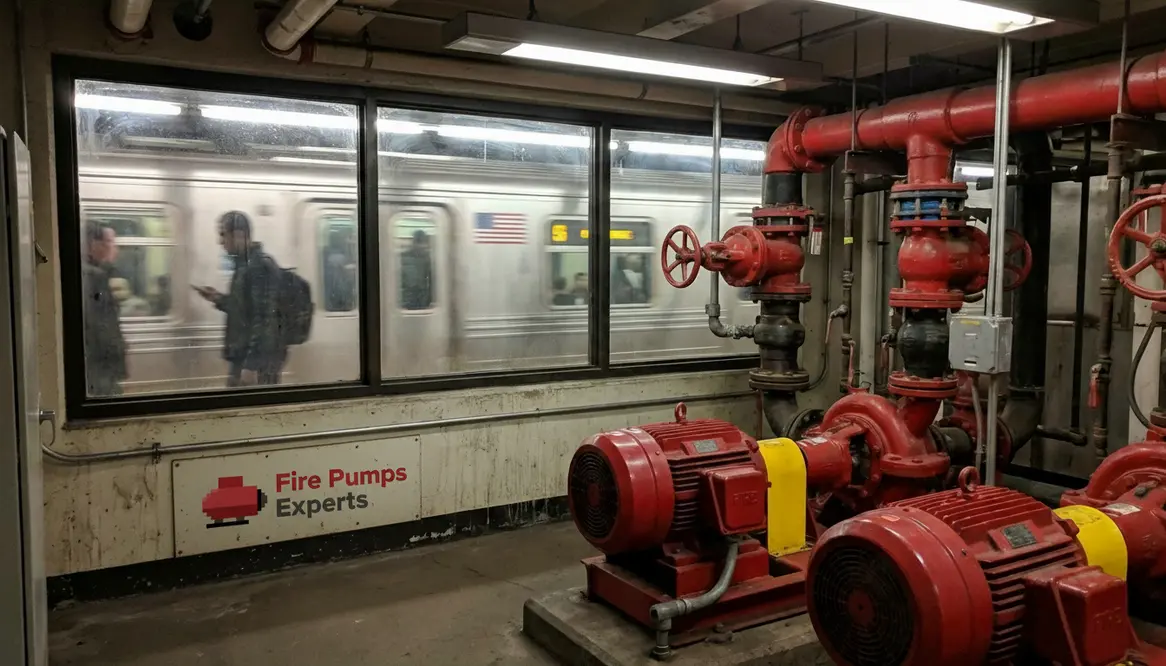
Fire Pump Requirements for Transit Stations Guide
I have always believed that the quiet heroes of our cities are not the ones you see rushing through terminals with rolling luggage. It is the systems behind the walls, humming patiently, waiting for the one moment they are needed. When I talk about Fire Pump Requirements for Transit Stations, I am talking about that silent promise of safety. In massive transportation hubs where thousands pass through every hour, fire protection is not optional. It is engineered certainty. And yes, while it may not sound as thrilling as a blockbuster chase scene, it is the reason everyone makes it home after one.
What Makes Transportation Hubs So Demanding for Fire Protection
Let me paint the scene. A transit station is not just a building. It is a living organism. Trains arrive, buses depart, escalators hum, and crowds ebb and flow like tides. Because of this constant motion, fire risks behave differently here than in standard commercial properties.
For one thing, the sheer scale changes everything. Long platforms, underground tunnels, and multi level terminals create complex fire zones. Additionally, high occupancy means evacuation must be fast and controlled. Therefore, fire pump systems must deliver reliable pressure across vast distances without hesitation.
And then there is the fuel load. Shops, electrical systems, and transit vehicles all contribute to potential hazards. It is not exactly a quiet library, unless your library happens to have trains and coffee kiosks on every corner.
Fire Pump Requirements for Transit Stations in Real World Design
When I approach the design of fire pump systems for these environments, I focus on consistency under pressure. Literally. Fire pumps must maintain steady water flow even when multiple sprinkler zones activate at once.
Codes and standards guide the process, but execution is where the real craft lies. For example, redundancy is not just recommended. It is expected. Backup pumps, secondary power supplies, and fail safe controls ensure that a single failure does not cascade into a larger problem.
Moreover, placement matters. Pumps must be accessible for maintenance yet protected from flooding or structural risks. In underground stations, this becomes especially tricky. It is a bit like placing a heart in a body that never stops running.
Finally, integration with alarm and suppression systems is critical. A fire pump is not a lone hero. It works as part of a coordinated response, triggered instantly and precisely.
How Do Fire Pumps Handle High Occupancy Transit Environments
I get this question a lot, and the answer is both simple and layered. Fire pumps in transit hubs are built for peak demand, not average use. That means they are sized and tested to handle worst case scenarios.
For instance, during a fire event, multiple sprinkler heads may activate across different zones. At the same time, standpipe systems might be in use by first responders. Therefore, the pump must sustain pressure without dropping performance.
Additionally, modern systems often include variable speed drives. These allow pumps to adjust output dynamically, which improves efficiency while maintaining reliability. Think of it as cruise control, but for water pressure in a high stakes environment.
Key Components That Keep Systems Reliable
Core Equipment
- Primary and backup fire pumps
- Diesel or electric drivers
- Jockey pumps for pressure maintenance
- Controller panels for automated response
Supporting Systems
- Dedicated water storage or municipal connections
- Emergency power systems
- Monitoring and alarm integration
- Routine testing and maintenance protocols
Each piece plays a role, and together they create a system that is greater than the sum of its parts. Skip one element, and the whole thing starts to wobble like a table with a missing leg.
Meeting Codes While Planning for the Unexpected
Codes give us the baseline, but real world experience teaches us to expect surprises. Transit stations evolve over time. New shops appear, passenger loads increase, and infrastructure ages.
Therefore, I always recommend designing with flexibility in mind. Oversizing certain components, planning for future expansion, and ensuring easy access for upgrades can save enormous costs later. It is the difference between adapting smoothly and scrambling during a crisis.
Inspections and testing also deserve attention. Regular performance checks ensure that pumps respond instantly when needed. After all, a fire pump that hesitates is about as useful as a superhero who forgot their cape.
Fire Pump Requirements for Transit Stations and Long Term Safety
Over time, the demands on transportation hubs only increase. More passengers, more technology, more complexity. Because of this, fire pump requirements for transit stations must evolve as well.
I see a growing emphasis on smart monitoring systems. These provide real time data on pump performance, alerting teams to issues before they become failures. Additionally, energy efficiency is gaining attention, especially in large commercial and industrial properties where operational costs matter.
Yet, the core principle remains unchanged. Reliability above all else. Because when something goes wrong, there is no room for negotiation.
FAQ
Conclusion
If you are responsible for a transportation hub, then you already understand the stakes. Fire protection is not just another system on a checklist. It is a commitment to safety at scale. I encourage you to evaluate your current setup, align with proven Fire Pump Requirements for Transit Stations, and invest in solutions that will stand the test of time. Because when everything is on the line, reliability should never be a question.
For a deeper technical breakdown of fire pump design, testing, and operation, you can visit https://firepumps.org as part of your reference toolkit while tailoring Fire Pump Requirements for Transit Stations to your specific site.