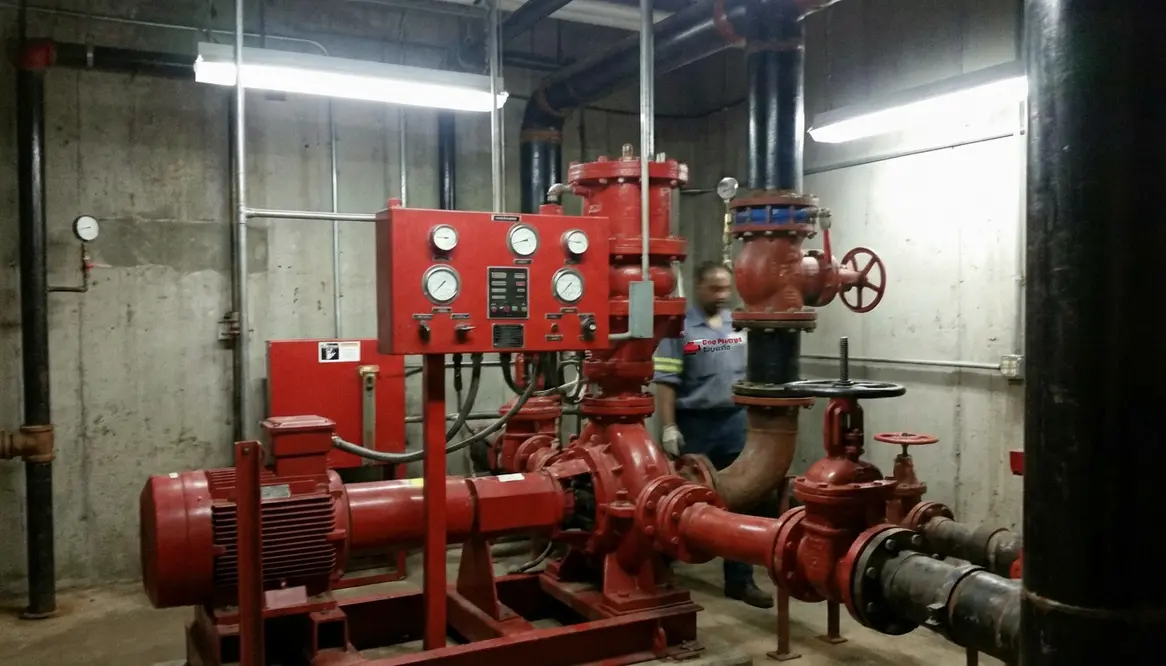
Fire Pump Systems for County Jails Safety
I have spent years around critical infrastructure, and if there is one place where fire safety cannot afford shortcuts, it is inside a detention facility. Lives depend on systems working exactly as designed, every single time. That is why Fire Pump Systems for County Jails sit at the center of serious planning. Within the first few minutes of a fire event, water pressure, response time, and system reliability determine whether a situation is contained or becomes a crisis. And trust me, no one wants a “this could have been prevented” headline attached to their facility.
Detention facilities operate on control, structure, and timing. Fire protection has to respect that reality, not fight it. In an emergency, you are not just moving people; you are coordinating staff, security, and response actions under pressure. A well designed system quietly stands ready in the background until the moment it becomes the most important asset in the building.
Understanding the Unique Risks Inside Detention Facilities
Detention environments are not like office buildings or retail spaces. Movement is controlled, doors are secured, and evacuation is complex. Therefore, I always approach fire safety here with a layered mindset.
Restricted movement and evacuation
First, occupants cannot self evacuate easily. That means suppression systems must act fast, often before staff can respond physically. Staff are responsible for unlocking doors, directing movement, and maintaining order, all while an alarm is sounding and conditions may be deteriorating.
Infrastructure and fuel loads
Materials used in these facilities can range from hardened, vandal resistant finishes to older, more combustible components in legacy areas. Add in electrical loads, kitchen operations, laundry, workshops, and aging infrastructure, and you have a recipe that demands precision and planning instead of wishful thinking.
Moreover, response delays are not just inconvenient, they are dangerous. A few extra seconds can escalate conditions rapidly. Think of it like a suspense movie, except no one enjoys the plot twist when smoke starts filling a secured corridor and doors take time to open.
How Do Fire Pump Systems for County Jails Improve Safety?
Let me answer this plainly. They ensure that water gets where it needs to go, at the pressure required, without hesitation. Sounds simple, right? Yet, behind that simplicity is a finely tuned system that does not care if it is 3 p.m. on a Tuesday or 3 a.m. during a storm.
Maintaining pressure when it matters
When municipal water pressure falls short, which happens more often than people think, a dedicated pump system compensates instantly. As a result, sprinklers and standpipes perform as designed. Without that support, even the best sprinkler layout becomes a polite suggestion rather than a solution.
Fire Pump Systems for County Jails create consistency across the facility, so a remote wing at the end of a long run of pipe receives the same decisive flow as an area near the riser room.
Integration with alarms and monitoring
Additionally, modern systems integrate with alarms and monitoring tools. Staff receive immediate alerts, and maintenance teams can act before small issues grow into large failures. A pressure anomaly or pump fault can trigger investigation long before an emergency exposes the weakness.
It is not flashy technology, but it is dependable, and in this line of work, dependable beats flashy every time.
Designing Fire Protection Systems That Actually Work
I have seen designs that look great on paper but fail in real conditions. So, I focus on practical performance instead of theoretical perfection and make sure Fire Pump Systems for County Jails are matched to the building they protect.
Sizing, redundancy, and layout
Proper sizing matters. Oversized pumps waste energy and strain components, while undersized ones simply cannot keep up. Then, redundancy becomes essential. Backup power and secondary systems ensure continued operation even during outages. Because let us be honest, fires rarely happen at convenient times.
Next, system layout must match the building’s structure. Long corridors, multiple levels, and secured zones require strategic placement of piping and valves. Otherwise, coverage gaps can occur in exactly the places you can least afford them.
| Critical Focus | Why It Matters |
|---|---|
| Water Pressure Stability | Ensures consistent sprinkler performance across all zones |
| Backup Power Integration | Keeps systems running during electrical failure |
| Routine Testing Access | Allows safe and regular inspections without disruption |
| System Monitoring | Provides real time alerts and reduces response time |
Each of these elements works together. Remove one, and the system starts to wobble like a chair missing a leg. It might stand for a while, but no one should be surprised when it eventually collapses at the worst possible moment.
Inspection and Maintenance That Prevents Surprises
I always say that fire protection systems are like gym memberships. They only work if you actually use them. Regular inspection and testing keep everything ready instead of merely installed.
Testing and observation
For detention facilities, I recommend scheduled flow tests, pressure checks, and control panel diagnostics. In addition, staff should understand how to recognize warning signs early. A strange vibration, a delayed startup, or a pressure drop should never be ignored or saved for “later.”
Documentation and trends
Furthermore, documentation matters. Clear records help identify patterns and prevent repeat issues. That slightly low pressure reading that appears every quarter may be hinting at a future failure. Paperwork may not be exciting, but it is far better than explaining a failure after the fact.
Fire Pump Systems for County Jails and Compliance Standards
Compliance is not just about passing inspections. It is about meeting standards that exist for a reason. NFPA guidelines and local codes outline the minimum requirements, but I always aim beyond minimum, especially when dealing with Fire Pump Systems for County Jails that protect people who cannot simply walk outside when something goes wrong.
Because detention facilities house vulnerable populations, expectations are higher. Therefore, systems must perform under stress, not just during routine checks. Working with experienced providers ensures that installations meet both regulatory and operational demands.
And let me be clear, cutting corners here is like skipping the seatbelt because you are “just going down the street.” It only feels fine until it really is not.
If you want to see how serious facilities treat this topic, resources such as https://firepumps.org highlight just how much engineering, code interpretation, and testing stand behind a system that looks deceptively simple from the outside.
FAQ: Fire Safety in Detention Facilities
How often should fire pump systems be tested?
Weekly visual checks and monthly operational tests are standard, with annual performance testing. The key is consistency and clear documentation, not last minute scrambling before an inspection.
Do detention facilities need backup power for fire pumps?
Yes, backup power ensures operation during outages and is often required by code. A power failure should never silently take your primary fire protection asset offline.
Can low water pressure affect fire safety systems?
Absolutely. Without adequate pressure, sprinklers and standpipes may fail to control a fire. That is exactly why Fire Pump Systems for County Jails are treated as critical infrastructure instead of optional upgrades.
Who should handle installation and maintenance?
Certified professionals with experience in commercial and industrial systems should always manage these tasks. Detention facilities have too many unique challenges to trust guesswork or generic “good enough” installation practices.
Conclusion
Fire safety in detention facilities is not a box to check. It is a responsibility that demands precision, planning, and the right systems in place. If you are managing or upgrading a facility, now is the time to evaluate performance, reliability, and compliance. Work with experts who understand the stakes and deliver systems that perform without hesitation.
When Fire Pump Systems for County Jails are designed, installed, tested, and maintained correctly, they become the quiet partner that shows up in the first crucial seconds of an emergency. Because when it comes to safety, “good enough” is never good enough. Let us build something that works when it matters most.