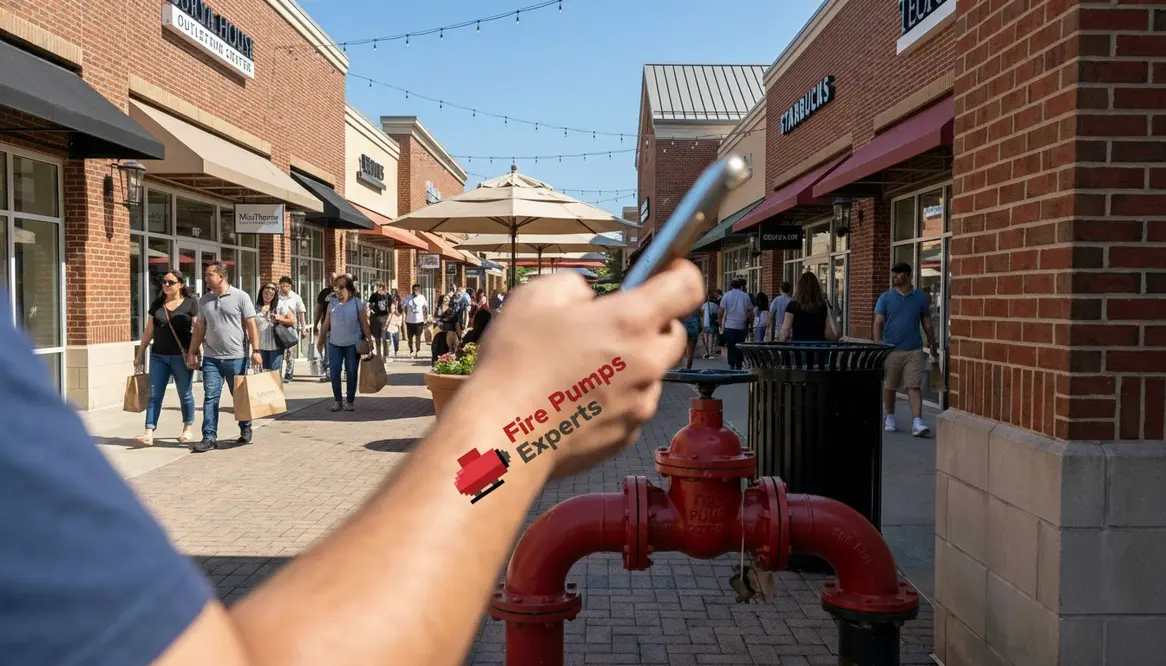
Outlet Center Fire Pump Requirements for Safety
I have walked through enough destination shopping properties to know one thing for certain. They are not just places to shop. They are experiences. They are environments where thousands of people gather, linger, and lose track of time. And that is exactly why outlet center fire pump requirements matter more than most people realize. Within the first few moments of a fire emergency, the right system does not just respond. It leads. It directs. It protects. So when I talk about fire protection in these large scale commercial spaces, I am not talking about boxes to check. I am talking about systems that quietly stand guard like a seasoned night watchman who has seen it all and is never caught off guard.
What makes destination shopping properties uniquely vulnerable
Let me paint the picture. You have sprawling layouts, open air corridors, mixed use spaces, restaurants, entertainment venues, and crowds that rival a concert on a Friday night. Now add in seasonal decor, temporary kiosks, and constant foot traffic. Suddenly, fire protection becomes less about simple coverage and more about intelligent coordination.
Because of this complexity, I always emphasize that traditional systems alone are not enough. Instead, these properties demand layered protection. Sprinklers, alarms, and most importantly, robust fire pump systems that meet outlet center fire pump requirements must work together seamlessly. Otherwise, it is like assembling the Avengers and forgetting Iron Man. Sure, you have a team, but you are missing a critical piece.
Why outlet fire pump design is a different animal
Destination properties are rarely simple rectangles on a plan. They twist, expand, and layer uses on top of each other. That means the distance from the fire pump to the most remote sprinkler head is often longer than many designers are comfortable with. Without a system tailored around outlet center fire pump requirements, you end up with beautiful architecture wrapped around underperforming protection.
How do outlet center fire pump requirements impact safety planning
In simple terms, these requirements define how water moves when everything is on the line. I have seen properties with impressive design fall short because they underestimated demand. A destination shopping center is not a small retail strip. It is a high demand environment where water pressure must remain consistent across large distances.
Therefore, I always advise planning for peak load scenarios, not average ones. During holidays or major events, system demand spikes. Fire pumps must deliver enough pressure and flow to support multiple sprinkler zones at once. If they cannot, the system becomes reactive instead of proactive, and that is a risk no operator should accept.
Additionally, redundancy matters. Backup power, secondary pumps, and smart controls ensure that even when one component fails, the system continues to perform. It is a bit like having a backup generator during a blackout. You do not appreciate it until the lights stay on while everything else goes dark.
When outlet center fire pump requirements are built into planning from day one, you get capacity that feels almost boring during normal operation and absolutely essential when everything goes sideways.
Design strategies that actually work in large commercial properties
Now, let us talk about what separates a good system from a great one. I focus on design that anticipates movement, density, and change. These properties evolve constantly, so fire protection must adapt just as quickly.
Hydraulic precision
I ensure calculations account for long pipe runs and elevation changes. Without this, pressure drops become inevitable.
Zoned protection
Dividing the property into strategic zones allows better control and faster response during an incident.
Smart monitoring
Modern systems provide real time data. This allows teams to identify issues before they escalate.
Future ready capacity
I always plan for expansion. Because if there is one thing developers love, it is adding more square footage.
As a result, these strategies create a system that does not just meet code. It performs under pressure. Literally.
Maintenance is where most systems quietly fail
Here is the part no one likes to talk about. Even the best system will fail if it is ignored. Fire pumps require regular testing, inspection, and calibration. Yet I have seen properties treat maintenance like that gym membership we all swear we will use more often.
However, consistency changes everything. Weekly churn tests, monthly inspections, and annual performance evaluations keep systems ready. In addition, trained personnel must understand how the system behaves. Because when something sounds off, it usually is.
Moreover, documentation matters. Clear records ensure compliance and provide insight into long term performance. Without it, you are guessing. And guessing has no place in fire protection.
The properties that truly respect outlet center fire pump requirements do not think of maintenance as a chore. They treat it as a standing appointment with their most critical life safety system.
Integrating fire protection with overall property operations
I often remind property managers that fire protection is not an isolated system. It is part of the larger operational ecosystem. Security teams, facility managers, and emergency responders must all work in sync.
For example, coordinated response plans ensure that alarms trigger immediate action, not confusion. Training staff to understand evacuation routes and system alerts reduces panic. And let us be honest, nothing spreads faster than confusion in a crowded mall except maybe a viral TikTok.
Therefore, integration turns systems into solutions. It transforms equipment into strategy. And that is where real safety lives.
Why compliance alone is not enough
Meeting code is the baseline. It is the starting point, not the finish line. I have worked with properties that technically met requirements but still faced vulnerabilities due to poor design or lack of foresight.
So I push for performance driven design. This means evaluating how systems behave in real world scenarios, not just on paper. Fire pump systems that align with outlet center fire pump requirements should exceed expectations, not merely satisfy them.
Because at the end of the day, safety is not about passing inspection. It is about protecting lives, assets, and reputation. And that is a responsibility I take seriously every single time.
For teams that want to benchmark their systems against best practices, resources like https://www.firepumps.org can help frame what “good” looks like in the context of outlet center fire pump requirements and modern risk profiles.
FAQ
Conclusion
When I look at destination shopping properties, I see more than architecture and retail. I see responsibility. The right fire protection strategy, built around strong fire pump performance, keeps everything running safely behind the scenes. If you are managing or developing a large commercial property, now is the time to act. Evaluate your systems, strengthen your design, and partner with experts who understand the stakes. Because safety is not optional. It is essential.