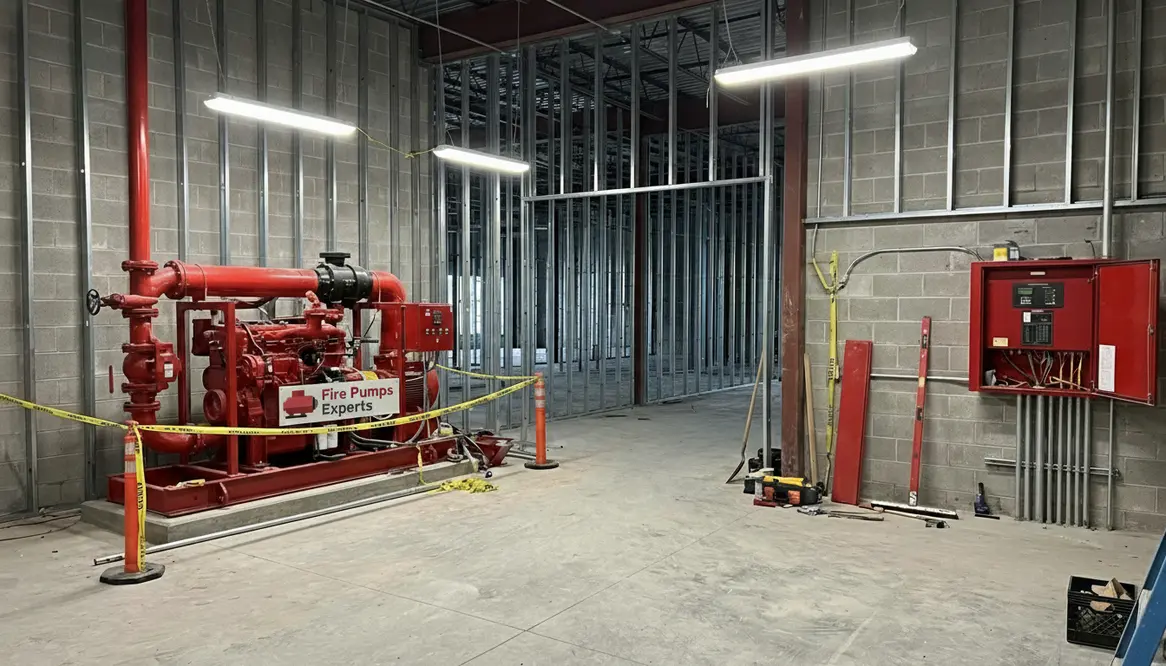
Shell Retail Fire Pump Requirements Guide
I have walked more retail shells than I can count, and I can tell you this with calm certainty: if you miss the shell retail fire pump requirements, everything else becomes a very expensive redo. Before tenants bring in racks, lights, and dreams of grand openings, the backbone of fire protection has to be ready. Not flashy. Not glamorous. But absolutely essential. Think of it as the bass line in a great song. You may not notice it at first, but without it, the whole thing falls apart.
What fire pump setup do I need for a retail shell?
Right out of the gate, I focus on demand. Every retail shell sits in a different ecosystem. Some are part of sprawling shopping centers. Others stand alone like a lone ranger in a sea of parking spaces. Either way, I calculate the required flow and pressure based on the future tenant mix, even if those tenants are still a mystery.
Because here is the truth. Designing only for today is like buying pants for a child and expecting them to fit in five years. It will not end well.
So I plan for flexibility. I size fire pumps to handle a range of sprinkler system demands, including potential high hazard tenants. This approach avoids costly upgrades later. And yes, future me always appreciates present me for that.
Planning for tenant uncertainty without overbuilding
Now, there is a fine line between being prepared and going full doomsday prepper. I do not oversize systems just to sleep better at night. Instead, I rely on code analysis, local authority requirements, and smart projections.
For example, if a retail shell could become a restaurant, gym, or big box store, I account for higher water demand scenarios. However, I avoid designing for extreme industrial use unless it is likely. Otherwise, you end up with a system that costs more to install and maintain than necessary.
In other words, I prepare for Batman, not Godzilla.
Core components that make or break performance
Every fire pump system has a few critical pieces. Miss one, and you are playing with fire. Literally.
Here is what I always prioritize:
- Reliable water supply that supports peak demand without pressure drops
- Properly sized fire pump aligned with calculated system needs
- Controller and power source that ensure operation during emergencies
- Test header and flow testing access for ongoing verification
- Room layout and ventilation that meet code and allow maintenance access
Additionally, I make sure the system is easy to service. Because when something goes wrong, and it will at some point, no one wants to crawl through a maze of pipes like they are auditioning for an action movie.
Shell retail fire pump requirements and code alignment
Codes are not suggestions. They are the rulebook, and I follow them closely. However, I also read between the lines. Local jurisdictions often interpret requirements differently, especially for commercial and large scale retail properties.
I coordinate early with fire marshals and inspectors. This step saves time and prevents redesigns. It also builds trust, which goes a long way when approvals are on the line.
Furthermore, I ensure compliance with NFPA standards and local amendments. The shell retail fire pump requirements are not just about installation. They cover testing, accessibility, and long term reliability.
Because passing inspection once is good. Passing every inspection after that is better.
Design decisions that affect long term cost
Let me say this clearly. Cheap upfront decisions often become expensive lessons. I have seen developers cut corners on pump sizing, power redundancy, or layout, only to pay double later.
Smart investments
- Diesel backup for power loss scenarios
- Accessible pump rooms for easy service
- Scalable system design for tenant changes
- Quality components with proven performance
Costly mistakes
- Undersized pumps requiring replacement
- Poor layout causing inspection failures
- Limited capacity for future tenants
- Ignoring maintenance access needs
As a result, I always weigh first cost against lifecycle cost. It is not just about opening day. It is about year five, year ten, and beyond.
Coordination with other building systems
A fire pump does not live in isolation. It interacts with electrical systems, water supply infrastructure, and building layouts. So I coordinate closely with engineers, contractors, and architects.
For instance, power requirements must align with available electrical service. Pump rooms must fit within the building footprint without compromising other functions. And water supply must support both domestic and fire protection needs.
Meanwhile, I keep communication flowing. Because when teams stop talking, problems start multiplying. And nobody wants a surprise during final inspection. That is the kind of plot twist no one enjoys.
FAQ about retail shell fire pump planning
Do all retail shells need a fire pump?
No. It depends on available water pressure and system demand. If city supply is insufficient, a pump becomes necessary.
When should I design the fire pump system?
At the earliest design stage. Early planning prevents costly changes later.
Can I wait until tenants are confirmed?
You can, but it often leads to delays and redesigns. Planning ahead is more efficient.
What codes apply to fire pump systems?
NFPA standards and local fire codes govern design, installation, and testing.
How do I future proof my system?
Design for a range of tenant types and allow capacity for higher demand scenarios.
Final thoughts that actually matter
If you are preparing a retail shell, do not treat fire protection like an afterthought. The right fire pump strategy supports safety, compliance, and long term value. More importantly, it keeps your project moving without costly surprises. So if you are planning your next commercial development, take a closer look at your system now. Work with experts who understand the stakes, align with shell retail fire pump requirements from day one, and build it right the first time. Your future self will thank you.