Brazil Fire Pump Compliance for Buildings Guide
Brazil Fire Pump Compliance Guide for Buildings
When I look at Brazil compliance for fire pump systems, I see more than a rulebook. I see the quiet machinery that helps keep a commercial tower, warehouse, or industrial plant ready when the pressure drops and the stakes rise. And yes, nobody throws a party for a fire pump room. Still, these systems matter. In Brazil, the right setup protects major properties, supports legal approval, and keeps a building from turning into a very expensive lesson in regret. So, let me walk you through the parts that matter most, in plain language, with the kind of detail building owners and facility teams actually need.
What Brazil fire pump compliance means for major buildings
In Brazil, fire pump rules support the fire protection system in large commercial and industrial buildings. I focus on the pump as the heart of the water supply for sprinklers, hydrants, and hose reels. If that heart fails, the whole system starts acting like a phone at 2 percent battery. Not ideal.
For major properties, compliance usually means the pump system must match the building risk, water demand, and local fire code needs. I always treat this as a full system issue, not a single equipment purchase. That means the tank, pump, valves, power source, piping, and controls all need to work together. If one part is weak, the rest cannot save the day by sheer optimism.
Also, I keep in mind that local authorities and fire departments may ask for proof during review, inspection, or occupancy approval. So, I plan for paperwork as carefully as I plan for hardware. That is not glamorous, but neither is explaining why the building failed a safety check.
How I check fire pump design and installation
I start with the building use. A shopping center, logistics hub, data center, and factory do not share the same fire load. Therefore, I size the system around real demand, not guesswork. I check flow, pressure, elevation, and the number of devices the pump must support. Then I verify that the pump curve fits the system curve, because the pump should not fight the building like a villain in a reboot nobody asked for.
Design point
- Flow and pressure need to match the building risk and water demand
- Water source must support the full required runtime
- Pump type should suit the facility layout and duty level
- Controls must allow safe start and monitoring
Installation point
- Room access must allow service and inspection
- Piping must stay secure and properly supported
- Valves and gauges must remain visible and usable
- Power supply must stay reliable under emergency conditions
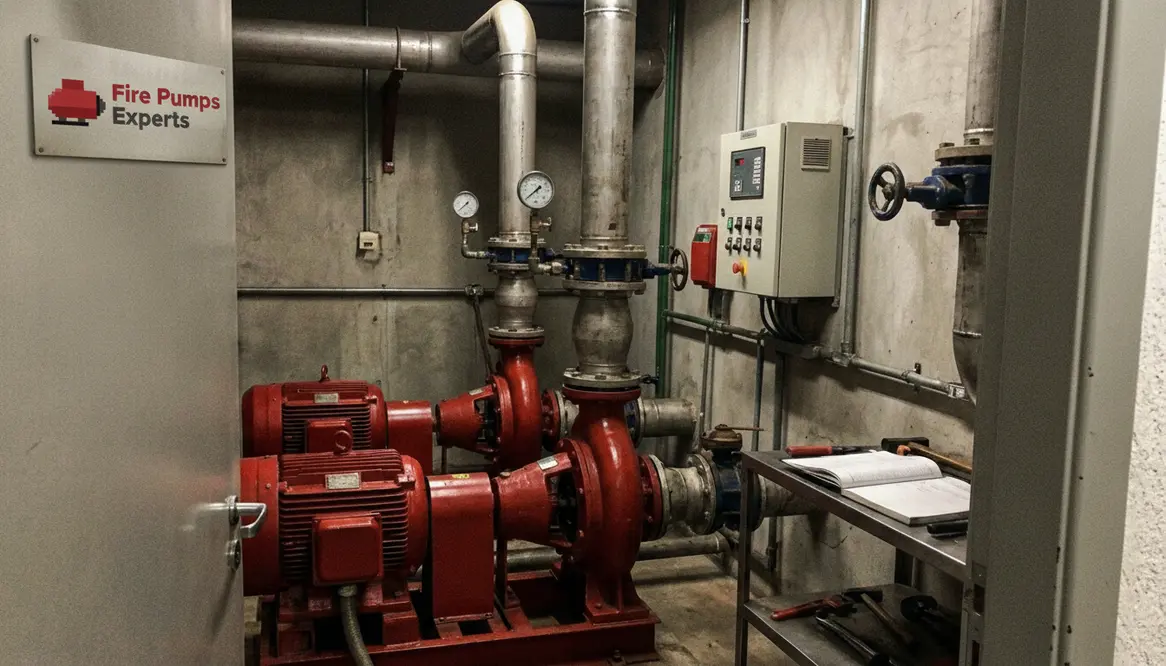
I also check the room itself. Good ventilation, drainage, lighting, and safe access all matter. In addition, I make sure the setup allows maintenance teams to reach parts without turning the room into a game of Twister.
Brazil compliance checks I never skip
Once the system is installed, I move to compliance verification. This part is where many projects win or lose time. So, I review the documents, labels, test records, and maintenance plan. If the building aims for approval, every detail should line up.
I look for the following:
- Correct pump selection for the project type
- Approved drawings and technical reports
- Reliable power arrangement, including backup where required
- Proper control panel function and alarm response
- Clear test and inspection logs
I also check whether the system follows the fire protection standard used for the site and the local authority guidance that applies to the building. Since this guide focuses on commercial and industrial facilities and major properties, I pay close attention to higher risk operations, larger water needs, and longer response time demands. A small office is one story. A warehouse full of inventory is another universe entirely.
For deeper guidance, I recommend reviewing the commercial fire pump compliance resource for major properties. It helps when you want a practical view of system planning, testing, and service support for large buildings.
Maintenance and testing for long term approval
Compliance does not end at installation. In fact, that is where the real work begins. I treat fire pump maintenance like dental care. You do not wait for the emergency to discover something is loose, broken, or making a strange noise that sounds like a haunted espresso machine.
Regular testing should confirm that the pump starts, runs, and delivers the right pressure. I also check suction conditions, discharge pressure, controller operation, and any sign of wear, vibration, or leaks. In addition, I review the water source and power supply on a routine basis, because a perfect pump cannot help if the tank runs low or the power system folds under stress.
For commercial and industrial buildings, I suggest a clear schedule with daily, weekly, monthly, and annual tasks. That schedule should match the site risk and the authority rules. Then I keep records in a clean file, both paper and digital if possible, so the building team can prove the system stayed in shape. Inspectors love records almost as much as people love saying, “It was working last month.” Solid documentation supports Brazil compliance over the life of the building.
Quick answers on Brazil compliance and fire pumps
Wrapping up your path to Brazil compliance
When I handle Brazil fire pump compliance for major buildings, I treat it as a mission, not a checkbox. The right design, clean installation, and steady testing protect people, assets, and operations. So, if your commercial or industrial facility needs a stronger path to approval, now is the time to act. Review your system, confirm your records, and make sure every part is ready before the pressure test becomes the real test. One smart step today can spare a long headache tomorrow while keeping your Brazil compliance record solid for the long haul.