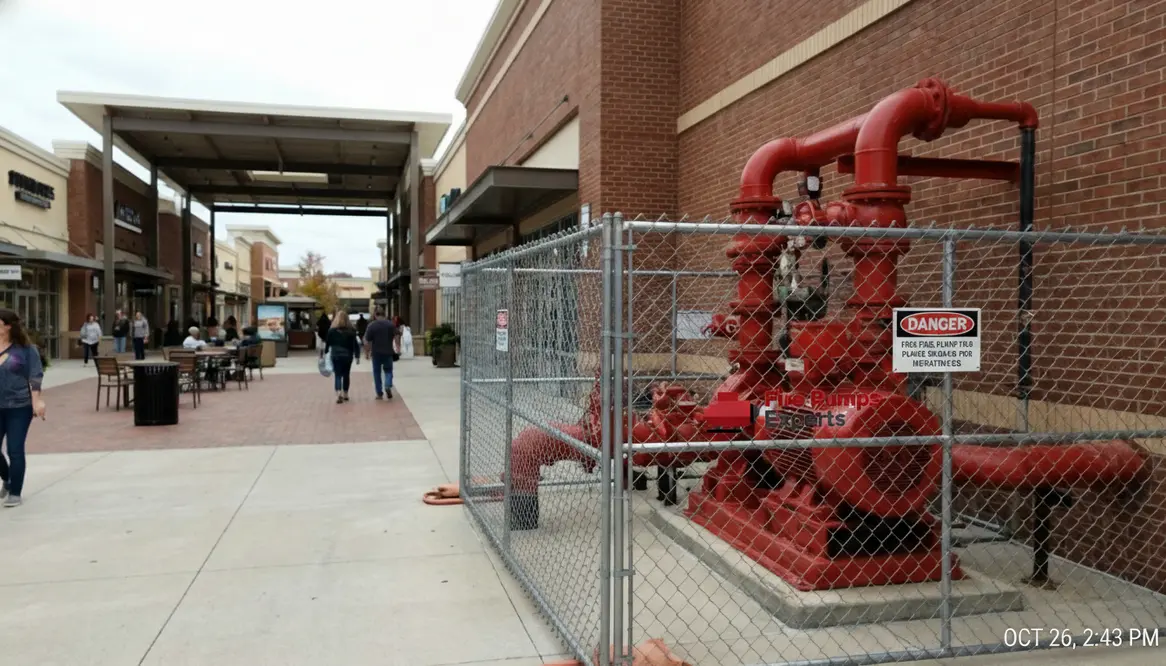
Lifestyle Center Fire Pump Systems Design Guide
I have spent years around commercial properties where safety is not a feature, it is a promise. And when I talk about lifestyle center fire pump systems, I am not just naming equipment. I am talking about the quiet guardians behind open air retail developments. These are the spaces where people stroll, shop, sip coffee, and occasionally wonder why parking is always full on a Tuesday afternoon. Beneath that calm surface, however, fire protection design works with precision and purpose.
So today, I will walk you through how I approach fire pump design for these sprawling, complex environments. And yes, I will keep it informative, but I might also keep you awake with a few well placed jokes. Think less textbook, more behind the scenes director commentary.
How do I design fire pump systems for open air retail developments?
I start with a simple truth. Open air does not mean low risk. In fact, these developments often spread across large footprints with mixed occupancy types. Restaurants, retail, entertainment venues, and parking structures all create unique fire protection demands.
Because of that, I design with hydraulic balance in mind. Water must travel long distances without losing pressure. Therefore, I carefully evaluate elevation changes, pipe sizing, and flow demand. Additionally, I account for peak usage scenarios. A fire system cannot hesitate like someone choosing a Netflix show. It must respond instantly.
Moreover, I integrate redundancy. If one component fails, another steps in without drama. That is the difference between a system that exists and one that performs.
Understanding the demands of lifestyle center fire pump systems
When I work on lifestyle center fire pump systems, I treat them as ecosystems. Each building may operate independently, yet they rely on a shared infrastructure. Consequently, coordination becomes everything.
Key factors I evaluate
- Long horizontal pipe runs that impact pressure stability
- Multiple hazard classifications within a single development
- Outdoor exposure that affects equipment durability
Furthermore, I factor in future expansion. These developments rarely stay static. One day it is a boutique store, the next it is a high occupancy dining space with open flames and ambitious chefs. So I design systems that can grow without requiring a complete overhaul. Think of it as planning for sequels before the first movie even premieres.
That forward thinking approach is especially important for lifestyle center fire pump systems because ownership, tenant mix, and building layouts can shift over time while the core infrastructure needs to stay reliable.
Balancing performance and efficiency in pump selection
Choosing the right fire pump is not about picking the biggest unit available. If that were the case, we would all be driving monster trucks to the grocery store. Instead, I match pump performance to calculated demand.
Performance focus
I ensure the pump meets required flow and pressure at the most remote point. Additionally, I validate that it can sustain operation under worst case conditions. Reliability always comes first.
Efficiency focus
At the same time, I avoid oversizing. An oversized pump can create pressure issues and increase maintenance needs. Therefore, I fine tune the selection to balance strength with control.
As a result, the system operates smoothly without unnecessary strain. It is a bit like casting the right actor for a role. You want presence, not chaos.
When done right, lifestyle center fire pump systems deliver steady, predictable water supply without turning routine testing into a spectacle or creating pressure spikes that bother downstream equipment.
What challenges come with open air environments?
Weather and environmental exposure
Open air retail developments introduce variables that indoor systems never face. Weather is the obvious one. Heat, cold, humidity, and debris all affect system components over time.
Because of this, I prioritize protective enclosures and corrosion resistant materials. Additionally, I design drainage and ventilation carefully. Water should flow where it is needed, not pool where it should not be.
Access, user experience, and noise
Another challenge is accessibility. Fire department connections must be easy to reach, even during peak shopping hours. And if you have ever tried to navigate a crowded parking lot during a sale event, you understand why that matters.
Finally, I address noise and aesthetics. These developments are designed for experience. No one wants a fire pump system that sounds like a spaceship taking off behind their favorite restaurant. So I work to minimize disruption while maintaining full performance.
Thoughtful placement, architectural screening, and acoustical considerations help lifestyle center fire pump systems stay in the background where they belong, quietly doing the job without becoming the main attraction.
Integrating fire pumps with broader safety systems
A fire pump does not work alone. It is part of a larger network that includes sprinklers, standpipes, alarms, and monitoring systems. Therefore, integration is key.
Coordination and communication
I coordinate closely with engineers and contractors to ensure seamless communication between systems. For example, when a sprinkler activates, the pump must respond instantly and consistently. There is no room for miscommunication here. This is not a group project where someone forgets their part.
Smart monitoring and proactive maintenance
Additionally, I incorporate smart monitoring tools. These allow facility managers to track performance and identify issues early. As a result, maintenance becomes proactive instead of reactive.
For owners and operators, especially in larger properties or multi site portfolios, tying lifestyle center fire pump systems into a central monitoring platform can simplify compliance tracking and trend analysis across locations.
Design priorities for lifestyle center fire pump systems
Reliability
- Redundant components where needed
- Robust power supply strategies
- Clear testing and maintenance access
Flexibility
- Capacity for tenant and use changes
- Room for future pipe and equipment additions
- Controls that adapt to evolving code requirements
Blend those with thoughtful aesthetics and you get lifestyle center fire pump systems that protect people and property while staying neatly behind the curtain.
FAQ about fire pump design for open air retail
Questions come up quickly when planning or modernizing lifestyle center fire pump systems, especially when balancing budgets, tenant expectations, and evolving codes.
Conclusion
Designing fire pump systems for open air retail is not just engineering. It is foresight, coordination, and a commitment to safety that operates quietly in the background. If you are planning or upgrading a commercial development, I can help you build a system that performs when it matters most. Reach out today and let us create a solution that protects your property, your tenants, and every visitor who walks through your space while keeping your lifestyle center fire pump systems ready for the moment they are needed.