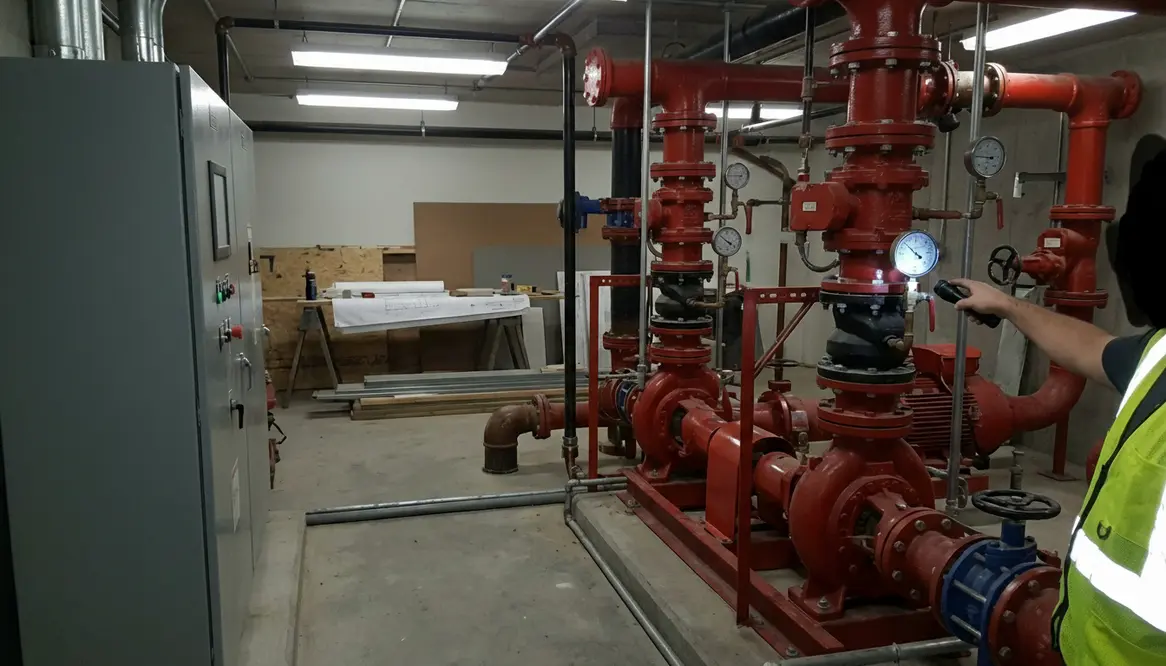
Multifamily Expansion Fire Pump Systems Guide
I have watched buildings rise like quiet giants, stretching higher, housing more lives, more stories, more risk. And as these residential properties grow into large scale multifamily structures, one truth settles in with calm certainty. Fire protection must grow with them. That is where multifamily expansion fire pump systems step in, not as an afterthought, but as a backbone. They are the steady pulse behind the walls, ready when everything else fails. And yes, much like a good movie soundtrack, you only notice them when they are missing. That is not a situation anyone wants.
Why fire protection must evolve as properties scale
As buildings expand, the fire risk does not just increase, it multiplies. More floors mean more vertical pressure demands. More units mean more occupants, and more occupants mean greater evacuation complexity. Therefore, a standard system that once worked fine can quickly become overwhelmed.
In my experience, developers often focus on visible upgrades like amenities or design. However, behind the scenes, fire protection requires equal attention. Because when a system fails under pressure, literally and figuratively, the consequences move fast. Consequently, scaling systems such as advanced fire pump solutions becomes less of an option and more of a necessity.
How do multifamily expansion fire pump systems support larger buildings?
Let me answer this directly, because this is what most people want to know. These systems ensure consistent water pressure across every level of a growing property. Whether it is the ground floor or the top floor penthouse, the system delivers reliable flow when it matters most.
Additionally, they adapt. As buildings expand in phases, these systems can scale alongside them. That means fewer costly overhauls later. Think of it like upgrading from a flip phone to a smartphone before you are forced to. It just makes life easier.
Key Benefits
- Maintains steady water pressure at all elevations
- Supports phased building expansion
- Reduces long term retrofit costs
- Enhances system reliability under peak demand
Operational Impact
- Faster emergency response performance
- Improved compliance with fire codes
- Reduced strain on municipal water supply
- Greater confidence for property stakeholders
Design considerations for high density residential structures
Now, here is where things get interesting. Designing fire protection for large residential properties is not just about installing bigger equipment. It is about precision. Every pipe diameter, every pressure calculation, every pump capacity must align with the building’s footprint and future growth.
Moreover, engineers must consider redundancy. Because if one component fails, another must take its place without hesitation. This is not the time for a system to say, “I need a minute.” Emergencies rarely wait politely.
Equally important, placement matters. Pump rooms must remain accessible yet protected. Controls must be intuitive, because during an emergency, clarity beats complexity every single time.
Compliance, codes, and the reality of inspections
Fire protection is not just about performance. It is also about meeting strict regulatory standards. Local and national fire codes evolve as buildings become more complex. Therefore, systems must stay ahead of those requirements.
Inspections are not simply checkboxes. They are moments of truth. Inspectors will test pressure, flow rates, and system response times. And if something falls short, the consequences can delay occupancy or lead to costly corrections.
That is why integrating scalable fire pump solutions early in the design phase pays off. It reduces surprises later. And in this line of work, fewer surprises are always welcome.
Future proofing fire protection in expanding properties
Let me paint a picture. A property starts with two buildings. Then it grows to four. Then six. Before long, it resembles a small city. Without a scalable fire protection plan, each expansion becomes harder to support safely.
However, when systems are designed with growth in mind, expansion becomes smoother. Multifamily expansion fire pump systems allow property owners to extend coverage without tearing apart existing infrastructure. That means less disruption, lower costs, and better continuity.
And honestly, in a world where construction timelines already feel like a suspense thriller, anything that reduces delays deserves applause.
For owners and managers planning long term growth, multifamily expansion fire pump systems are not just equipment choices; they are strategic decisions. The right configuration supports phased development, helps keep insurance conversations sane, and reassures residents that safety is being taken seriously even as the skyline shifts around them.
Practical planning tips for multifamily expansion fire pump systems
Start with a long horizon
If the project has even a whisper of future towers, parking structures, or additional wings, that needs to show up in the hydraulic calculations. The best multifamily expansion fire pump systems are sized not just for day one, but for the fully built out site plan.
Coordinate early with the fire marshal
Too many teams treat the authority having jurisdiction as someone who appears at the end to hand out approvals. Bringing them into the conversation early can clarify expectations about pump sizing, test header locations, and future tie ins, saving a stack of revisions later.
Document everything like someone else will inherit it
Turnover happens. Clear as built drawings, sequences of operation, and testing logs make it much easier for the next facilities team to maintain and upgrade the system without unpleasant surprises behind every access panel.
FAQ
Conclusion
Growth is inevitable for successful properties, but risk does not have to grow with it. With the right fire protection strategy, you can scale confidently and safely. If you are planning expansion or managing a large residential complex, now is the time to invest in systems that keep pace with your vision. Explore advanced solutions that protect both your structure and the people inside it, because peace of mind should always be part of the blueprint.