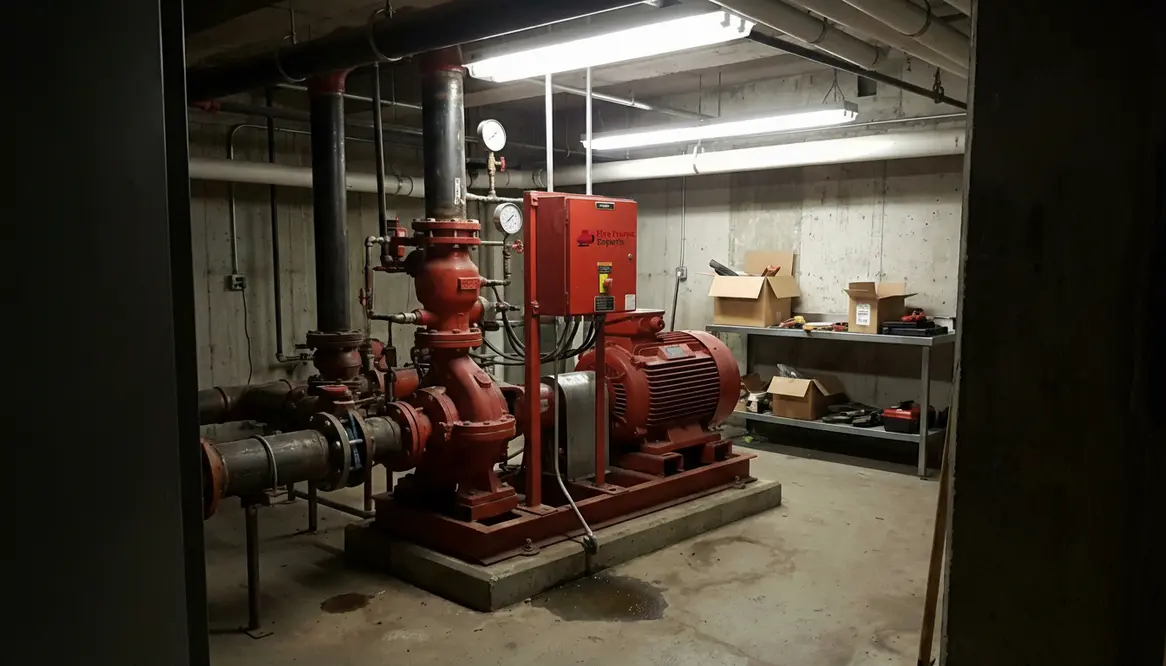
Hotel to Mixed Use Fire Pump Requirements Guide
I have seen plenty of buildings reinvent themselves. Old hotels become vibrant mixed use hubs with offices, retail, and residential spaces layered together like a well written plot twist. However, once you start digging into hotel to mixed use fire pump requirements, the story gets serious fast. Fire protection is not something you casually “remodel.” It demands precision, foresight, and a bit of respect for physics. And yes, a fire pump will absolutely remind you who is in charge if you ignore it.
So let’s walk through what really happens when a property changes its identity and what that means for fire pumps in commercial and industrial scale buildings.
What changes when a hotel becomes mixed use from a fire pump perspective?
Right away, the demand profile shifts. Hotels typically have predictable water flow needs tied to guest rooms and corridors. However, once you introduce retail kitchens, office spaces, or even light industrial tenants, the system no longer plays by the same rules.
As a result, I often need to reassess flow and pressure requirements entirely. Mixed use spaces bring varied hazard classifications under one roof. That means the fire pump must support different sprinkler demands simultaneously, not just sequentially. Think of it like upgrading from serving coffee to running a full buffet during rush hour.
Additionally, local codes may require higher redundancy or updated compliance standards. Therefore, what worked before may now fall short without upgrades or complete replacement.
Understanding hotel to mixed use fire pump requirements in real projects
When I evaluate these conversions, I start with a simple truth. The original system was never designed for the new reality. That does not mean it is useless, but it does mean it needs a hard look.
Capacity and pressure
First, I examine capacity. Many existing pumps lack the horsepower to handle increased density and hazard levels. Then, I check pressure curves. Mixed use layouts often introduce vertical and horizontal expansion, which can strain older systems.
Power and infrastructure
Moreover, electrical infrastructure becomes part of the conversation. Fire pumps rely on stable and sufficient power. If the building upgrades tenant spaces but ignores electrical support, the pump becomes a very expensive decoration.
Codes and inspections
Finally, I verify compliance. Codes evolve. What passed inspection ten years ago might not survive today’s standards. And inspectors tend to notice things. They always do.
Key design shifts I focus on during repurposing
As I move deeper into a project, several design factors demand attention. Each one directly affects performance and safety. This is where hotel to mixed use fire pump requirements become very real on the drawing board and in the mechanical room.
Hydraulic demand recalculation
Therefore, I recalculate the full system demand based on new occupancy types. This step is non negotiable.
System zoning
Mixed use buildings often require separate zones. Consequently, I ensure the fire pump can handle multiple zones without pressure imbalance.
Redundancy and reliability
In larger commercial properties, backup systems are often required. So I plan for secondary pumps or emergency power sources.
Controller and monitoring upgrades
Modern systems benefit from smarter controls. In addition, remote monitoring helps facility managers respond faster.
Comparing original hotel and mixed use setups
Original Hotel Setup
Consistent occupancy
Lower hazard levels
Simpler zoning
Predictable demand
Repurposed Mixed Use Setup
Variable occupancy types
Multiple hazard classifications
Complex multi zone layouts
Fluctuating peak demand
It is like upgrading from a quiet acoustic set to a full stadium concert. The equipment needs to keep up, and hotel to mixed use fire pump requirements make sure the sound system – in this case, the fire protection system – does not cut out during the headliner.
Common pitfalls I see in commercial conversions
Now, here is where things get interesting and occasionally a bit painful. I have seen projects try to “make it work” with existing fire pumps that clearly cannot handle the new load.
Undersized or mismatched pumps
For example, some developers assume minor tweaks will do the trick. However, undersized pumps lead to insufficient pressure during peak demand. That is not just a technical issue. It is a liability waiting to happen.
Ignoring system integration
Another frequent issue involves ignoring system integration. Fire pumps do not operate in isolation. They depend on piping, valves, power, and controls. If one piece lags behind, the whole system suffers.
Missing documentation
And then there is the classic oversight. Documentation. Without accurate records of upgrades, inspections become a guessing game. Inspectors are not fans of guessing games.
How I approach compliance and long term performance
I treat compliance as a baseline, not a finish line. Meeting code is essential, but performance over time matters just as much.
So, I prioritize durability and scalability. Mixed use buildings evolve. Tenants change. Demand shifts. Therefore, I design systems that can adapt without requiring a complete overhaul every few years.
In addition, I emphasize routine testing and maintenance planning. A fire pump that works perfectly on day one means very little if it fails five years later due to neglect.
And yes, I have had conversations where someone says, “We will deal with it later.” That strategy works great for streaming shows, not for fire protection systems. Planning early for hotel to mixed use fire pump requirements avoids those late night panic calls when permits, inspectors, and tenants all converge at once.
FAQ
Conclusion
When I look at repurposed buildings, I see opportunity paired with responsibility. Fire pumps sit quietly behind the scenes, yet they carry the weight of safety for everyone inside. If you are navigating a conversion and want clarity on hotel to mixed use fire pump requirements, now is the time to act. Evaluate, upgrade, and plan with intent. Because when the system is called into action, it should perform flawlessly, not hesitate like a rebooting laptop.