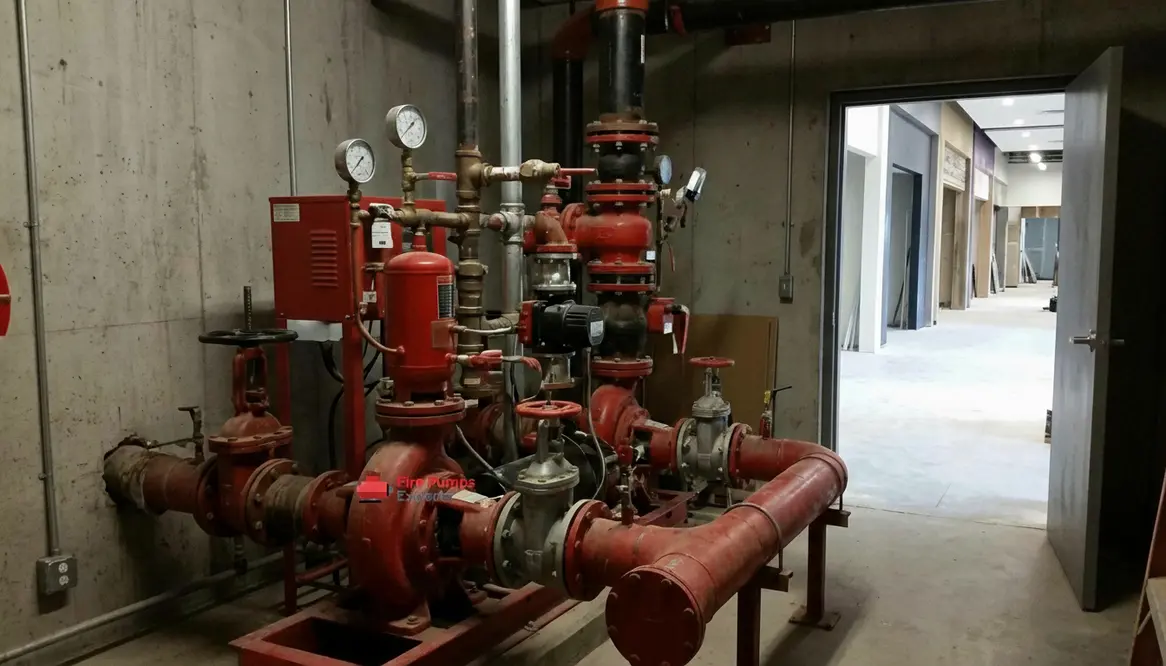
Hotel to Mixed Use Fire Pump Requirements
I have spent enough time around commercial buildings to know one truth. A structure can change its purpose, but fire risk does not politely adjust itself along the way. When I talk about hotel to mixed use fire pump requirements, I am really talking about what happens when a building gets a second life. Offices move in, retail shows up, maybe a restaurant decides it wants to flirt with open flame. And suddenly, that quiet old fire pump system is being asked to perform like it just joined the Avengers.
So yes, repurposed assets bring opportunity. But they also bring complexity. Let me walk you through it in a way that feels less like reading code and more like having a calm, slightly amused conversation with someone who has seen a few things.
What changes when a hotel becomes mixed use
First, I always remind clients that a hotel operates on predictable patterns. Guests sleep, shower, maybe complain about the Wi Fi. However, once you introduce mixed use elements, everything shifts.
New occupancy types, new behaviors
Now you have:
- Retail spaces that increase occupant load during peak hours
- Restaurants that introduce grease, heat, and higher fire risk
- Offices with dense layouts and electrical demand
Because of this, the original fire pump design may no longer meet demand. Flow and pressure requirements often increase. In addition, zoning inside the building becomes more complex. And just like that, your once adequate system starts looking like it skipped leg day.
hotel to mixed use fire pump requirements explained simply
I like to keep things straightforward. When a building transitions, the fire pump must support the most demanding hazard classification present. Not the old one. Not the average one. The worst case scenario.
What gets evaluated
- Updated hazard classifications across all occupancies
- Hydraulic demand changes for sprinkler systems
- Standpipe system requirements especially in taller structures
Therefore, even if the existing pump still runs, that does not mean it still complies. And compliance, in this world, is not optional. It is the difference between controlled risk and chaos.
Why it matters for conversions
In hotel to mixed use fire pump requirements, each new occupancy stacks additional demand onto the same core infrastructure. A single high-risk tenant can redefine the entire hydraulic profile, and the pump has to be sized and configured to handle that without hesitation.
Ignoring that reality turns a change-of-use project into a slow-motion problem that only shows up when alarms are sounding and water should be flowing at full capacity.
How do I evaluate an existing fire pump system?
I start with testing, because assumptions are where mistakes like to hide. Flow testing tells me what the pump can actually deliver today, not what it promised years ago.
Then I review original design documents and compare them to current building use. If those documents are missing, which happens more often than anyone admits, I reconstruct the system profile from field data.
Key components under review
- Driver type and capacity
- Controller condition and compliance
- Water supply reliability
Meanwhile, I keep local code updates in mind. Codes evolve. They do not care that your building has sentimental value.
Common issues I see
- Undersized pumps for new hazards
- Outdated controllers
- Inadequate pressure for upper floors
- Missing documentation
What I recommend
- Full hydraulic recalculation
- Performance testing under load
- Controller upgrades
- Coordination with fire protection engineers
Why repurposed buildings create hidden fire risks
Here is where things get interesting. Repurposed assets often carry legacy systems that were never designed to work together. It is like asking a vintage record player to sync with a streaming app. Charming, but not practical.
For example, adding a commercial kitchen increases suppression demand significantly. At the same time, retail layouts may require different sprinkler densities. As a result, the fire pump must serve multiple system types with varying demands.
Furthermore, water supply infrastructure may not support these changes. Municipal supply can become a limiting factor. And when that happens, the pump has to work harder, or worse, fails to meet required performance.
That is why I never treat conversions as minor upgrades. They are system transformations.
hotel to mixed use fire pump requirements and code alignment
Codes are not suggestions. They are the rulebook, and they get updated more often than your favorite streaming service adds new shows.
In these projects, I align systems with standards such as NFPA 20 and NFPA 13. However, I also factor in local amendments, which can be stricter.
Key code-driven considerations
- Minimum pressure at the highest demand point
- Redundancy requirements in critical facilities
- Power supply reliability including backup options
Because of this, many projects require either a pump replacement or a significant upgrade. And yes, that conversation can be uncomfortable. But it is far less uncomfortable than explaining system failure during an emergency.
Designing for the future, not just passing inspection
I always encourage clients to think beyond immediate compliance. Buildings evolve. Tenants change. Expectations grow.
So instead of asking, will this pass inspection, I ask, will this still work in ten years?
Future-ready strategies
- Higher capacity pumps to accommodate future tenants
- Smart monitoring systems for real time diagnostics
- Flexible system layouts that adapt to new uses
And let us be honest. No one wants to reopen walls and floors five years later because the system cannot keep up. That is the construction equivalent of a sequel nobody asked for.
Thoughtful planning around hotel to mixed use fire pump requirements keeps you from writing that unwanted sequel. Design once, verify properly, and give the building enough capacity and flexibility to survive more than one round of tenant turnover.
FAQ
Conclusion
If you are navigating a building conversion, do not leave your fire protection system in the past. I help commercial and industrial property owners bring their systems up to modern demands with clarity and precision. Reach out to https://firepumps.org and let us make sure your fire pump is ready for what your building has become, not what it used to be.