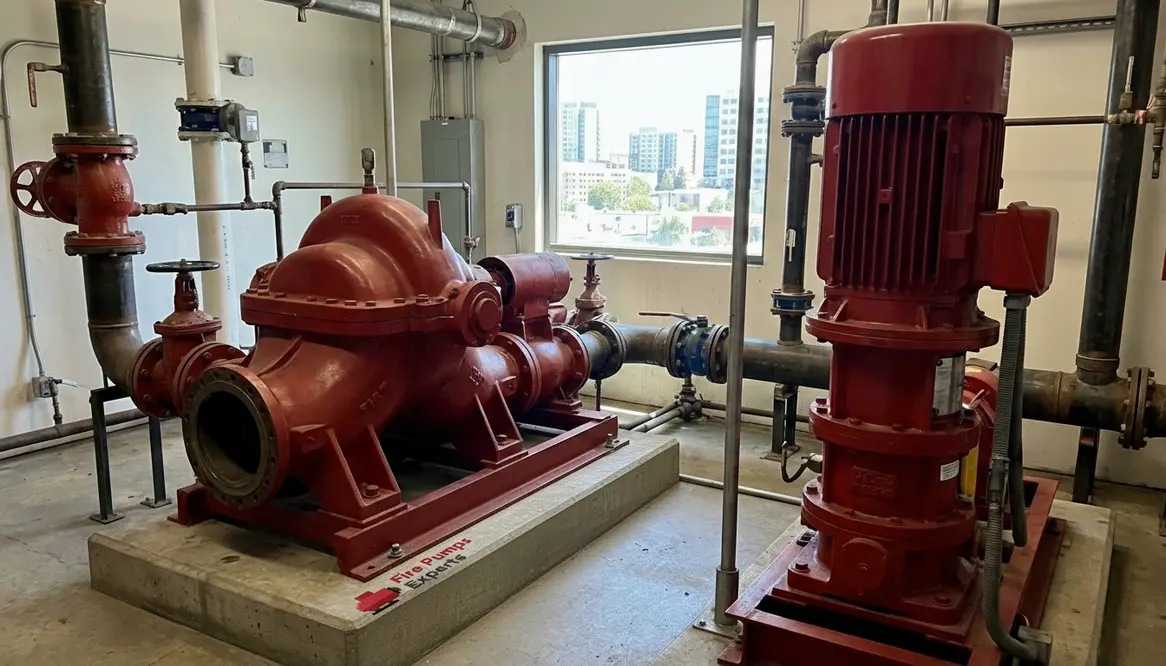
Split Case vs Vertical Inline Fire Pump San Jose Guide
I have spent enough time around commercial pump rooms in San Jose to know one thing for certain. The choice between a horizontal split case and a vertical inline fire pump is never just about equipment. It is about space, reliability, and how a building breathes under pressure. When clients ask me about split case vs vertical inline fire pump San Jose, I lean in a little, slow the pace, and tell them the truth. The right answer depends on the story your building is trying to tell when things go wrong. And trust me, in fire protection, that story needs a strong ending.
In a city where commercial space is carved out with precision, fire pumps sit in the middle of a quiet negotiation between code, cost, and common sense. Your decision is not just technical; it shapes how confidently your building will respond when the alarms sound and the pressure spikes.
How do I choose between split case vs vertical inline fire pump San Jose?
Let me answer this the way most engineers wish someone had done sooner. Start with your building, not the pump. If you are managing a large commercial or industrial facility, your priorities are flow demand, footprint, maintenance access, and long term reliability.
Now, here is the short version. Horizontal split case pumps deliver power and durability. Vertical inline pumps save space and simplify installation. However, that simple comparison hides the real drama. One is built like a classic muscle car. The other is a sleek city commuter that somehow still outruns traffic.
So, when I evaluate split case vs vertical inline fire pump San Jose, I always factor in building size, system demand, and how much room you can actually spare without turning your mechanical room into a game of Tetris.
Start with the building, not the brochure
Codes will narrow your options, but they will not tell you how tight that pump room really feels at 3 a.m. when someone is troubleshooting a pressure drop. Think about ceiling height, door access, and how many trades need to share that same square footage.
Then weigh operation and maintenance reality
Ask who will maintain the system, how often they access it, and what downtime really costs. The split case vs vertical inline fire pump San Jose discussion becomes clearer when you price out a midnight shutdown on a live facility.
Understanding Horizontal Split Case Pumps in Large Facilities
There is something reassuring about a horizontal split case pump. It sits low, wide, and confident, like it knows it has been doing this job since before most buildings had WiFi. These pumps are designed for high flow rates, which makes them ideal for large commercial complexes, industrial campuses, and high rise systems with heavy demand.
Because the casing splits horizontally, maintenance becomes easier. Technicians can access internal components without disconnecting the piping. That means less downtime, which, in a facility that operates around the clock, is not just convenient. It is critical.
However, space is the tradeoff. These units require a larger footprint and careful alignment during installation. If your pump room is already tight, adding a split case pump can feel like trying to park a truck in a compact space. It can be done, but you will not enjoy the process.
When a horizontal split case earns its keep
- Large distribution centers that cannot afford extended outages for repairs
- Industrial sites with multiple suppression zones hammering the system at once
- High rise buildings where pressure and flow are not just high, but relentless
- Facilities with staff and budget to maintain equipment for the long haul
Vertical Inline Pumps and the Art of Saving Space
Now, let us talk about vertical inline pumps. These are the quiet overachievers of the fire protection world. They stand upright, integrate directly into the piping system, and take up far less floor space. In San Jose, where every square foot of a commercial building can carry a premium, that matters more than most people admit.
Installation is typically faster, and alignment issues are minimal because the pump connects inline with the system. That simplicity often translates into lower upfront labor costs. And yes, I have seen project managers smile when they realize they do not need to redesign an entire mechanical room just to fit the pump.
Still, vertical inline pumps are not always the hero. They are better suited for moderate flow requirements. Push them too far, and they start to show their limits. It is like asking a sprinter to run a marathon. Impressive at first, but not built for the long haul.
Where vertical inline pumps make the most sense
- Retrofit projects where the pump room feels like an afterthought
- Mid-rise office or mixed-use buildings with moderate system demand
- Sites where installation time needs to be minimized to keep schedules intact
- Spaces where the phrase “every inch counts” is not an exaggeration
Split Case vs Vertical Inline Fire Pump San Jose for Performance and Longevity
Performance is where the conversation gets interesting. Horizontal split case pumps generally offer higher efficiency over time, especially in systems with consistent high demand. They handle wear better and tend to last longer under heavy use.
On the other hand, vertical inline pumps shine in systems where space and simplicity matter more than maximum output. They are efficient within their range, and when properly selected, they perform reliably without demanding constant attention.
Horizontal Split Case
- High flow capacity for large facilities
- Easier internal maintenance access
- Long service life under heavy demand
- Requires more floor space
Vertical Inline
- Compact design saves valuable space
- Faster and simpler installation
- Lower initial labor costs
- Best for moderate demand systems
When I weigh split case vs vertical inline fire pump San Jose in real projects, I look beyond specs. I think about how the system will behave five, ten, even twenty years down the line. Because in fire protection, shortcuts have a way of coming back at the worst possible moment.
Cost Considerations That Actually Matter
Let us talk money, because eventually every conversation does. Vertical inline pumps often win on initial cost. They require less space, less structural work, and less installation time. That can make them very attractive during construction or retrofit projects.
However, horizontal split case pumps often balance that equation over time. Their durability and ease of maintenance can reduce long term operational costs. So while they may cost more upfront, they can quietly save money year after year.
It is the classic choice between paying now or paying later. And if I had a dollar for every time someone learned that lesson the hard way, I would probably be writing this from a beach instead of a pump room.
A quick cost sanity check before you commit
- Tally construction savings on vertical inline pumps against projected maintenance
- Price the cost of access: cramped rooms tend to make simple work expensive
- Consider how long you plan to own or operate the building
- Remember that the wrong pump, even if cheaper, is always the most expensive option over time
FAQ Quick Answers for Building Owners and Engineers
Before finalizing your choice around split case vs vertical inline fire pump San Jose projects, it helps to clear up the questions that never quite make it into the spec sheet but always surface during commissioning and maintenance meetings.
Final Thoughts and Your Next Move
Choosing the right pump is not about trends or quick wins. It is about matching the system to the building it protects. If you are weighing your options, take a closer look at your facility demands, available space, and long term goals. Then act with confidence. Reach out to a qualified fire pump specialist who understands commercial systems in San Jose and get a solution built to last. Your building deserves nothing less.
If you want a deeper technical breakdown, performance curves, and reference case studies, resources like https://firepumps.org can help frame the conversation. But the final decision on split case vs vertical inline fire pump San Jose will always come back to your specific story: your building, your risk profile, and how seriously you take that one system you hope never has to run at full power.