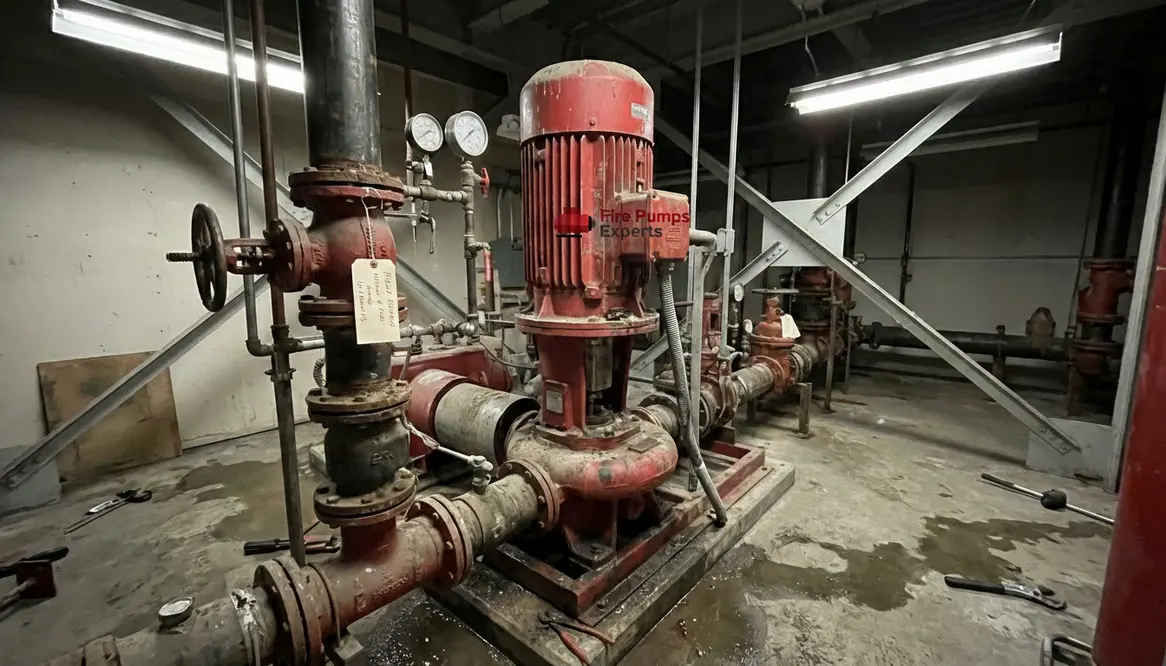
Vertical Inline Fire Pump Failure Oakland Causes
I have spent enough time inside mechanical rooms in Oakland to know one thing for certain: when a system fails, it never does so politely. And when it comes to vertical inline fire pump failure Oakland, the story often starts long before alarms sound. It begins with overlooked details, quiet wear, and a false sense of security. In large commercial and industrial buildings, these pumps are not just equipment. They are the last line of defense. So when they falter in real world conditions, the consequences ripple fast and wide.
What actually causes vertical inline fire pump failure Oakland in large buildings
I have seen people blame the pump itself. That is rarely the full truth. More often, failure is a chain reaction. First, installation corners get cut. Then maintenance becomes “we will get to it next quarter.” Eventually, the system meets real demand, and that is when things fall apart.
For example, in high rise facilities across Oakland, I often find misalignment issues caused by building vibration. Over time, that slight shift grows into seal damage. Meanwhile, water quality plays its own quiet game. Sediment builds up, efficiency drops, and suddenly the pump cannot meet pressure requirements.
And yes, sometimes controls fail too. Because nothing says “surprise” like an electrical fault during an emergency. It is almost like the system waits for the worst possible moment. If that sounds dramatic, it is because it is.
Why real world conditions in Oakland stress these systems
Oakland is not a gentle environment for mechanical systems. Between seismic activity, aging infrastructure, and fluctuating demand in large commercial buildings, these pumps face constant stress. Therefore, what works perfectly in a lab often struggles in a basement mechanical room.
Humidity plays a role. So does temperature variation. Additionally, older buildings often have retrofitted systems that were never designed for modern load requirements. I walk into these spaces and sometimes feel like I am looking at a time capsule that someone asked to run a marathon.
Moreover, inconsistent testing practices add to the problem. Some facilities test just enough to check a box. However, real world conditions do not care about checkboxes. They care about performance under pressure, literally.
That is why understanding how vertical inline fire pump failure Oakland actually unfolds in these environments is critical. It is not just theory; it is about what holds up when the sprinklers open and there is real heat on the other side of the wall.
How I identify early warning signs before failure hits
I like to think of fire pumps as quiet storytellers. They tell you what is wrong if you listen closely. The trick is knowing what to listen for.
Mechanical clues I watch
- Unusual vibration patterns
- Seal leakage that comes and goes
- Bearing noise that sounds like a tired engine
- Gradual pressure drops during routine tests
Operational signals I track
- Delayed startup response
- Inconsistent flow rates
- Control panel faults that reset themselves
- Energy consumption creeping upward
At first glance, these signs seem minor. However, they rarely stay that way. Ignoring them is like ignoring a check engine light because the car still moves. Technically true. Strategically unwise.
The hidden role of system design and retrofits
Not every failure begins with wear and tear. Sometimes the issue is baked into the design. In Oakland, many commercial and industrial properties have undergone expansions. New floors. New tenants. New demands. Yet the original pump system often remains unchanged.
Consequently, the pump operates outside its ideal range. That creates strain. Over time, components degrade faster than expected. I have seen systems that looked fine on paper but struggled in practice because they were never recalibrated for real demand.
Then there is the retrofit puzzle. Different components from different eras, all expected to work together like a perfectly rehearsed band. Spoiler alert: they do not always hit the same note. When that mismatch sits on top of already stressed infrastructure, vertical inline fire pump failure Oakland becomes less of a surprise and more of an inevitability unless someone steps in and corrects the design path.
Can routine testing really prevent major failures
Short answer: yes, but only if it is done with intention. I have watched routine testing save systems, and I have also seen it become a meaningless ritual.
Effective testing goes beyond turning the pump on and checking a box. Instead, I simulate real demand conditions. I track performance trends over time. I compare current data with past results. Because patterns matter.
Additionally, I make adjustments immediately. Waiting turns small issues into expensive ones. And in large facilities, expensive tends to scale very quickly.
Think of it like going to the gym. Showing up is good. However, if you just sit on the bench and scroll your phone, do not expect results. Fire pumps deserve better than that.
Lessons learned from vertical inline fire pump failure Oakland cases
Every failure teaches something. The key is paying attention. In Oakland, I have seen a few consistent lessons emerge.
What repeated failures keep saying
First, proactive maintenance always beats reactive repair. It is less dramatic and far less costly. Second, system integration matters more than most people realize. A strong pump cannot compensate for weak controls or poor piping design.
Finally, expertise makes a difference. These systems are complex. Treating them like generic equipment is a mistake. When experienced professionals stay involved, problems get caught earlier and solved faster. In city cores where space is tight and systems are stacked on top of each other, that expertise can be the thin line between reliability and another headline about vertical inline fire pump failure Oakland during a critical event.
And yes, sometimes the lesson is simply this: if something sounds off, it probably is. Trust that instinct.
FAQ: Quick answers for busy facility managers
Conclusion
If there is one thing I have learned, it is this: fire pump failures do not happen out of nowhere. They build slowly, quietly, and then all at once. Therefore, staying ahead requires attention, expertise, and action. If you manage a commercial or industrial property in Oakland, now is the time to evaluate your system, address risks, and ensure reliability before it matters most. Because when the moment comes, there is no room for second guesses.