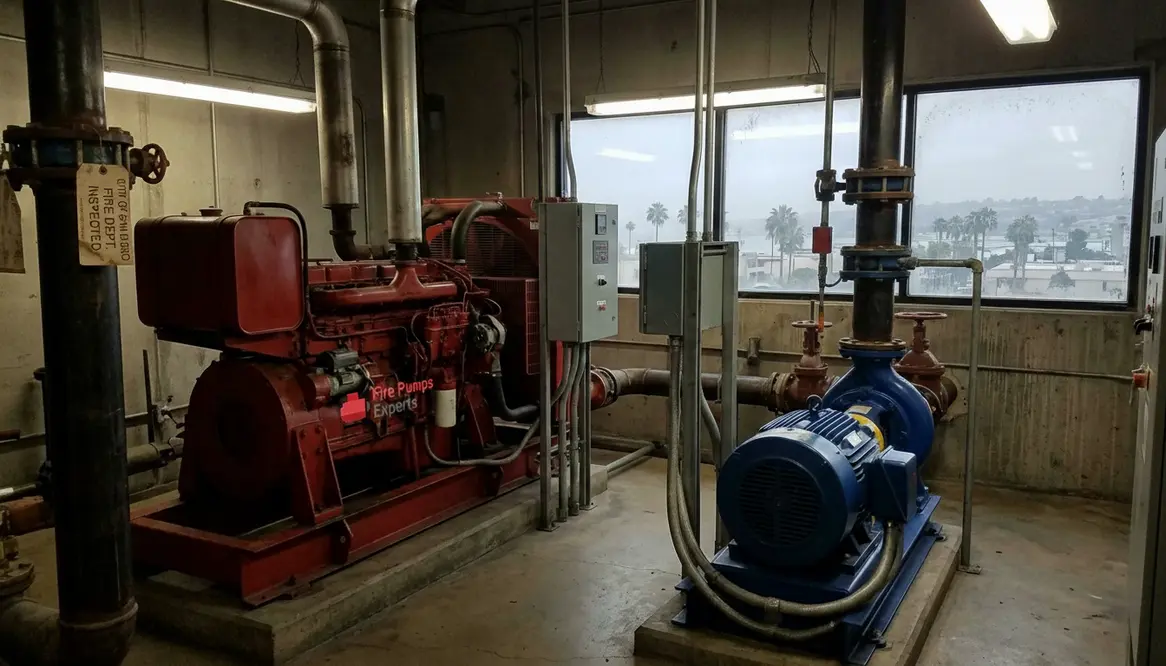
Fire Pump Diesel vs Electric Reliability San Diego
I have spent years walking through mechanical rooms across San Diego, where the hum of equipment tells you everything you need to know if you listen closely. When we talk about fire pump diesel vs electric reliability San Diego, we are not debating theory. We are deciding whether a system performs when everything else fails. In large commercial and industrial facilities, reliability is not a feature. It is the whole story. And yes, the choice of driver can feel like choosing between Batman and Iron Man. Both are impressive, but only one fits your situation.
Why Driver Type Shapes Reliability in San Diego Facilities
First, let me set the stage. Fire pumps exist for one reason. They move water when pressure drops during a fire event. However, the driver behind that pump determines how dependable that response will be. In San Diego, where seismic activity, grid variability, and strict compliance standards intersect, driver selection becomes a strategic decision.
Electric drivers offer consistency. They start quickly, require less mechanical upkeep, and integrate smoothly with building systems. On the other hand, diesel drivers operate independently of the electrical grid. So, when the power goes out, they do not even blink. That independence can be the difference between a close call and a catastrophe.
Therefore, reliability is not about which driver is better in general. It is about which one performs under your facility’s specific risks.
What Makes Electric Fire Pumps Reliable in Urban Buildings?
I often recommend electric fire pumps for high rise buildings and dense commercial properties. Why? Because they thrive in environments where power infrastructure is stable and well maintained.
Electric systems start instantly. There is no fuel to monitor, no engine to warm up, and fewer moving parts to fail. As a result, maintenance teams can focus on inspection routines instead of complex mechanical servicing.
Moreover, electric pumps align well with San Diego’s push toward energy efficiency. They produce no on site emissions, which keeps compliance straightforward. However, there is a catch. If your building loses power and lacks a reliable backup system, your fire pump could sit idle. And that is not the kind of suspense anyone wants.
Diesel Fire Pumps and Their Edge in Critical Operations
Now, let us talk about diesel drivers. These are the rugged workhorses of fire protection. If electric pumps are like a smooth jazz track, diesel pumps are more like a rock anthem. Loud, powerful, and impossible to ignore.
Diesel pumps bring one major advantage. Independence. They do not rely on the electrical grid, which makes them ideal for facilities where power loss is a real concern. Think manufacturing plants, logistics hubs, and large industrial campuses.
However, this reliability comes with responsibility. Diesel engines require regular testing, fuel management, and ventilation considerations. If neglected, they can become unreliable fast. So, while they offer resilience, they demand discipline.
fire pump diesel vs electric reliability San Diego in Real World Conditions
In real world scenarios, I have seen both systems succeed and fail. The difference almost always comes down to how well the system matches the facility’s risk profile.
San Diego facilities face unique challenges. Coastal humidity can affect equipment longevity. Seismic considerations require robust installation. Additionally, regulatory inspections are strict and unforgiving.
Electric pumps perform exceptionally well in buildings with redundant power systems. Meanwhile, diesel pumps shine in facilities where downtime is not an option. Therefore, the decision is less about preference and more about alignment. When you look at fire pump diesel vs electric reliability San Diego conditions force you to think less about brand names and more about infrastructure reality.
Electric Driver Strengths
- Fast and reliable startup
- Lower maintenance complexity
- Clean operation with no fuel storage
- Ideal for high rise and office environments
Diesel Driver Strengths
- Operates during power outages
- Highly dependable in critical operations
- Strong performance in remote or industrial sites
- Less reliance on external infrastructure
How Do I Choose the Right Fire Pump Driver for My Facility?
I approach this question the same way every time. I look at risk, infrastructure, and operational priorities. Then I connect the dots.
If your facility depends on uninterrupted power and already has backup generators, electric pumps often make sense. They are efficient and easier to maintain. However, if your operation cannot tolerate any dependency on the grid, diesel becomes the safer bet.
Additionally, local codes and insurance requirements play a role. San Diego authorities expect systems to meet strict performance standards. So, compliance is not optional. It is baked into the decision.
And let me be honest. Choosing the wrong driver is like bringing a spoon to a sword fight. Technically you showed up, but the outcome will not be great. When teams start comparing fire pump diesel vs electric reliability San Diego facilities quickly realize that the real question is not “what do we like” but “what actually runs under worst case conditions.”
Maintenance Practices That Protect Reliability Over Time
Even the best system can fail without proper care. Therefore, maintenance is where reliability is either preserved or lost.
Electric pumps require routine testing of controllers, wiring, and power supply. Meanwhile, diesel systems need fuel quality checks, engine inspections, and regular run tests. Both demand attention, just in different ways.
I always stress consistency. Scheduled inspections, documented testing, and proactive repairs keep systems ready. Because when a fire event occurs, there is no time for troubleshooting. Everything must work immediately. Facility managers who put fire pump diesel vs electric reliability San Diego realities into their maintenance planning see far fewer surprises during both inspections and emergencies.
FAQ
Conclusion
Choosing the right fire pump driver is not just a technical decision. It is a commitment to safety and operational continuity. I help San Diego facilities evaluate risk, align with code, and install systems that perform when it matters most. If you are weighing your options or questioning your current setup, now is the time to act. Reach out and ensure your fire protection system is ready, reliable, and built to handle the unexpected. For additional technical context on performance standards, you can reference resources like https://firepumps.org, but the real work happens inside your own walls, pairing your risks with the right driver and maintenance plan.