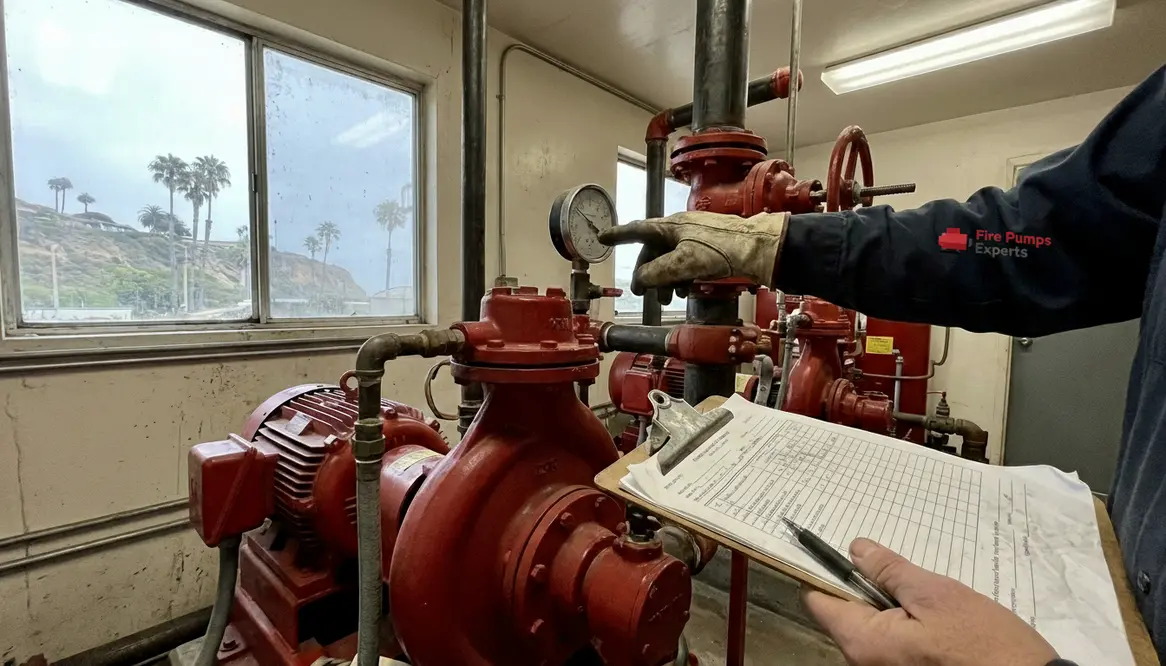
Fire Pump Flow Test Data Interpretation Ventura Guide
Understanding fire pump flow test data is not about checking a box; it is about reading the story your system is trying to tell and deciding whether that story ends well.
I have spent years walking through mechanical rooms where the hum of a fire pump feels almost like a heartbeat for the building. And yet, I keep seeing the same quiet problem surface across Ventura properties. fire pump flow test data interpretation Ventura is often misunderstood, rushed, or treated like a box to check rather than a story to read. That story matters. Because when the numbers get misread, the system meant to protect lives and assets becomes a question mark. And trust me, in fire protection, question marks are not your friend.
The good news is that those numbers are not random. With the right approach, patterns appear, risks become visible, and decisions get a lot less stressful. That is the real value of effective fire pump flow test data interpretation Ventura facility teams rarely get handed in a clean, understandable format.
Why Fire Pump Flow Test Data Gets Misread in Ventura Buildings
Let me paint a familiar scene. A technician runs a flow test, prints out the results, and everyone nods like they just watched a Christopher Nolan movie and totally understood it. But did they?
In many Ventura commercial and industrial buildings, I notice that data gets taken at face value. However, numbers without context can be misleading. A pressure drop might look acceptable, yet when compared against the pump curve, it tells a different story. Likewise, flow rates can appear compliant while masking performance degradation.
Moreover, environmental factors in Ventura such as coastal air and mineral content in water quietly affect pump efficiency over time. If those influences are ignored, interpretation becomes guesswork. And guesswork, in this field, is about as comforting as a smoke alarm with dead batteries.
What Should I Look For in Fire Pump Flow Test Data Interpretation Ventura?
Reading the Numbers Like They Owe You Money
Here is where I slow things down and really look at the data like it owes me money.
First, I compare churn, rated, and peak flow points against the original manufacturer curve. Then, I examine pressure consistency across each stage. A smooth curve tells me the pump is healthy. Sudden drops or spikes suggest internal wear or obstruction.
Finding the Story in the Trends
Next, I focus on trends rather than isolated results. One test might pass, but when compared year over year, subtle declines appear. That is where the real story lives.
Additionally, I always check for instrumentation accuracy. Faulty gauges can turn solid data into fiction faster than a Hollywood reboot. When fire pump flow test data interpretation Ventura hinges on bad instruments, everything downstream becomes unreliable.
What I Check Immediately
- Pressure at churn and rated flow
- Alignment with pump curve
- Gauge calibration status
- Flow stability during test
What I Watch Over Time
- Performance decline trends
- Repeated anomalies
- System demand changes
- Wear indicators in components
The Hidden Risks Behind Misinterpreted Data
Now here is the part where things get real.
When fire pump flow data is misinterpreted, building owners assume protection levels that may not exist. In large facilities, that gap can mean the difference between controlling a fire and watching it spread like gossip in a small office.
For example, I have seen systems that technically passed a test but could not sustain pressure during peak demand. On paper, everything looked fine. In reality, the system was one bad day away from failure.
Furthermore, compliance does not always equal readiness. Codes set minimums, not guarantees. So if interpretation stops at pass or fail, critical insights get lost. That is why thoughtful fire pump flow test data interpretation Ventura properties depend on should always push beyond a simple checkbox mentality.
How I Approach Accurate Interpretation Every Time
Treating the Data Like a Conversation
I treat every dataset like a conversation. The pump is talking. My job is to listen carefully.
First, I align test results with system design requirements. Then, I cross reference historical data. After that, I factor in any system changes such as renovations or increased demand.
Bringing People and Numbers Together
Equally important, I collaborate with facility managers. They often notice operational quirks that data alone cannot reveal. When those insights combine with test results, clarity emerges.
And yes, I double check everything. Because in this line of work, confidence should come from verification, not optimism. That approach turns routine reports into meaningful fire pump flow test data interpretation Ventura decision makers can actually act on.
Fire Pump Flow Test Data Interpretation Ventura for Large Facilities
Ventura’s commercial and industrial properties bring unique challenges. Larger buildings demand higher reliability, and even small inefficiencies scale into major risks.
In these environments, I prioritize precision. I also ensure that interpretation accounts for system complexity, including multiple pumps, backup power, and varying demand zones.
Additionally, I look beyond the pump itself. Valves, piping, and water supply all influence test outcomes. Ignoring those elements is like blaming your car when the road is the problem.
Because of this, fire pump flow test data interpretation Ventura must be approached as a system wide evaluation, not a single component review.
FAQ: Fire Pump Flow Testing and Data Interpretation
Conclusion
When I look at fire pump data, I see more than numbers. I see risk, readiness, and responsibility. If you manage a commercial or industrial facility in Ventura, do not settle for surface level analysis. Let us take a deeper look together, uncover what your system is really saying, and make sure it stands ready when it matters most. Reach out today and bring clarity to your fire protection strategy, and if you want more resources on this topic, you can explore additional guidance at https://firepumps.org.