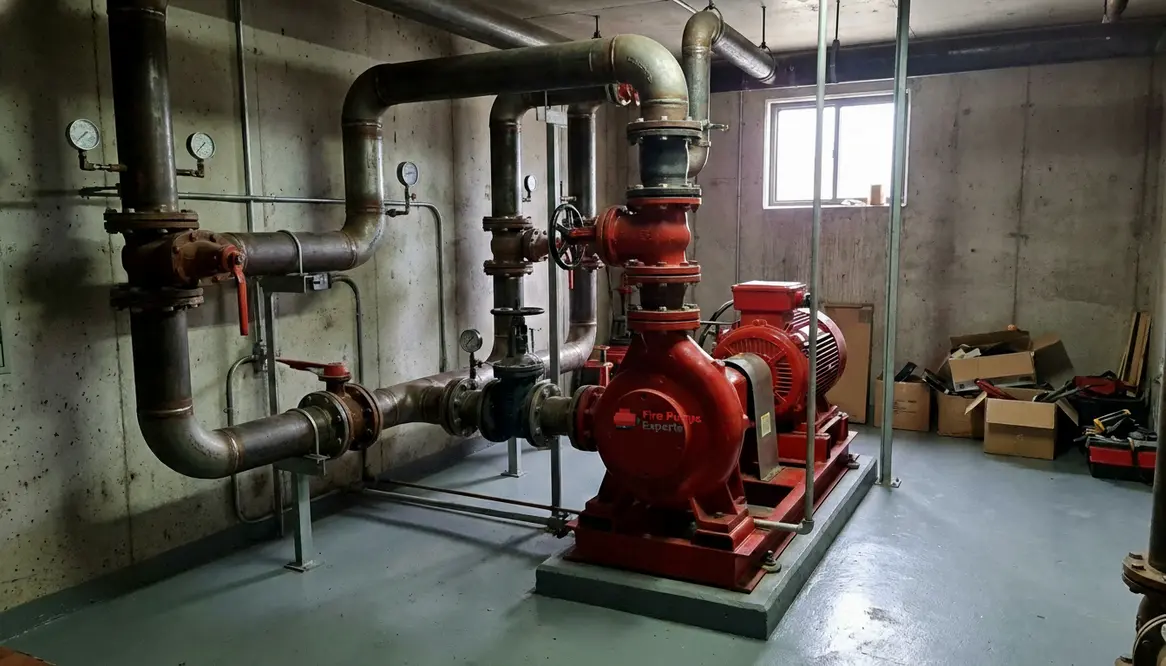
Fire Pump Header Design Issues Stockton Guide
I have spent years around pump rooms that hum like quiet engines of safety, and I can tell you this much right away. When things go wrong, they rarely start with the pump itself. More often, the trouble begins upstream, in the header. And yes, fire pump header design issues Stockton facilities face are not just technical quirks. They are performance killers hiding in plain sight. If your system feels like it should be stronger, faster, or more reliable, the header may be quietly holding it back, like a traffic jam no one planned for.
Fire Pump Header Design Issues Stockton Facilities Often Overlook
First, let me say this. A fire pump is only as good as the path it feeds. I have seen beautifully engineered pumps deliver disappointing results because the header design created friction, imbalance, or worse, pressure loss.
For example, when pipe sizing is inconsistent, water behaves like a confused traveler. It slows down, speeds up, and sometimes fights itself. As a result, pressure drops exactly where you need it most. In large commercial and industrial properties, that kind of inefficiency is not just inconvenient. It is dangerous.
Additionally, poor alignment between the pump discharge and the header can create turbulence. And turbulence is not your friend. It eats away at efficiency, adds wear, and makes your system work harder than it should. Think of it like trying to drink a milkshake through a bent straw. You will get there, but not without effort and frustration.
Why headers quietly control system confidence
In many commercial and industrial buildings, owners pour money into pumps, controllers, and alarms, yet ignore the one section of pipe that connects everything. That is where subtle fire pump header design issues Stockton buildings struggle with start compounding into very real performance gaps.
A well-planned header quietly keeps the system balanced. A poorly planned one quietly robs you of flow, pressure, and reliability, sometimes for years before anyone notices. By the time it shows up on a performance test, those decisions have already become baked into the building.
What header layout works best for maximum fire pump output?
I get this question a lot, and the answer is refreshingly simple. Straight, balanced, and predictable always wins. However, the execution is where things get tricky.
Ideally, I design headers that allow water to move with minimal resistance. That means gradual turns instead of sharp angles, consistent pipe diameters, and evenly spaced branch connections. Consequently, the system maintains stable pressure across all discharge points.
Moreover, symmetry matters more than most people think. When one side of a header feeds more aggressively than another, the system becomes uneven. Over time, that imbalance shows up in performance tests and, worse, in real emergencies.
And let me be honest. If your header layout looks like a plate of spaghetti, it probably performs like one too.
Key traits of a high-performing fire pump header
- Predictable, linear routing that respects pump discharge direction
- Consistent diameters sized for peak demand, not just average conditions
- Branches arranged to avoid one zone “stealing” from another
- Accessible, test-friendly locations that keep technicians honest and data reliable
Common Design Mistakes That Quietly Kill Performance
I have walked into facilities where everything looked fine at first glance. Then we ran tests. That is when the truth came out.
Here are some issues I see repeatedly:
Undersized headers
Water demand in large buildings is no joke. When headers are too small, they choke flow and reduce output exactly when demand peaks.
Too many directional changes
Every turn adds resistance. Therefore, excessive elbows and tight bends create pressure loss that adds up fast.
Poorly placed valves
Valves are essential, but placement matters. When installed too close to bends or branches, they disrupt flow patterns.
Lack of proper testing connections
Without accurate test headers, you are essentially guessing your system performance. And guessing is not a strategy.
Interestingly, many of these mistakes happen during expansion projects. A building grows, the system gets patched, and suddenly the header is doing a job it was never designed to handle.
Comparing Efficient vs Problematic Header Designs
Efficient Design
Smooth flow paths
Water moves with minimal resistance
Balanced distribution
All zones receive consistent pressure
Proper pipe sizing
Handles peak demand without strain
Strategic valve placement
Supports control without disrupting flow
Problematic Design
Sharp turns and tight angles
Creates turbulence and energy loss
Uneven branch connections
Leads to pressure imbalance
Undersized piping
Restricts flow under demand
Random valve locations
Interrupts smooth operation
When you put these side by side, the difference becomes obvious. One system works with physics. The other fights it like a stubborn movie villain who refuses to learn.
How I Diagnose Fire Pump Header Design Issues Stockton Buildings Face
I approach diagnostics like a detective story, minus the trench coat but with just as much curiosity. First, I look at performance data. Flow rates, pressure readings, and test results tell a story if you listen closely.
Next, I physically inspect the header layout. I trace the path water takes, noting every bend, connection, and restriction. Meanwhile, I compare that layout to the building’s actual demand profile.
Then comes flow testing. This is where theory meets reality. If the system struggles to maintain pressure under load, the header is often the culprit.
Finally, I connect the dots. In many Stockton facilities, the issue is not one big flaw but several small ones working together like a poorly rehearsed band. Fixing them restores harmony and performance.
Where diagnostics usually lead
Most assessments uncover a mix of legacy decisions, rushed retrofits, and “good enough” fixes from years past. Correcting them often means straightening layouts, resizing key sections, and rebalancing branches so that fire pump header design issues Stockton teams inherited do not keep dragging down current performance.
FAQ: Quick Answers About Fire Pump Header Design
What is the most common header design issue?
Undersized piping that restricts flow during peak demand.
Does header layout really affect pump performance?
Yes, poor layout can reduce pressure and flow efficiency significantly.
How often should header systems be evaluated?
During major upgrades, performance issues, or routine compliance testing.
Can old headers be improved without full replacement?
Yes, strategic modifications can improve flow and balance.
Why does turbulence matter in fire systems?
It increases energy loss and reduces effective water delivery.
Bringing It All Together for Reliable System Output
If there is one thing I have learned, it is this. Water will always follow the path you give it, whether that path is efficient or flawed. Therefore, addressing fire pump header design issues Stockton properties deal with is not just about compliance. It is about confidence.
When your header is designed right, your system performs with quiet strength. No drama, no surprises, just reliable output when it matters most.
If your facility depends on consistent fire protection, now is the time to take a closer look at your header design. Small adjustments can unlock major performance gains. Reach out to professionals who understand complex commercial and industrial systems, and take action before minor inefficiencies turn into costly risks. A stronger system starts with smarter design, and that begins today.