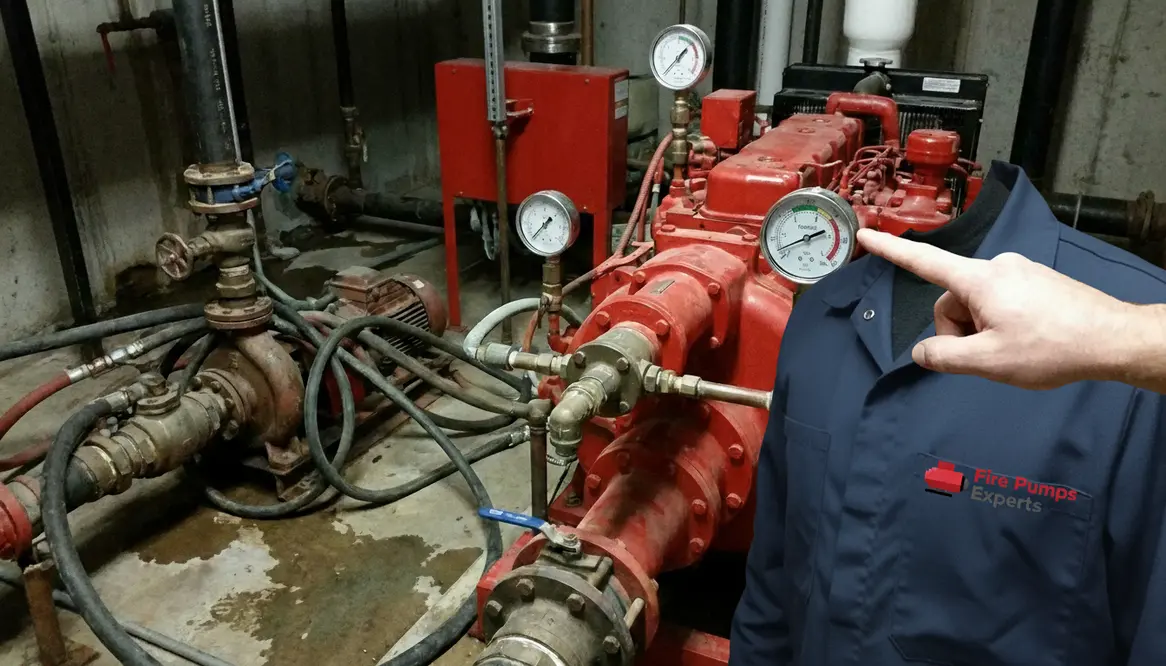
Fire Pump Sizing Errors Oakland CA Causes Instability
I have spent years around commercial and industrial fire protection systems, and one thing I see time and again is how fire pump sizing errors Oakland CA quietly create chaos behind the scenes. On paper, everything looks fine. The pump spins, the gauges move, and everyone sleeps well at night. But in reality, a poorly sized fire pump behaves like a drummer who cannot keep time. Eventually, the whole band falls apart. In a city like Oakland, where large facilities depend on precise fire suppression, even a small miscalculation can ripple into serious system instability.
In Oakland, fire protection design is not just a code checkbox. It is the difference between a reliable, steady system and one that lurches from problem to problem. When the pump at the heart of that system is miscalculated, every weakness gets magnified, especially under real emergency conditions.
What Happens When a Fire Pump Is Sized Incorrectly?
Let me answer this plainly. When a fire pump is too large or too small, it disrupts the balance of pressure and flow across the entire system. As a result, components that were designed to work together start competing instead of cooperating.
For instance, an oversized pump pushes excessive pressure through the system. Consequently, valves strain, pipes experience stress, and pressure relief systems work overtime. On the flip side, an undersized pump fails to meet demand during peak conditions. That means sprinklers at the farthest points may not deliver adequate coverage when it matters most.
In both cases, instability creeps in. And unlike a flickering light bulb, this is not something you can ignore until payday.
The Hidden Cost Of Hydraulic Mismatch
Hydraulic calculations are meant to create harmony between pumps, pipe sizes, sprinkler types, and elevation changes. When the pump is not matched to those calculations, everything downstream becomes guesswork. That guesswork shows up as nuisance repairs, unexplained leaks, pumps short cycling, and test results that never quite look the same twice.
fire pump sizing errors Oakland CA and Pressure Imbalance
In Oakland’s dense commercial zones, pressure balance is everything. High rise buildings, warehouses, and industrial campuses all rely on consistent hydraulic performance. However, fire pump sizing errors Oakland CA often lead to uneven pressure distribution.
Because of this, some areas receive excessive force while others are left under supplied. Over time, this imbalance causes wear on critical components. Even worse, it can trigger false alarms or system shutdowns that interrupt operations.
Picture a looped system where upper floors barely get enough pressure while the lower floors get hammered. That is how small fire pump sizing errors Oakland CA can quietly damage confidence in an entire network of sprinklers and standpipes.
I like to compare it to watering a garden with a fire hose on one end and a drinking straw on the other. Neither side is happy, and neither gets what it actually needs.
How Pressure Imbalance Shows Up Day To Day
- Sprinkler inspectors struggling to get consistent readings from test headers
- Zones where gauges spike during pump start, then sag while flowing
- Relief valves chattering or discharging more often than anyone wants to admit
- Frequent tweaking of valves that never seems to actually fix anything
Why Oversizing Feels Safe but Backfires
There is a common belief that bigger is better. I get it. It feels safer to overshoot capacity than risk coming up short. However, in fire pump design, that logic can backfire quickly.
An oversized pump cycles more frequently. As a result, it generates heat, increases energy use, and shortens equipment lifespan. In addition, pressure relief valves may open more often, which wastes water and stresses the system.
Meanwhile, operators might not notice the issue right away. The system still runs, after all. But beneath that calm surface, it is working harder than it should. And systems that work too hard tend to fail sooner than expected.
Common Oversizing Effects
- Frequent pump cycling
- Excess pressure damage
- Higher energy costs
- Valve wear and tear
Common Undersizing Effects
- Insufficient flow at peak demand
- Delayed sprinkler activation
- Coverage gaps in large facilities
- Compliance risks
Why “Just Add A Bigger Pump” Is A Trap
Upgrading to a larger pump without revisiting calculations, pipe sizes, backflow devices, and water supply curves is like swapping in a bigger engine without upgrading the brakes or suspension. For facilities already wrestling with fire pump sizing errors Oakland CA, this shortcut takes a small problem and gives it a much bigger set of consequences.
How Do I Know If My Fire Pump Is Causing Instability?
If you are asking this, you are already ahead of the curve. There are several signs I look for when evaluating commercial systems.
- Inconsistent pressure readings during annual or quarterly testing
- Frequent packing, seal, or valve failures that never seem fully resolved
- Relief valves opening under normal operation instead of only at extremes
- Pump test curves that do not align with the nameplate or original design data
- Sprinkler or standpipe performance that feels “weak” at remote locations
First, inconsistent pressure readings during testing often signal a mismatch. Next, frequent maintenance issues or unexplained component failures can point to deeper sizing problems. Additionally, if your system struggles during flow tests, that is a clear red flag.
Interestingly, some facilities only discover the issue during inspections or audits. That is like finding out your car has no brakes while going downhill. Not ideal.
fire pump sizing errors Oakland CA in Complex Facilities
Large scale properties in Oakland add another layer of complexity. Industrial plants, logistics hubs, and multi building campuses require carefully coordinated fire protection systems. Therefore, fire pump sizing errors Oakland CA can have amplified consequences in these environments.
The more risers, zones, and buildings you connect, the more one mis-sized pump can upset pressure relationships. That is why campuses and industrial sites are often the first to feel the pain when calculations are rushed or based on old water supply data.
For example, interconnected systems rely on stable pressure zones. When one pump is incorrectly sized, it can disrupt multiple zones at once. As a result, a single error cascades into widespread instability.
Moreover, regulatory compliance becomes harder to maintain. Inspectors expect systems to perform predictably. If they do not, you are looking at costly corrections and potential downtime.
And let us be honest. Downtime in a commercial or industrial operation is about as welcome as a surprise fire drill during a board meeting.
How I Approach Correct Fire Pump Sizing
Start With Clean, Current Data
I always start with accurate data. That includes building demand, system layout, and hazard classification. From there, I calculate required flow and pressure with precision. No guesswork, no shortcuts.
Account For Real World Conditions
Then, I factor in real world conditions. Elevation changes, pipe friction, and future expansion all play a role. Because of this, proper sizing is not just about meeting today’s needs. It is about ensuring long term stability.
Test, Verify, Then Commit
Finally, I test the system thoroughly. A well sized pump should operate smoothly under all expected conditions. If it does not, adjustments are made before problems arise.
For owners and facility managers, the goal is simple: when the fire department connects, when sprinklers open, or when standpipes are flowing at the top floor, you want those pumps delivering exactly what the calculations promised, not “close enough for now.”
FAQ
Conclusion
If you manage a commercial or industrial property in Oakland, do not leave your fire protection system to chance. I encourage you to take a closer look at your pump performance and sizing. A stable system protects more than assets. It protects operations and peace of mind. Reach out to a qualified expert who understands complex facilities and can ensure your system runs exactly as it should, every single time.