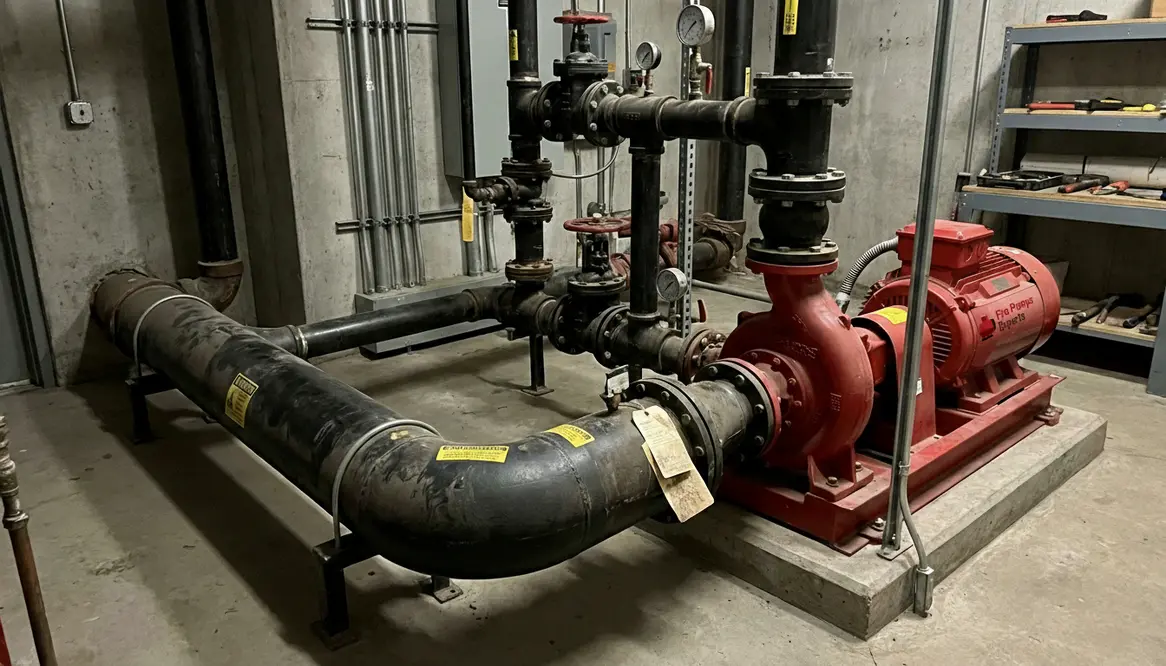
Fire Pump Suction Pipe Design San Jose Guide
I have walked through more mechanical rooms than I can count, and I have learned one quiet truth. A fire pump only performs as well as its suction side allows. In many commercial and industrial facilities across California, I keep seeing the same costly issues surface. That is why fire pump suction pipe design San Jose deserves more attention than it gets. It may not sound glamorous, but when the alarm rings, this is the difference between control and chaos. And trust me, chaos is a terrible project manager.
Where Most Designs Go Quietly Wrong
First, I want to address the elephant in the pump room. Many designs look perfect on paper but fail in real world conditions. Why? Because the suction side is often treated like an afterthought. However, the pump does not forgive that mistake.
I often see undersized pipes trying to feed large fire pumps. That is like asking a straw to supply a milkshake for a marathon runner. It will not end well. In addition, sharp bends placed too close to the pump create turbulence. That turbulence disrupts flow and reduces efficiency. Consequently, the pump works harder, wears faster, and delivers less when it matters most.
Another issue comes from poor alignment between the water source and the pump. If the path is not smooth and direct, the system struggles before it even starts. And yes, the pump notices.
How I Approach Fire Pump Suction Pipe Design San Jose Projects
When I step into a project, I slow things down. I study the layout, the building demand, and the water supply conditions. Then I design the suction piping like it is the star of the show, because in many ways, it is.
I prioritize straight runs of pipe leading into the pump. Whenever possible, I reduce fittings and avoid sudden direction changes. Furthermore, I ensure the pipe diameter supports full flow without strain. It is not about passing inspection. It is about performance under pressure.
I also account for future demand. Commercial and industrial buildings evolve. What works today may fall short tomorrow. Therefore, I design with a bit of breathing room. Think of it as giving the system a comfortable pair of shoes instead of squeezing it into something tight and unforgiving.
Why Air and Cavitation Are Silent Enemies
Now here is where things get interesting. Air in the suction line is like a bad actor who forgets their lines. It disrupts everything. Even small air pockets can cause cavitation, which damages the pump over time.
To prevent this, I make sure the piping stays properly flooded. In addition, I avoid high points where air can collect. A consistent downward slope toward the pump works wonders. It is simple physics, yet often overlooked.
Moreover, I pay attention to valves and connections. Poorly placed valves can trap air or restrict flow. And when that happens, the system performance drops quietly until it suddenly does not.
Common Mistakes I Still See in the Field
Left Column
- Oversized strainers that clog and reduce flow
- Improper pipe supports causing misalignment
- Reducers installed too close to the pump
- Shared suction lines between multiple pumps
Right Column
- Ignoring manufacturer suction requirements
- Using too many elbows near the intake
- Failing to test under real demand conditions
- Assuming city supply is always consistent
Each of these may seem small. However, together they create a system that looks fine during inspection but struggles during operation. It is like assembling the Avengers but forgetting to give them a plan. Impressive lineup, questionable outcome.
What Should a Proper Layout Look Like?
I keep it simple and intentional. The suction pipe should be as short and straight as possible. In addition, the diameter must support full flow without restriction. I also ensure there is adequate clearance for maintenance, because no one enjoys wrestling with a wrench in a tight corner.
Then, I confirm the system meets both code and manufacturer guidance. Codes provide the baseline. Manufacturers provide the fine tuning. Ignoring either one is like cooking without a recipe and hoping for a five star result.
Finally, I test the system under realistic conditions. Flow tests reveal the truth. They show whether the design holds up when demand peaks. And in my line of work, truth is non negotiable.
Fire Pump Suction Pipe Design San Jose: What Do Building Owners Ask Me?
I get this question often. Owners want to know why their system passed inspection but still feels unreliable. The answer usually points back to suction design. Inspections check compliance. They do not always reveal performance gaps.
Another common question involves upgrades. When facilities expand, the original suction piping may not support increased demand. Therefore, I recommend evaluating the entire system before adding capacity. Otherwise, you are building on a weak foundation.
In growing markets, fire pump suction pipe design San Jose projects often start with legacy infrastructure that was never meant for current demand. That is why I push owners to think beyond the immediate permit set and consider how their site will operate ten years from now.
Design Priorities For Reliable Performance
Hydraulic Reality
For any fire pump suction pipe design San Jose facilities depend on, I start with available city supply and realistic worst case demand. Static pressure, residual pressure, and flow curves all matter. If the suction piping chokes the supply, no downstream adjustment can fix it.
Maintainability
If the layout forces technicians to crawl over pipe, squeeze behind valves, or disassemble half the room to reach a flange, the system will not be maintained properly. I frame every decision around, “Can this be tested, flushed, and serviced quickly when everyone is already busy?”
Local Conditions
Corrosion, water quality, and seismic requirements shape the details more than most owners realize. Seismic bracing, flexible couplings, and proper anchorage transition from “nice ideas” to “non negotiable” once you have seen what movement can do to a suction header.
Why Location And Source Selection Matter
City Supply Versus Storage
Some owners assume that tying directly into the city main guarantees dependable flow. In practice, demand spikes, maintenance work, or distribution changes can surprise you. A robust fire pump suction pipe design San Jose teams can trust often includes tanks or dedicated mains that insulate the system from daily fluctuations.
Mechanical Room Reality Check
I have seen beautiful drawings fall apart in the field because the mechanical room was treated like leftover space. Columns, low beams, and random existing utilities can force ugly suction routing. Planning the room around the pump and suction entry instead of squeezing it in after the fact pays off every single time.
FAQ
Final Thoughts That Actually Matter
If there is one thing I have learned, it is this. A strong fire protection system begins before the pump even spins. The suction side sets the stage. Therefore, investing in proper design is not optional. It is essential. If your facility in San Jose depends on reliable fire protection, now is the time to take a closer look. Work with experts who understand the details, because when the moment comes, details decide everything.
Whether you are reviewing a new installation or rethinking an older layout, treat fire pump suction pipe design San Jose projects as a strategic decision instead of a checkbox. The cost of getting it right is measured in drawings, fittings, and coordination. The cost of getting it wrong shows up in the middle of the night, when alarms are sounding and everyone suddenly realizes which details were ignored.