Fire Pump Unstable Water Supply Delhi Solutions
Understanding how fire pumps behave when the water supply plays games with pressure is the difference between “installed system” and “reliable protection.” In a city like Delhi, that difference matters.
I have spent years watching how infrastructure behaves under pressure, and nowhere is that pressure more literal than in fire safety systems. When I talk about fire pump unstable water supply Delhi, I am not describing a rare inconvenience. I am describing a daily reality for commercial towers, industrial plants, and large facilities that depend on reliability when everything else fails. And in a city where municipal supply can feel as unpredictable as a plot twist in a Bollywood thriller, fire pump performance becomes less of a technical detail and more of a survival story.
Every alarm, evacuation plan, and fire drill ultimately leans on one assumption: the pump will deliver when called. If the water supply is unstable, that assumption turns into a gamble. My work is about removing that gamble.
Why municipal inconsistency changes everything
Dependence on what feeds the pump
Let me say it plainly. A fire pump is only as dependable as the water feeding it. However, in Delhi, fluctuating pressure, intermittent supply, and uneven distribution create conditions that test even the best systems.
As a result, pumps often face dry suction, pressure drops, or sudden surges. Consequently, this instability can lead to delayed response during critical moments. And in fire protection, delay is not dramatic tension. It is risk.
The illusion of readiness
I have seen facilities assume their systems are ready, only to discover that real world conditions tell a very different story. It is a bit like trusting your phone battery at 5 percent during a long commute. Technically possible, practically stressful.
When the phrase fire pump unstable water supply Delhi appears on design briefs, it is not a line item. It is a warning label that every decision from suction source to discharge header must respect.
How fire pump systems adapt in unstable supply zones
Designing for chaos, not perfection
So how do we keep performance steady when supply is anything but steady? I focus on system design that anticipates inconsistency rather than reacting to it.
Dedicated storage as a buffer
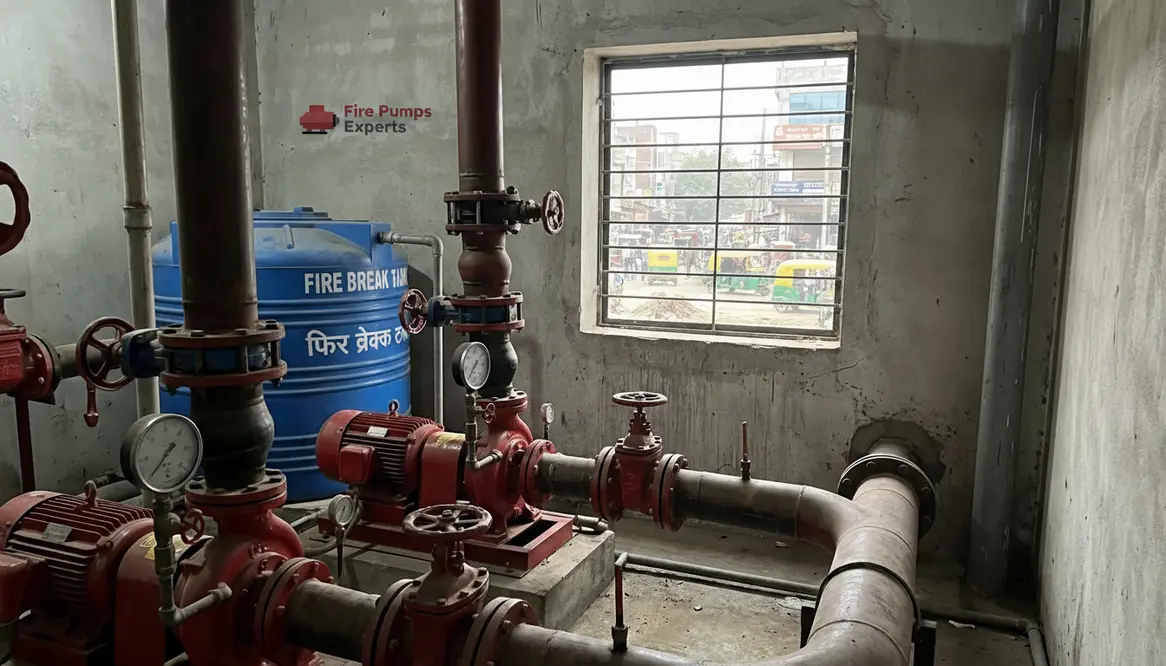
First, I rely on dedicated water storage. Therefore, break tanks and underground reservoirs act as buffers, ensuring the pump always has a reliable source. Without this, even the most advanced pump becomes a spectator.
Pressure management and redundancy
Next, I emphasize pressure management. Variable frequency drives and jockey pumps help stabilize fluctuations. As a result, the system maintains readiness without unnecessary wear.
Finally, I never overlook redundancy. Because when one component struggles, another must step in instantly. Think of it as assembling a team where no single player carries the entire game.
Design priorities for fire pump unstable water supply Delhi environments
When I design for these conditions, I prioritize resilience over simplicity. That means I make deliberate choices that may seem excessive at first glance but prove essential in practice.
Core design elements
|
Operational benefits
|
Moreover, I always align these systems with the scale of the property. A high rise commercial tower demands a very different setup than a manufacturing facility, even if both face similar supply instability.
What maintenance actually looks like in real conditions
Testing under the conditions you fear
Let me be honest. Even the best designed system will fail if maintenance becomes an afterthought. And in Delhi, where supply conditions shift constantly, maintenance must be proactive.
I recommend frequent flow testing under simulated low supply conditions. This way, I can see how the system behaves when it matters most. Additionally, I monitor suction pressure closely because it often reveals hidden issues early.
Calibration and data that still matches reality
Then there is calibration. Sensors, controllers, and valves need regular adjustment to stay accurate. Otherwise, the system starts making decisions based on outdated data, which is about as helpful as using last year’s traffic report to plan today’s route.
In a fire pump unstable water supply Delhi setting, skipping testing is not saving time; it is accepting uncertainty at the exact moment you cannot afford it.
Can fire pumps perform reliably with unstable water supply?
Reliability is engineered, not wished for
Yes, they can. However, reliability does not happen by accident. It comes from thoughtful design, disciplined maintenance, and a clear understanding of local conditions.
I have seen systems perform flawlessly even in the most challenging environments. On the other hand, I have also seen expensive installations fail simply because they ignored supply variability.
The difference is never luck. It is preparation.
Balancing compliance with real world performance
Codes as a starting line
Codes and standards provide a foundation, and I respect them deeply. However, I never treat them as the finish line. Instead, I treat them as the starting point.
In fire pump unstable water supply Delhi scenarios, compliance alone does not guarantee performance. Therefore, I go beyond minimum requirements to address actual operating conditions.
Beyond minimums: building for the worst day
This means integrating smarter controls, building in redundancy, and stress testing systems under realistic scenarios. Because when a real emergency happens, no one cares if the system was merely compliant. They care if it works.
For facilities wrestling with fire pump unstable water supply Delhi issues, the smartest investment is often in better logic, better monitoring, and better backup, not just bigger equipment.
Conclusion
If you manage a commercial or industrial facility in Delhi, now is the time to evaluate your fire pump system against real supply conditions. I can help you design, upgrade, or audit your setup to ensure it performs when it matters most. Reach out today and let us turn uncertainty into reliability, because in fire protection, confidence should never depend on chance.
If you want to go deeper into system behavior, resources such as https://firepumps.org can provide useful technical context before you plan your next upgrade.