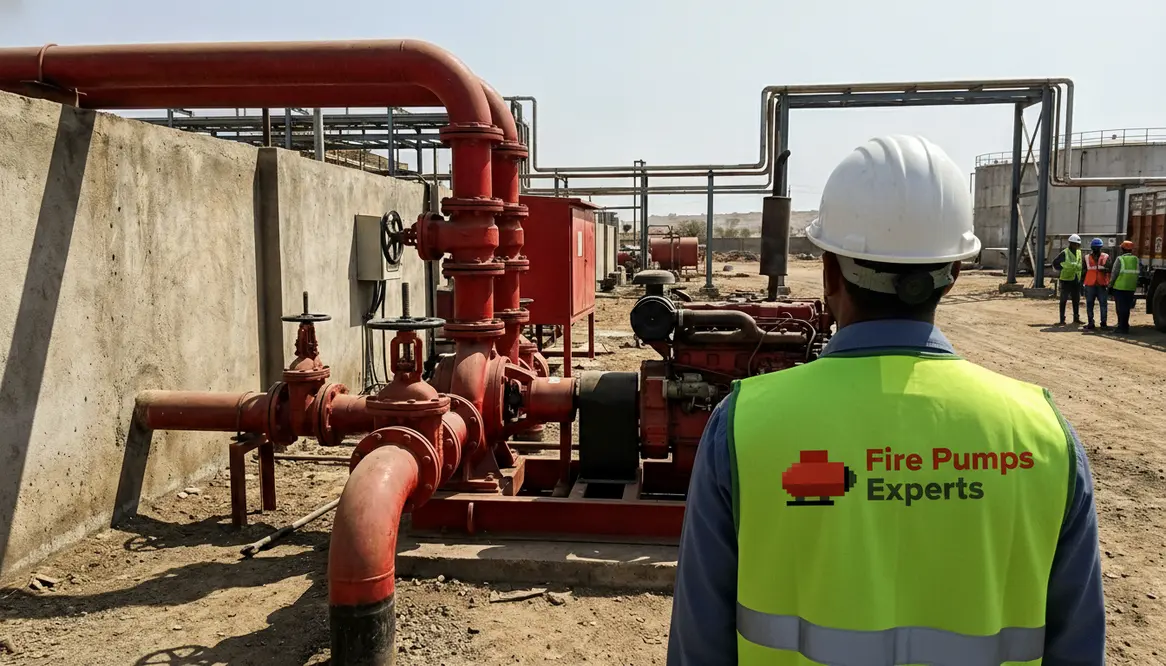
Fire Pump Industrial Gujarat Design Guide for Safety
Practical insights on designing reliable fire pump systems that quietly protect Gujarat’s industrial backbone.
I have spent years watching industrial systems hum quietly in the background, doing their job without applause. And when it comes to safety in Gujarat’s industrial zones, nothing works harder behind the scenes than a well planned fire pump industrial Gujarat design. It is not flashy. It does not trend on social media. But when something goes wrong, it becomes the difference between a close call and a catastrophe. So today, I will walk you through what truly matters, with a calm voice and just enough wit to keep you awake.
In Gujarat’s dense industrial clusters, a well engineered fire pump system is less about bells and whistles and more about predictable, repeatable performance under pressure. Think of it as the one system you never want to see in action, but absolutely need to trust.
Understanding Fire Pump Needs in Gujarat’s Industrial Landscape
Gujarat is not just another industrial hub. It is a powerhouse of chemicals, petrochemicals, textiles, and heavy manufacturing. Because of this, fire risks are not theoretical. They are very real, and they scale quickly.
Now, when I design or evaluate a system here, I always start with one truth. Not all fires behave the same. A textile unit burns differently than a chemical plant. Therefore, your fire pump system must match your specific hazard profile, not your neighbor’s setup.
Key context for Gujarat’s risk profile
- Chemical and petrochemical plants with fast-escalating fire potential
- Textile and warehouse units with high fuel loading
- Refineries and storage yards with complex hazard zones
- Dry, hot conditions that can accelerate equipment wear
Additionally, local climate plays its role. High temperatures and dust can strain equipment. So, durability is not a luxury. It is survival.
How do I choose the right fire pump industrial Gujarat design for my facility?
Good question. And honestly, it is the one I hear most often.
Step 1: Calculate real water demand
First, I look at water demand. Not guesswork. Real calculations based on hazard classification. Then, I evaluate pressure requirements. Because a pump that delivers water without adequate pressure is like a superhero who forgot their cape. Technically present, but not very helpful.
Step 2: Choose the right power source
Next, I consider redundancy. Industrial facilities cannot afford downtime. So, I typically recommend a main pump paired with a standby unit. Electric or diesel driven options both have their place, depending on power reliability.
Step 3: Align with codes and standards
Finally, compliance matters. Systems must align with NFPA standards and local Gujarat regulations. Skipping this step might save money today, but it invites trouble tomorrow. And trust me, fire inspectors are not known for their sense of humor.
A well thought out fire pump industrial Gujarat design blends hydraulic performance, power reliability, and regulatory alignment into one coherent system rather than a patchwork of components.
Core Components That Make or Break Performance
Let me simplify something that often gets overly technical. A fire pump system is only as strong as its weakest component. So, I pay attention to every piece.
Essential Elements
- Pump unit sized for peak demand
- Reliable power source or backup engine
- Controller for automatic activation
- Water storage or assured supply
Performance Enhancers
- Pressure relief valves for stability
- Flow meters for testing accuracy
- Jockey pumps to maintain pressure
- Monitoring systems for real time alerts
Now, here is where many facilities slip. They invest in a strong pump but ignore monitoring. That is like buying a luxury car and never checking the fuel gauge. Eventually, something stops working, and it will not be subtle.
Designing for Reliability in High Risk Industrial Zones
Reliability is not just about quality equipment. It is about smart planning.
For example, I always think about accessibility. Can maintenance teams reach the pump easily? Because if it takes an expedition to inspect it, inspections will not happen often. And neglected systems fail quietly until they fail loudly.
Moreover, I plan for worst case scenarios. Flooding, power outages, or simultaneous system demands. A resilient fire pump industrial Gujarat design anticipates problems before they arrive.
Reliability checklist
- Clear access routes to pump room and valves
- Protection against localized flooding and water ingress
- Independent power or diesel backup for critical zones
- Regular weekly churn tests and scheduled flow tests
- Documented maintenance linked to alarms and monitoring
And yes, regular testing is non negotiable. Weekly churn tests and periodic flow tests ensure everything works when it matters. It is not glamorous work, but neither is explaining to management why the system failed.
Behind every successful fire pump industrial Gujarat design is a team that treats maintenance and testing as part of operations, not as an afterthought to be squeezed in when someone remembers.
Balancing Compliance, Cost, and Long Term Value
Let me say this clearly. Cutting corners on fire systems is a false economy.
However, that does not mean overspending blindly. I focus on balance. Choose components that meet standards without unnecessary extras. Invest in durability where it counts. And most importantly, think long term.
Because replacing a poorly chosen system costs far more than installing the right one the first time. It is like trying to fix a leaky roof with a bucket. It works, technically, until it does not.
Documentation and audits
Also, documentation matters. Clear records of design, testing, and maintenance help with audits and insurance. And in industrial zones, those audits are as inevitable as Monday mornings.
Good documentation also protects the logic behind your fire pump industrial Gujarat design, making it easier to justify budgets, upgrades, and future expansions.
For deeper reference material on pump configurations and sizing philosophies, https://firepumps.org offers technical context that can support your design decisions.
FAQ: Fire Pump Systems for Industrial Facilities
Conclusion: Building Systems That Stand the Test of Time
If you are responsible for an industrial facility, then you already know this. Safety is not an afterthought. It is a foundation. A well executed fire pump system protects assets, operations, and lives without asking for attention.
So, take the time to get it right. Work with experts who understand industrial risks in Gujarat, and invest in a system that performs when it matters most. Because in this line of work, quiet reliability is the loudest success. When your fire pump industrial Gujarat design is solid, compliant, and tested, you do not need drama or fanfare—just the calm confidence that, if a bad day ever arrives, the system will be ready.