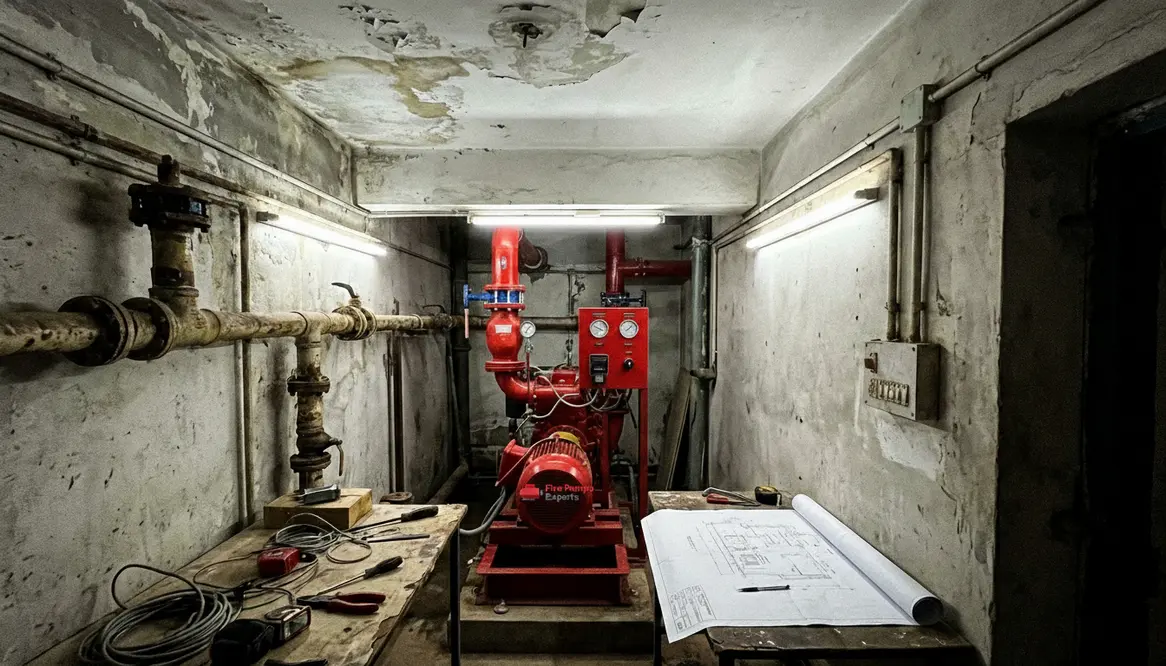
Fire Pump Retrofit Old Buildings India Guide
I have walked through many aging commercial towers and industrial facilities across India, and there is a certain quiet dignity in those walls. Yet, beneath that calm, there is often a ticking concern. When we talk about fire pump retrofit old buildings India, we are not just discussing equipment. We are dealing with safety, compliance, and the fine art of fitting modern systems into spaces that were never designed for them. And trust me, older buildings can be as stubborn as a vintage Bollywood hero who refuses to retire.
Why Retrofitting Fire Pumps in Older Buildings Feels Like Solving a Puzzle
First, space is rarely generous. Older commercial and industrial properties were built with different priorities. Fire safety systems were simpler, and pump rooms were often an afterthought. As a result, I often find myself measuring tight corners and thinking, “Well, this will be interesting.”
Moreover, structural limitations play a big role. Thick concrete walls, low ceiling heights, and limited access routes make installation tricky. However, the real challenge lies in integrating modern fire pump systems without compromising the building’s integrity. You cannot just knock down a wall and call it a day. That is not retrofitting. That is renovation chaos.
In addition, outdated piping networks often resist upgrades. They were not designed for today’s pressure requirements. So, even if you install a new pump, the rest of the system might not keep up. It is like putting a sports car engine into a bullock cart. Impressive, but not exactly effective.
Fire Pump Retrofit Old Buildings India: Key Compliance and Safety Hurdles
Now let’s talk about regulations, because nothing wakes up a project team faster than a compliance audit. Indian fire safety codes have evolved significantly. Therefore, retrofitting projects must meet current standards, not the ones from decades ago.
One major hurdle is aligning with National Building Code requirements. These codes demand specific pump capacities, redundancy systems, and reliable power sources. However, older facilities often lack the infrastructure to support these upgrades.
Additionally, power supply becomes a critical concern. Modern fire pumps require dependable backup systems. Yet, many older buildings have outdated electrical setups that struggle to handle new loads. So, we end up upgrading electrical systems alongside fire pumps, whether we planned to or not.
And then there is water availability. Storage tanks in older properties may not meet current capacity requirements. As a result, we must redesign storage solutions, which can feel like playing Tetris with concrete blocks.
What are the biggest technical challenges in retrofitting fire pumps?
I get this question a lot, and the answer is layered.
Hydraulic mismatch
Hydraulic mismatch often tops the list. Existing pipelines may not support the flow and pressure of modern pumps. Consequently, performance suffers unless upgrades are made.
Space constraints
Space constraints come next. Installing horizontal split case pumps or vertical turbine pumps in confined areas requires creative engineering. Sometimes I feel like I am directing a heist scene, except instead of stealing diamonds, we are installing life saving equipment.
Integration with existing systems
Integration with existing systems is another hurdle. Fire alarms, sprinkler systems, and control panels must work together seamlessly. If one component lags, the entire system becomes unreliable.
Access for maintenance
Access for maintenance is often overlooked. A pump squeezed into a corner might work today, but what about five years later? If technicians cannot access it easily, long term reliability takes a hit.
Balancing Cost, Downtime, and Safety in Live Facilities
Retrofitting in active commercial or industrial buildings adds another layer of complexity. These are not empty shells waiting for upgrades. They are busy environments where downtime costs money.
Therefore, planning becomes everything. I always recommend phased installations. This approach allows parts of the system to remain operational while others are upgraded. It is a bit like changing the tires of a moving car, except with fewer action movie explosions.
Cost management also plays a crucial role. While it may be tempting to cut corners, fire safety is not the place for shortcuts. Instead, smart design choices can optimize costs without compromising performance. For example, selecting compact pump systems or modular installations can reduce both space and expense.
Challenge
Limited space
Old piping systems
Electrical constraints
Operational downtime
Solution
Compact pump designs
Selective pipe replacement
Electrical system upgrades
Phased installation strategy
Design Strategies That Actually Work in Indian Retrofits
Over time, I have learned that flexibility is the secret weapon. No two retrofit projects are the same, especially in India’s diverse building landscape.
Using vertical inline and compact layouts
One effective approach is using vertical inline pumps where horizontal space is limited. They fit better into tight layouts and reduce the need for extensive structural changes.
Decentralized pump systems
Another strategy involves decentralized pump systems. Instead of relying on a single large pump, smaller distributed units can serve different zones. This not only improves efficiency but also simplifies installation.
Digital monitoring and smarter control
Additionally, digital monitoring systems have become game changers. They allow facility managers to track performance in real time. So, even in older buildings, you can have a modern level of control without tearing everything apart.
Collaboration from day one
Finally, collaboration is key. Engineers, architects, and facility managers must work together from the start. Otherwise, the project risks becoming a patchwork of compromises.
Fire Pump Retrofit Old Buildings India: Why Expertise Matters More Than Ever
When dealing with retrofitting fire pump systems in India’s older commercial and industrial properties, experience is not optional. It is essential.
Every decision, from pump selection to layout design, must consider the building’s unique constraints. A one size fits all approach simply does not work. In fact, it often creates more problems than it solves.
Moreover, expert planning helps avoid costly rework. I have seen projects where poor initial decisions led to multiple redesigns. That is time and money no one wants to lose.
So yes, expertise may come at a cost, but it saves far more in the long run. And if that sounds like something your finance team needs convincing on, just tell them it is the difference between a smooth operation and a very expensive lesson. When a fire pump retrofit old buildings India project is led by the right team, the building’s age becomes a design parameter, not an excuse.
FAQs
Conclusion
Retrofitting fire pump systems in older commercial and industrial buildings is not just a technical task. It is a responsibility. When done right, it protects lives, assets, and business continuity. If you are planning a fire pump retrofit old buildings India project, now is the time to act. Work with experienced professionals, plan carefully, and invest wisely. Because when safety calls, you want your system ready, not still under construction.