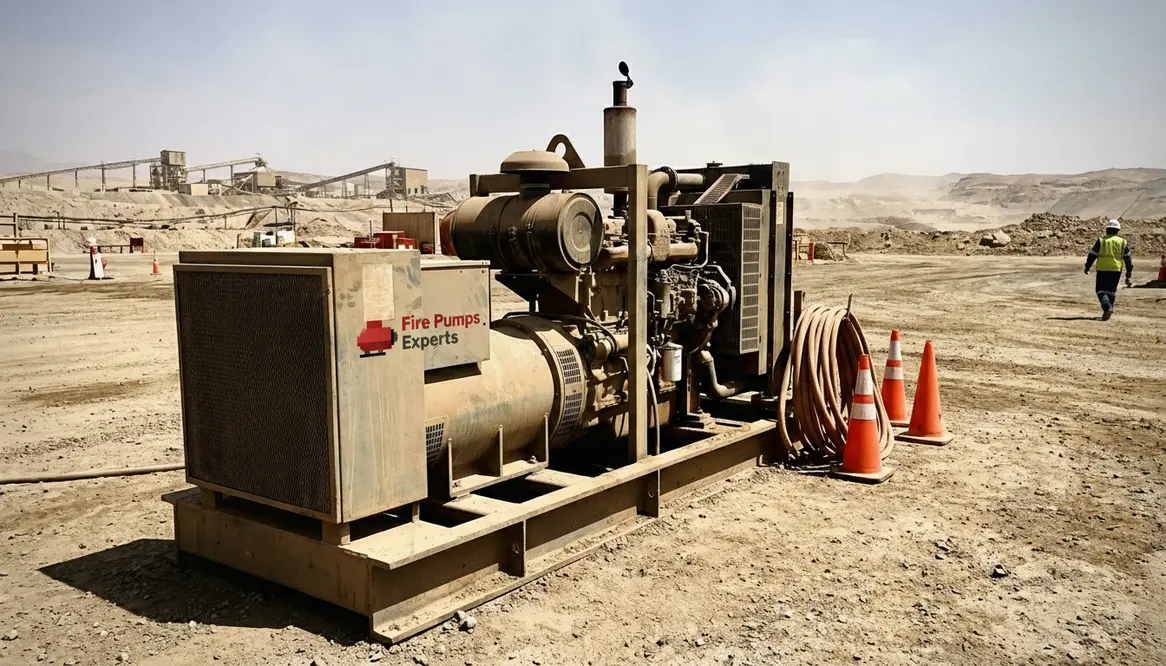
Fire Pump Reliability for Remote Facility India
High stakes, long distances, and zero room for error. That is the daily reality of a fire pump remote facility India setup operating far from quick external support.
I have spent years around industrial safety systems, and one thing I never take lightly is fire pump reliability. When we talk about a fire pump remote facility India scenario, we are not just discussing equipment. We are talking about lifelines tucked away in places where help is not exactly around the corner.
Picture a refinery miles from the nearest city or a mining operation deep in rugged terrain. If a fire breaks out there, the pump either performs or everything else becomes a very expensive bonfire. No pressure, right?
Why reliability matters more in isolated industrial zones
In remote industrial locations across India, response time is not measured in minutes. It is measured in distance, terrain, and sometimes pure luck. Therefore, the fire pump becomes the first responder, the backup plan, and the hero all rolled into one.
Moreover, environmental conditions add another layer of complexity. Dust, heat, humidity, and unstable power supply all challenge system performance. Because of this, reliability in any fire pump remote facility India configuration is not optional. It is engineered.
And let’s be honest, no facility manager wants to explain to stakeholders that a multi crore asset was lost because a pump decided to take a day off. Even machines should not ghost you.
What makes a fire pump system dependable in remote facilities
I like to think of reliability as a combination of design discipline and operational awareness. First, the pump itself must meet strict industrial standards. However, that is only the beginning.
Equally important is the power source. In many remote facility fire pump India setups, diesel driven pumps become essential. They do not rely on an unstable grid, and they keep running when everything else goes dark. Additionally, redundancy plays a critical role. A single pump is a risk. A well configured system with backup units is peace of mind.
Then there is monitoring. Today, smart sensors and remote diagnostics allow teams to track performance without being physically present. It is like having a watchful guardian, minus the dramatic background music.
How do I maintain fire pump performance in remote industrial India?
I get this question often, and the answer is straightforward but requires discipline. Maintenance is not a one time event. It is a routine that must be followed without shortcuts.
First, regular testing ensures the pump starts and runs under load conditions. Secondly, fuel quality checks are essential for diesel systems. Contaminated fuel can quietly sabotage performance. Furthermore, periodic inspection of valves, controllers, and piping prevents small issues from turning into major failures.
In addition, I recommend training on site personnel. Even in remote setups, someone should know how to respond when alarms trigger. Because when something goes wrong, Google is not always your fastest friend.
Common challenges in fire pump remote facility India setups
Let me paint a realistic picture. Remote industrial sites in India face logistical hurdles that urban facilities rarely encounter. Transporting spare parts can take days. Skilled technicians are not always nearby. Weather conditions can delay everything.
However, the biggest challenge I see is neglect born out of distance. Out of sight should never mean out of mind. A fire pump system that is rarely inspected becomes unpredictable.
On the bright side, modern automation helps bridge this gap. Remote alerts and performance dashboards allow facility managers to stay informed. It is not quite Jarvis from Iron Man, but it is getting there.
Design strategies that actually work in the field
Robust Equipment Selection
I always start with equipment that can handle harsh conditions. Corrosion resistant materials and high quality seals go a long way.
Redundant Systems
Backup pumps and dual power sources reduce risk significantly. If one fails, the other steps in without hesitation.
Simple Layouts
Complex systems often fail in complex ways. Therefore, I prefer designs that are easy to understand and maintain.
Remote Monitoring
Smart systems provide real time data, which helps teams act quickly even from a distance.
Scheduled Testing
Routine testing ensures readiness. Skipping tests is like skipping leg day. It shows when it matters most.
Local Training
Empowering on site teams improves response time and reduces dependency on external support.
The role of compliance and standards in India
Compliance is not just paperwork. It is a framework that ensures systems perform when needed. In India, fire safety standards for industrial facilities are evolving, and rightly so.
Following national and international guidelines helps maintain consistency. Moreover, audits and inspections keep systems aligned with safety expectations. I always advise facilities to treat compliance as a continuous process rather than a one time checkbox.
Because at the end of the day, standards exist for a reason. They are written in lessons learned, often the hard way. Resources like https://www.firepumps.org and national guidelines provide valuable reference points when designing or auditing a fire pump remote facility India installation.
FAQ
Conclusion
If you manage or design a fire pump remote facility India system, you already know the stakes are high. Reliability is not luck. It is built through smart design, disciplined maintenance, and the right technology. Now is the time to evaluate your systems, strengthen weak points, and ensure readiness. Because when the moment comes, your fire pump should not hesitate. And neither should you when it comes to upgrading your safety infrastructure.