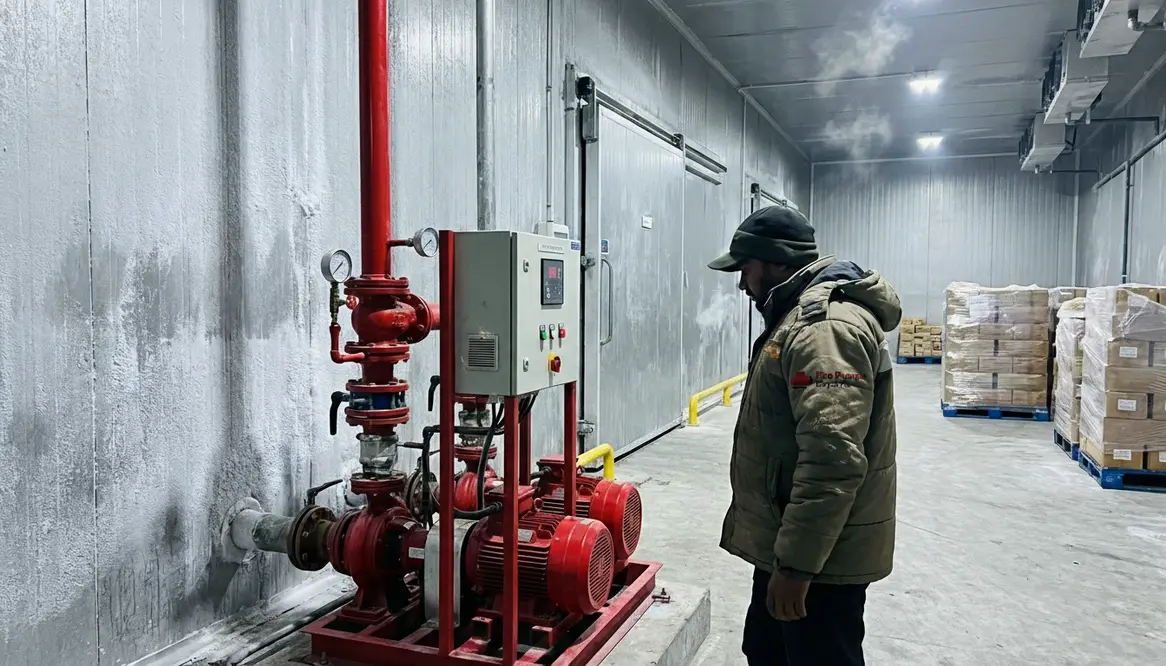
Fire Pump Cold Storage India Selection Guide
I have spent enough time around industrial facilities to know this simple truth. Fire does not care how cold your building is. In fact, when I talk about fire pump cold storage India, I am really talking about a quiet guardian working behind the scenes in some of the most temperature sensitive environments in the country. Cold storage facilities hold valuable goods, from pharmaceuticals to food supply chains, and when something goes wrong, it goes wrong fast. So, let us walk through how I approach selecting the right fire pump for these spaces, with a steady hand and maybe a small chuckle along the way.
Why Cold Storage Demands a Different Kind of Fire Protection
At first glance, you might think cold storage reduces fire risk. After all, everything is chilled. However, reality has a different script. Insulated panels, electrical systems, and packaging materials can all fuel a fire. Meanwhile, low temperatures can affect water flow and pump performance.
Because of this, I always look at fire protection here as a precision job. The pump must perform reliably despite cold environments, fluctuating loads, and often remote locations. Moreover, response time matters. You do not want your system hesitating like someone deciding what to watch on a Friday night.
How Do I Choose the Right Fire Pump Cold Storage India Setup?
I start with one principle. The pump must match the risk, not just the building size. In India, codes like NBC guidelines and local fire authority requirements shape decisions, but I go deeper.
First, I evaluate hazard classification. Cold storage often falls under moderate to high hazard depending on stored goods. Then, I consider water supply reliability. If supply is inconsistent, I lean toward robust pump configurations with backup systems.
Next, I assess temperature impact. Diesel driven pumps often perform better in extreme cold compared to electric ones, especially where power stability is questionable. Still, electric pumps work beautifully in facilities with strong infrastructure.
Finally, I think about redundancy. Because when you are protecting assets worth crores, one pump is rarely enough. It is like relying on one actor to carry an entire blockbuster. Even the best need support.
Key Factors I Never Ignore in Industrial Cold Storage Facilities
Temperature resilience
I ensure materials and components can handle low temperatures without cracking or slowing down.
Water flow consistency
Cold environments can affect viscosity and pressure. So I select pumps that maintain steady discharge.
System integration
The pump must align with sprinklers, hydrants, and detection systems. A mismatch here is like pairing a sports car engine with bicycle tires.
Compliance and certification
I always verify adherence to Indian standards and international benchmarks where required.
Maintenance accessibility
Because even the best systems need care, and no technician enjoys crawling through freezing corners at midnight.
Comparing Fire Pump Options for Large Facilities
When I work on a fire pump cold storage India project, the starting point is usually a debate between electric and diesel pumps. Both have clear roles depending on the facility’s location, power reliability, and risk appetite.
Electric Fire Pumps
Pros
- Lower operational noise
- Efficient for stable power environments
- Easier automation
Cons
- Dependent on uninterrupted power
- May require backup generators
Diesel Fire Pumps
Pros
- Independent of grid power
- Reliable in remote locations
- Strong performance in cold conditions
Cons
- Higher maintenance
- Fuel storage considerations
In many Indian cold storage projects, I find a combination works best. One electric pump for efficiency, paired with a diesel backup for reliability. It is not overkill. It is insurance.
Installation Realities I Plan for Every Time
Even the perfect pump can fail if installed poorly. So I pay attention to practical details early.
First, I ensure proper insulation around pump rooms. Cold exposure can damage components over time. Then, I plan suction and discharge piping carefully to avoid pressure losses.
Additionally, I look at vibration control. Pumps should run smoothly, not like a washing machine on its final spin cycle. And of course, accessibility matters. Engineers need space to inspect and maintain without wrestling with equipment.
Finally, I coordinate with fire safety consultants and local authorities. Approvals are not just paperwork. They are checkpoints that ensure the system will perform when it matters most.
Fire Pump Cold Storage India Trends I See Emerging
The industry is evolving, and I see some clear shifts in how teams design and maintain fire pump cold storage India systems, especially across large logistics parks and integrated food hubs.
Automation is becoming standard. Smart monitoring systems now track pump health in real time. So instead of reacting to failures, operators can act early.
Energy efficiency is also gaining attention. Facilities want systems that protect assets without driving up operational costs.
Moreover, integrated safety ecosystems are on the rise. Fire pumps now connect seamlessly with alarms, suppression systems, and building management platforms. It feels a bit like giving your facility its own nervous system.
And yes, sustainability is entering the conversation too. Because even in heavy industry, people are starting to ask how safety and environmental responsibility can coexist. Thoughtful choices in pump sizing, pipe routing, and control logic can reduce wastage without affecting response capability.
For teams looking to explore deeper standards, guidance and technical resources from platforms such as https://firepumps.org can support better planning alongside national codes.
FAQ
Below are some quick answers to the questions that come up most often when planning a fire pump cold storage India project.
Conclusion
Choosing the right fire pump system is not just a technical decision. It is a commitment to safety, continuity, and peace of mind. If you are planning or upgrading a cold storage facility, I encourage you to invest in a system that matches your operational demands and future growth.
Treat every fire pump cold storage India project as a long-term safety investment rather than a line item to be rushed. Work with experienced professionals, ask the right questions, and build a solution that stands ready, even when everything else is frozen still.