Fire Pump Data Center India Design Guide
I have seen a quiet revolution unfolding across India’s skyline. Data centers are rising like digital fortresses, humming with information that fuels everything from banking apps to late night streaming marathons. And right at the heart of these critical facilities lies a system that rarely gets applause but always deserves it: fire pump design. When we talk about fire pump data center India, we are talking about precision, reliability, and a level of foresight that borders on paranoia. And frankly, that is exactly what we need when the stakes are this high.
Why Fire Pump Design Matters in India’s Data Center Boom
India’s tech sector is not just growing, it is sprinting. Consequently, data centers must operate without interruption, even when things go sideways. Fire risk in these facilities is not always dramatic flames and alarms. Instead, it often begins quietly through electrical faults or overheating systems.
Because of that, I design fire pump systems with one simple rule: assume failure is inevitable, but downtime is not. A well engineered system ensures consistent water flow and pressure, even during peak demand. Moreover, it supports sprinkler and suppression systems that act faster than most humans can react. Think of it as the silent bodyguard who never blinks.
How do I design a fire pump system for data centers in India?
I start with risk mapping. Not all data centers are created equal, and neither are their fire loads. Therefore, I evaluate equipment density, layout complexity, and power infrastructure. From there, I move into hydraulic calculations. This step ensures the system delivers adequate pressure across every corner of the facility.
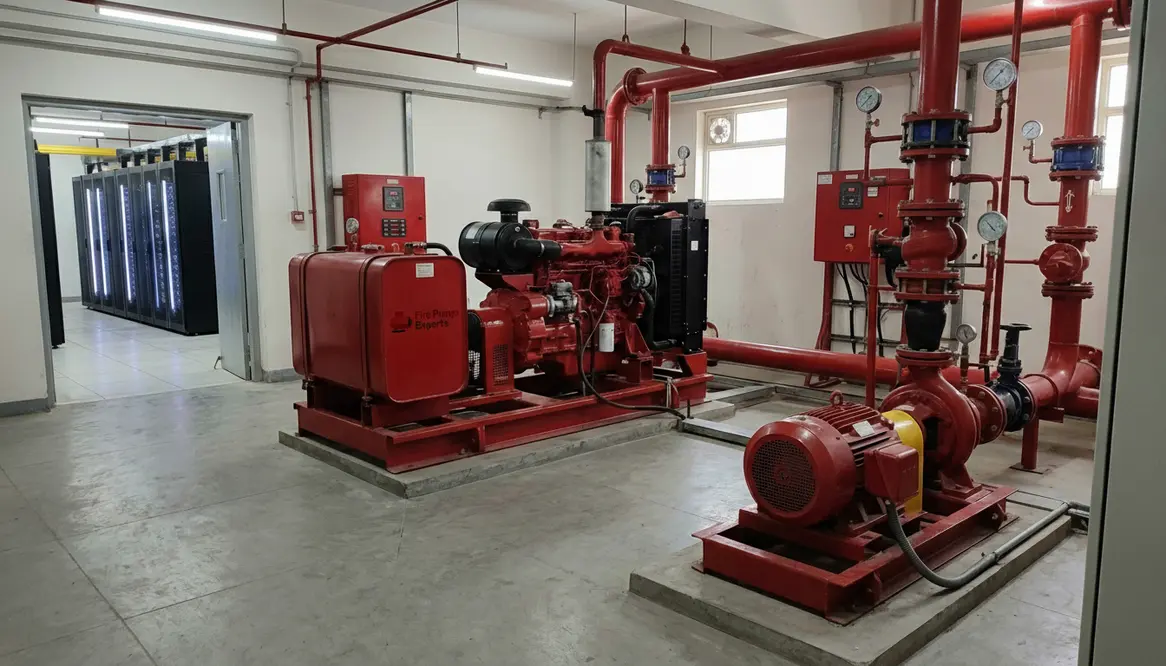
Next, I focus on redundancy. In India’s climate and power conditions, backup is not optional. I typically recommend multiple pumps, including electric and diesel driven units. Additionally, I integrate automatic transfer systems to handle power interruptions smoothly.
Then comes compliance. Indian standards, along with global benchmarks like NFPA, guide my design choices. However, I never treat them as a checklist. Instead, I treat them as a baseline and build upward. Because when servers worth millions are at stake, “good enough” is a phrase I politely ignore.
Key Components That Make or Break Performance
Every fire pump system has moving parts, but not all parts carry equal weight. I pay special attention to a few critical components that determine long term reliability.
Pumps and Drivers
I select pumps based on flow requirements and pressure needs. Meanwhile, I ensure drivers can operate under extreme conditions without hesitation.
Controllers
Controllers act as the brain. They detect pressure drops and activate pumps instantly. A delayed response here can turn a small issue into a headline.
Water Storage
Without adequate water supply, even the best pump is just an expensive paperweight. Therefore, I design storage systems that account for worst case scenarios.
Piping Network
I design piping layouts to minimize friction loss while maintaining consistent pressure distribution. It is a bit like city planning, but with fewer traffic jams and more life safety implications.
Balancing Efficiency and Redundancy in Fire Pump Data Center India
Here is where things get interesting. On one hand, I want efficiency. On the other, I demand redundancy. At first glance, those goals seem to argue like two siblings in the back seat. However, I have learned to make them cooperate.
I use variable speed pumps to optimize energy use during normal conditions. Meanwhile, I maintain backup systems that kick in during emergencies. Additionally, I design layouts that allow maintenance without shutting down operations. Because in a data center, downtime is not just inconvenient, it is expensive enough to make CFOs lose sleep.
Efficiency Focus
- Energy optimized pump selection
- Smart controllers for demand based operation
- Reduced friction in piping design
Redundancy Focus
- Dual pump configurations
- Diesel backup systems
- Independent power sources
What challenges do I face in India’s environment?
India presents a unique mix of challenges, and I say that with both admiration and caution. First, power reliability can vary. Therefore, I always incorporate diesel driven pumps as backup. Second, water availability can fluctuate, especially in urban clusters. So, I design storage systems that can sustain extended operation.
Additionally, space constraints often push me to think creatively. Data centers want maximum server space, not bulky mechanical rooms. As a result, I optimize layouts without compromising safety. It is a bit like playing Tetris, except the stakes are significantly higher and there is no cheerful music in the background.
Compliance, Testing, and Long Term Reliability
Design is only the beginning. I always emphasize testing and maintenance because even the best system can fail without proper care. Routine testing ensures pumps start instantly and deliver required pressure. Moreover, periodic inspections help identify wear before it becomes a problem.
I also align designs with Indian regulations and international standards. However, I go beyond compliance by building systems that anticipate future expansion. Data centers evolve quickly, and fire protection systems must keep up without requiring a complete redesign.
FAQ
Conclusion
When I design for a fire pump data center India project, I am not just planning for emergencies. I am building confidence into every pipe, pump, and controller. If you manage a commercial or industrial facility, now is the time to rethink your fire protection strategy. Connect with experts who understand the stakes and design systems that never flinch. Because in this business, preparedness is not optional, it is everything.