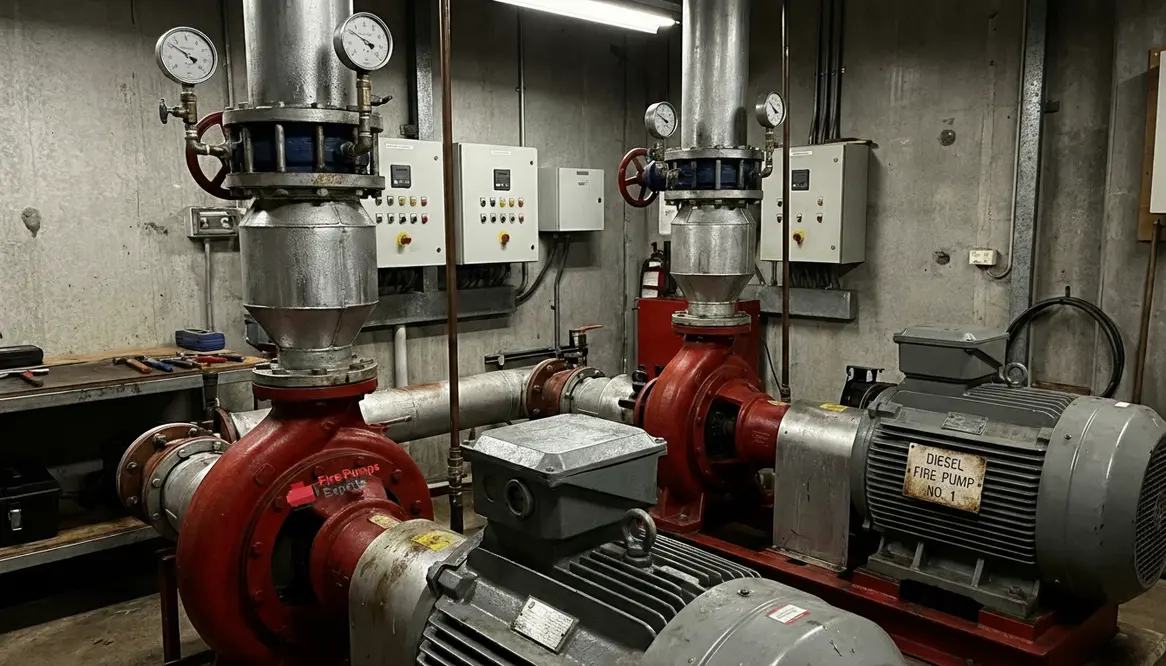
Fire Pump Industrial Brisbane Design Guide
I have spent years walking through plant rooms where the quiet hum of machinery carries more responsibility than most people realize. In Brisbane, where industrial facilities run hot, busy, and unforgiving, a properly designed fire pump industrial Brisbane system is not just a compliance checkbox. It is the last line of defense when everything else goes wrong. And trust me, when alarms start singing, nobody wants a system that “mostly works.” That is like bringing a spoon to a sword fight.
What makes fire pump design critical in industrial facilities
First, I always remind clients that industrial buildings are not gentle environments. They hold fuel loads, complex layouts, and high-value assets. Therefore, the fire pump becomes the heart of the suppression system. Without strong pressure and reliable flow, even the best sprinklers just sit there looking decorative.
Moreover, Brisbane facilities face unique conditions. Heat, humidity, and sometimes coastal air quietly test every component. Because of this, I design systems that can handle stress without flinching. In other words, we do not build for average days. We build for the worst Tuesday imaginable.
And yes, I have seen what happens when design is rushed. It usually ends with someone saying, “It looked fine on paper.” Paper, unfortunately, does not put out fires.
How do I design a compliant fire pump industrial Brisbane system?
I start with standards, always. Australian Standards like AS 2941 guide pump selection, installation, and performance. However, I do not stop at compliance. I build systems that exceed minimum expectations because “just enough” tends to fail at the worst time.
Next, I evaluate demand. Every facility has a unique hazard profile. For example, a warehouse storing plastics behaves very differently from a manufacturing plant handling chemicals. Consequently, I calculate flow rates and pressure requirements based on real risks, not guesswork.
After that, I select the pump type. Electric pumps offer efficiency, while diesel pumps provide reliability during power loss. Often, I recommend a combination. Think of it as having both Batman and Superman on standby. Redundancy is not overkill. It is smart planning.
Key components I never compromise on
When I design systems, I focus on the parts that quietly determine success. Each component must perform under pressure, literally and figuratively.
Core Equipment
- Fire pump units sized for peak demand
- Reliable drivers, electric or diesel
- Controllers with clear, fail-safe logic
- Water storage with consistent supply
Support Systems
- Jockey pumps to maintain pressure
- Test lines for performance checks
- Backup power integration
- Monitoring and alarm interfaces
Additionally, I make sure every element works together. A powerful pump means nothing if the controller hesitates or the water supply falls short. It is a team effort, not a solo act.
Designing for Brisbane conditions and industrial scale
Brisbane is not shy about its climate. Heat builds up inside facilities, and moisture finds its way into everything. Because of that, I select corrosion-resistant materials and ensure ventilation protects sensitive equipment.
Furthermore, industrial sites often operate around the clock. This means maintenance access cannot be an afterthought. I design layouts that technicians can navigate easily. After all, if a system is difficult to service, it will eventually be ignored. And ignoring a fire system is like ignoring a smoke alarm at 2 AM. It rarely ends well.
In large facilities, zoning also plays a major role. I divide systems so that pressure and flow remain consistent across vast areas. Otherwise, you risk strong performance in one section and disappointing results in another.
Common mistakes I see in fire pump system design
Over the years, I have seen patterns. Some mistakes show up again and again, like reruns of a show nobody asked for.
First, undersized pumps remain a classic issue. Designers sometimes aim for cost savings, but that approach backfires quickly. A pump that cannot meet demand is simply decoration with pipes attached.
Second, poor integration between systems causes delays during activation. If alarms, pumps, and sprinklers do not communicate properly, precious seconds disappear. And in fire scenarios, seconds matter more than most meetings ever will.
Finally, lack of testing provisions makes long-term reliability uncertain. I always include proper test lines and monitoring. Because if you cannot verify performance, you are relying on hope. Hope is great for movies, less so for industrial safety.
How I future proof fire pump industrial Brisbane systems
I design with tomorrow in mind. Facilities expand, processes evolve, and risks change. Therefore, I allow room for upgrades and increased capacity. It is far easier to scale a system than to rebuild it from scratch.
In addition, I integrate smart monitoring where possible. Real-time data helps facility managers catch issues early. It is like having a health tracker for your fire system, minus the guilt about skipped workouts.
Energy efficiency also plays a role. While safety comes first, efficient systems reduce operational costs over time. That balance keeps both engineers and accountants happy, which is no small achievement.
Whenever I work on a fire pump industrial Brisbane upgrade, I look not only at the current hazard profile but also at where production lines, storage zones, and utilities are likely heading. Designing pipework, pump capacity, and control logic with spare headroom means the next project does not start from zero.
Strategic placement and layout for industrial reliability
The best-performing systems I have seen share one thing in common: their fire pumps are placed where they can breathe, stay dry, and stay accessible. In many Brisbane projects, that means carefully assessing flood risks, nearby process hazards, and even traffic patterns for forklifts and heavy vehicles.
When planning a fire pump industrial Brisbane plant room, I pay close attention to clearances for removal of major components, door widths, and ventilation paths. Nobody thanks you for saving one metre of floor space if it means a pump or driver cannot be swapped out without major demolition.
I also make sure acoustic and vibration impacts are considered. Nearby offices, control rooms, or sensitive equipment should not feel like they are living beside an engine test cell every time the pump runs. Mounting systems, flexible connections, and room layout all influence how quietly and smoothly the system operates.
Operations, maintenance, and training
Design does not end at commissioning. A fire pump that nobody understands will eventually be treated like a mysterious red box in the corner. I aim for panels, controls, and indicators that operators can read even during a stressful 3 AM call-out.
Clear test procedures, labelled valves, and logical pipework routing mean that weekly and monthly checks do not feel like a scavenger hunt. When crews have confidence in the system, they are more likely to keep it in top condition. That is where a thoughtfully designed fire pump industrial Brisbane installation really separates itself from a bare-minimum project built only to chase a certificate.
Finally, I encourage facilities to log testing data and maintenance history carefully, whether in a digital platform or a structured site system. Trends in start times, pressure curves, and alarm events can reveal issues long before they become critical. This approach turns the fire pump from a silent mystery into a well-understood asset that fits neatly into broader risk management plans.
FAQ about fire pump systems in industrial facilities
A lot of facility teams have similar questions when they first look at upgrading or installing a fire pump industrial Brisbane system, especially if the existing setup has grown old quietly in the background. These are some of the most common queries that come up during design workshops and site reviews.
Conclusion
When I design a fire pump system, I think beyond drawings and specifications. I think about the moment it will be needed most. If you are planning or upgrading a system, now is the time to get it right. Reach out, and let’s build something that stands strong when it matters, protects your facility, and quietly does its job without asking for applause.