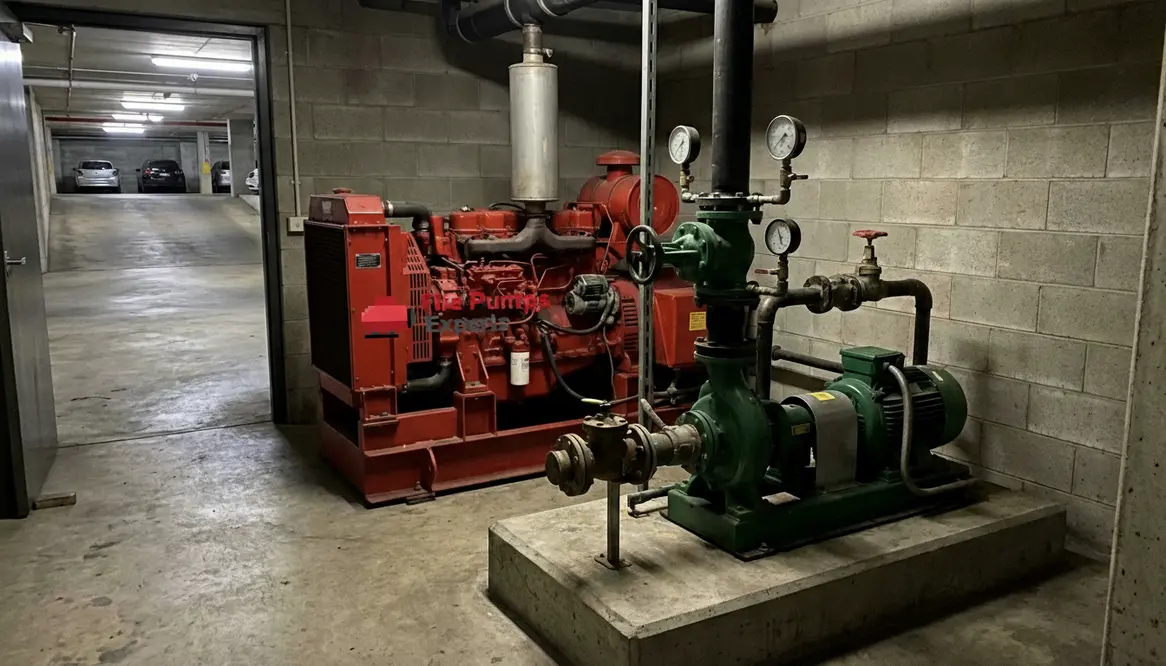
Fire Pump Underground Car Park Australia Guide
I have spent years around concrete ramps, low ceilings, and the quiet hum of machinery that only wakes when something goes wrong. In that world, choosing the right fire pump underground car park Australia solution is not just a compliance task. It is a decision that sits quietly in the background until the day it saves a structure, a fleet, and lives. In Australian cities, where underground parking stretches beneath towers like hidden basements of steel and rubber, the right fire pump is less of a luxury and more of a silent guardian. And yes, like Batman, it works best when no one notices it.
What matters most when selecting a fire pump for underground car parks in Australian cities?
I start with purpose, not product. Underground car parks are enclosed, heat trapping environments. Therefore, I focus on systems that can deliver consistent pressure, fast response, and reliability under stress. Electric pumps often suit sites with stable power and backup generators. However, diesel driven pumps step in where redundancy is non negotiable.
Additionally, I always consider flow rate and pressure requirements based on the building size and hazard classification. Australian standards guide this, but real world conditions refine it. Long pipe runs, multiple levels, and ventilation limits all shape the final choice. So, while a spec sheet looks tidy, the actual environment tells the real story.
Understanding compliance without falling asleep halfway through
Let us be honest. Compliance documents are not exactly beach reading. Still, they matter. In Australia, fire pump systems for underground parking must align with AS 2419 and related standards. I treat these not as hurdles, but as guardrails.
Moreover, local council requirements and building codes often add another layer. Sydney is not Brisbane, and Melbourne loves to keep things interesting. Therefore, I always cross check regional nuances before locking in a design. It saves time, money, and a few headaches that no amount of coffee can fix.
Choosing between electric and diesel fire pumps
This is where things get practical. Electric pumps are efficient, quieter, and easier to maintain. However, they depend on power continuity. So, if a site has a reliable generator backup, they become a strong contender.
On the other hand, diesel pumps bring independence. They do not rely on the grid, which makes them ideal for high risk or mission critical facilities. Yes, they need more maintenance, and yes, they can be a bit louder. But when everything else fails, they keep going. Think of them as the action hero who never checks if the plan will work.
Electric Pumps
- Lower operational noise
- Simpler maintenance
- Dependent on power supply
- Ideal for stable infrastructure
Diesel Pumps
- Independent operation
- Higher reliability in outages
- Requires fuel management
- Better for critical facilities
Designing for real world underground conditions
Underground car parks are not kind environments. Heat builds quickly, airflow is limited, and access can be tight. Because of this, I prioritise ventilation around pump rooms and ensure adequate cooling for equipment.
Furthermore, I account for water supply reliability. Whether it is a dedicated tank or a boosted mains connection, the system must deliver without hesitation. Even a few seconds of delay can change outcomes dramatically. So, I design with a margin, not just minimum compliance.
And then there is space. In many city builds, every square metre is precious. Therefore, compact layouts and smart positioning become part of the engineering conversation, not an afterthought.
Fire pump underground car park Australia cost factors and lifecycle thinking
Cost is never just about installation. I look at lifecycle value. A cheaper pump upfront can become expensive if maintenance is frequent or downtime risks increase. So, I balance capital cost with long term reliability.
Additionally, I consider energy consumption, servicing access, and parts availability. In major Australian cities, downtime is not just inconvenient. It disrupts operations and can impact compliance status. Therefore, investing in quality systems pays off over time.
Also, a small note with a smile. If a system only works perfectly in a brochure, it probably will not behave the same in a concrete basement at 2 am.
Installation and integration with broader fire systems
A fire pump does not work alone. It connects with sprinklers, hydrants, detection systems, and alarms. Because of this, integration is critical. I ensure that control panels communicate clearly and that activation sequences are tested thoroughly.
Moreover, commissioning is where theory meets reality. I insist on full system testing under load conditions. This step reveals issues that drawings never show. It is also where confidence is built, not assumed.
FAQ
Before choosing a fire pump underground car park Australia solution for your building, it helps to clear up the common questions that always surface in design meetings and audits.
If you need more technical depth or want to compare options, detailed resources such as https://www.firepumps.org can help frame questions before speaking with designers or contractors.
Final thoughts and next steps
Choosing the right system is not about ticking boxes. It is about building confidence beneath the surface, where risks hide and response time matters most. If you are planning or upgrading a commercial or industrial site, now is the time to act. Work with specialists who understand the demands of underground environments and Australian standards. Because when the moment comes, your system should not hesitate, and neither should you.
Underground parking might never be the glamorous part of a project, but the decisions made there echo through every storey above. Treat your fire pump underground car park Australia selection as core infrastructure, not a footnote in the specification, and it will quietly watch over everything built on top of it.