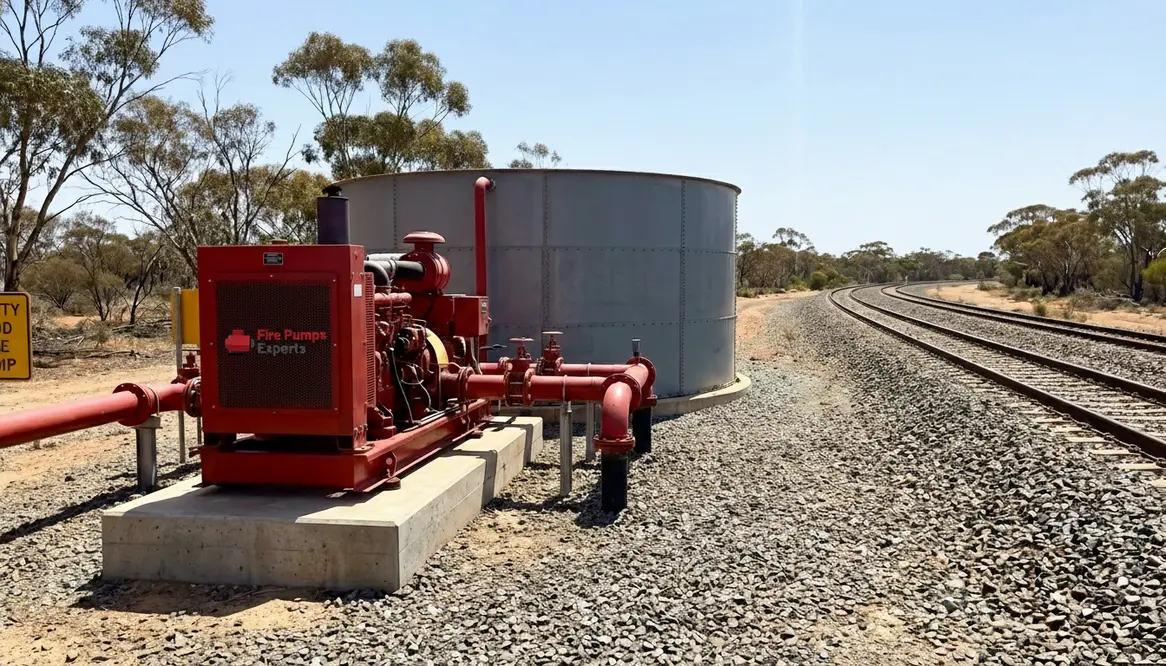
Railway Fire Pump Australia for Rail Infrastructure
I have spent enough time around rail corridors to know one thing for certain. Steel, speed, and sparks do not forgive mistakes. That is exactly where railway fire pump Australia solutions step in, quietly doing their job long before anyone notices trouble. In a country where distances stretch wide and infrastructure works hard, fire protection is not just a box to tick. It is a system that needs to respond fast, hold pressure, and stay reliable when everything else is under stress. So let me walk you through how these systems really function across major rail infrastructure, without putting you to sleep along the way.
What makes fire pump systems essential for rail infrastructure?
I like to think of rail networks as moving cities. You have stations, tunnels, maintenance depots, and power systems all packed into one ecosystem. Because of that, fire risk spreads in ways that are both predictable and, occasionally, dramatic enough to make a Hollywood director take notes.
First, electrical faults are common in high load environments. Then you add fuel storage, hydraulic systems, and confined tunnel spaces. As a result, a small ignition can escalate quickly. That is where dedicated fire pump systems earn their keep.
Unlike standard building setups, rail infrastructure requires pumps that can maintain consistent pressure over long pipe runs. Additionally, systems must activate without hesitation. In many cases, human response simply cannot move fast enough.
So, I rely on engineered systems that combine diesel and electric pumps, backed by redundancy. Because when a train line carries thousands of passengers daily, “almost reliable” is not a comforting phrase.
Designing for scale across Australia’s rail networks
Distance, climate, and the realities of the network
Australia does not do small when it comes to distance. Consequently, fire pump design must adapt to wide networks, remote stations, and varying climates. From humid coastal lines to dry inland corridors, each environment pushes systems in different ways.
Coverage, durability, and response
I approach design with three priorities in mind. Coverage, durability, and response time. For instance, long tunnels require high pressure pumps capable of feeding hydrants and sprinklers simultaneously. Meanwhile, open air depots demand systems that can handle wind and temperature swings without losing efficiency.
Moreover, water supply is not always guaranteed. Therefore, storage tanks and booster configurations become critical. A well designed system anticipates interruptions and compensates before anyone notices a drop in performance.
And yes, sometimes it feels like building a system that could survive a Mad Max sequel. In parts of Australia, that is not entirely a joke.
Key components that keep systems running smoothly
Every effective setup comes down to its core parts working together. I have seen impressive systems fail because one component was treated as an afterthought. That is like buying a sports car and skipping the brakes. Bold move, not a wise one.
Core mechanical elements
- Pump units with consistent pressure output
- Diesel backup for power outages
- Jockey pumps for pressure maintenance
- Corrosion resistant pipework
Control and safety systems
- Automatic start controllers
- Pressure sensors and alarms
- Remote monitoring capability
- Fail safe redundancy design
When these elements align, the system does not just react. It anticipates. That is the difference between controlled incidents and operational chaos.
Compliance and standards for railway fire pump Australia systems
I cannot stress this enough. Compliance is not paperwork. It is performance under pressure. Across Australia, fire pump systems for rail infrastructure must align with strict standards such as AS 2941 and other relevant codes tied to commercial and industrial facilities.
However, ticking compliance boxes is only the starting point. Real world conditions demand more. For example, vibration from constant rail movement can impact fittings over time. Therefore, installations must account for dynamic loads, not just static ones.
Additionally, routine testing is non negotiable. I always recommend scheduled flow tests and system audits. Because when a system finally activates, that is not the moment to discover a valve decided to retire early.
How do modern fire pump systems improve rail safety and uptime?
I have seen the shift toward smarter systems, and it is not just about fancy dashboards. Today’s fire pump setups integrate monitoring tools that provide real time data on pressure, flow, and system health.
As a result, maintenance teams can act before failures occur. This predictive approach reduces downtime and keeps rail operations running smoothly. And in large scale infrastructure, downtime is not just inconvenient. It is expensive.
Furthermore, automation ensures immediate activation during emergencies. There is no waiting, no hesitation, and definitely no one flipping through a manual while things heat up. The system simply does what it was built to do.
It is a bit like having a silent bodyguard who never sleeps. Not flashy, but incredibly effective.
Installation challenges and practical solutions
Working inside live rail environments
Installing fire pump systems in rail environments is rarely straightforward. Space constraints, ongoing operations, and safety requirements all compete for attention. Still, I have found that careful planning solves most issues before they escalate.
For example, phased installation allows systems to be integrated without halting operations. Additionally, modular pump skids simplify transport and reduce onsite assembly time.
Designing for access and long term maintenance
Another common challenge is accessibility. Maintenance teams need clear access to equipment, even in tight service corridors. Therefore, layout design must balance efficiency with usability.
And let us be honest. If a technician needs to crawl through a maze just to reach a valve, that system will not age gracefully.
Why railway fire pump Australia solutions matter for critical corridors
Across high capacity passenger lines and heavy haul freight routes, a well engineered railway fire pump Australia installation does more than satisfy risk reports. It protects signaling equipment, substations, stations, and maintenance depots that keep entire corridors moving.
When designers treat each site as part of a connected network rather than a standalone project, the result is consistent pressure, predictable performance, and faster response across long distances. That is the real value of a coordinated railway fire pump Australia strategy.
Conclusion
If you manage rail infrastructure, you already understand the stakes. Fire protection is not optional, and it should never feel like an afterthought. I encourage you to invest in systems that are built for scale, tested for reliability, and designed with real world conditions in mind. The right solution protects assets, supports uptime, and most importantly, keeps people safe. When you are ready to strengthen your infrastructure, choose expertise that delivers performance where it counts. A robust railway fire pump Australia configuration is one of the quiet foundations that keeps everything else running.
If you are looking for deeper technical guidance or reference material, resources such as https://firepumps.org provide useful context around pump selection, maintenance expectations, and lifecycle planning within complex networks.