Canada Building Code Fire Pump Requirements Guide
National Building Code of Canada Fire Pump Requirements sound dry on paper, but in the real world, they sit at the center of life safety for commercial and industrial buildings. I see them as the quiet backup singer that keeps the whole show going when the main power or water supply drops out. Under the Canada Building Code requirements, fire pumps step in when a building needs steady pressure to feed sprinklers, standpipes, or both. For major properties, that is not a nice extra. It is a core part of the fire protection plan, and if you get it wrong, the whole system can wobble like a shopping cart with one bad wheel.
In this article, I will walk through the code logic, the main design points, testing needs, and the practical details that matter for owners, engineers, and facility teams. I will keep it simple, clear, and grounded in the code framework that governs commercial and industrial facilities across Canada.
What the code expects from a fire pump
Under the Canada Building Code requirements, a fire pump must support the fire protection system when the normal water supply cannot do the job on its own. That usually means the pump must provide enough pressure and flow to meet the demand of the sprinkler or standpipe system at the most remote point. In plain words, it must push water where gravity and common sense alone cannot.
I always tell people to think of the fire pump as the building’s emergency athlete. It does not sit around all day looking impressive. Instead, it must be ready to perform under stress, quickly and without drama. The code also pushes designers to match the pump size to the system need, not to guess, and certainly not to “just pick a bigger one because bigger sounds safer.” Bigger can create its own problems, which is a very human lesson dressed up in steel and pipe.
For commercial and industrial buildings, the focus stays on reliability, proper installation, and enough capacity to protect the building’s fire safety features. That means the pump, its driver, controls, suction supply, and power source all need careful coordination.
Fire pump as the “emergency athlete”
- Stays idle most of the time but must start instantly under stress
- Must deliver enough pressure at the most remote sprinkler or hose outlet
- Needs to work with the limits of the water supply, not pretend they do not exist
Design mindset the code expects
- Size the pump to real system demand, not to a guess
- Avoid oversizing that can hammer pipes and valves
- Treat the pump, driver, and power source as one system
How I check pump size and water supply
The first thing I look at is demand. The building’s sprinkler and standpipe needs set the target. Then I compare that with the available water supply, because the pump cannot create water out of thin air, no matter how confident the sales brochure sounds.
The Canada Building Code requirements work with fire protection standards that push for proper calculations, not rough guesses. I check the flow rate, pressure loss, suction conditions, and the elevation difference between the source and the top demand point. If the water source cannot support the need, the pump must make up the gap, but only within the limits of the system design.
Here is a simple way to think about it:
Fire pump planning at a glance
- Building fire protection demand
- Water supply flow and pressure
- Suction line size and layout
- Power or driver reliability
- Pressure at the most remote outlet
- System loss during full demand conditions
This is where good design pays off. If the pump is too small, the system underperforms. If it is too large, it can stress pipes, valves, and equipment. So, I prefer a measured approach. The code wants performance, not guesswork dressed up in a hard hat.
Canada Building Code requirements for installation and power
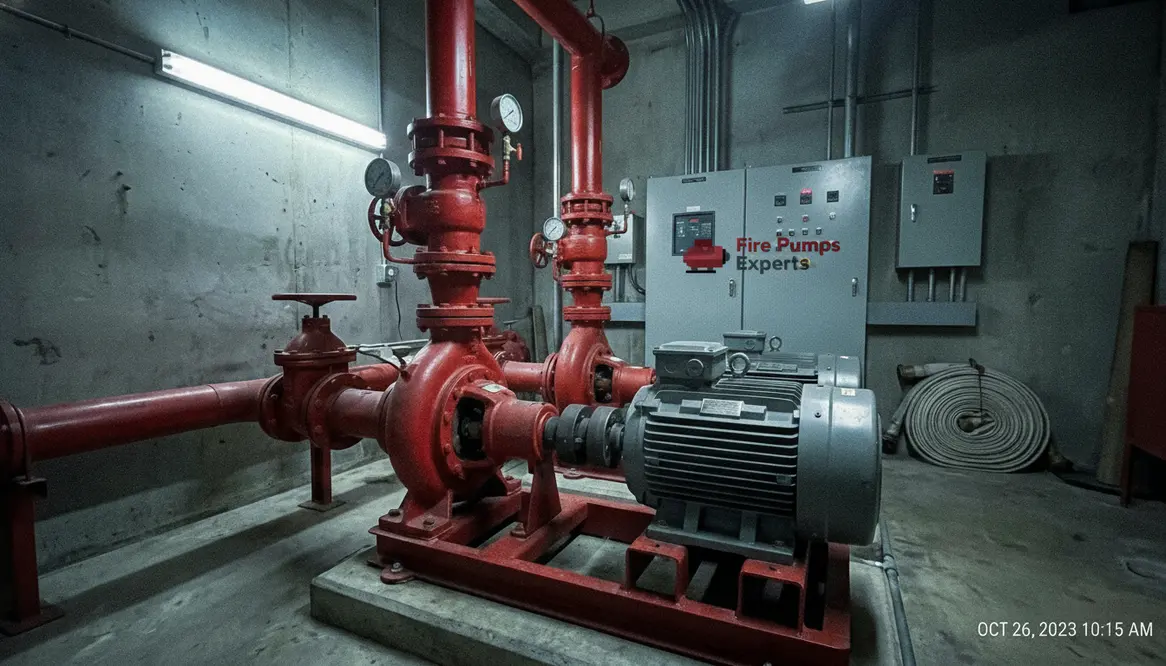
Installation matters as much as pump size. The Canada Building Code requirements expect the pump to be installed in a way that keeps it accessible, protected, and ready to run when needed. That means the room or space must support inspection, testing, and service without making the team play hide and seek with critical equipment.
Power is another big piece. A fire pump may run on electric power or a suitable engine driver, depending on the building design and risk profile. Either way, the source must stay dependable during a fire event. That is why emergency power, fuel supply, and control wiring all need close attention. If the power side fails, the pump becomes a very expensive metal sculpture.
Pump room priorities
- Clear access for inspection and testing
- Protection from freezing, damage, and flooding
- Safe working clearance around equipment
- Drainage that manages test and leak water
- Simple, accurate labeling on valves and controls
Power and reliability checks
- Dedicated power source or listed engine driver
- Emergency or backup power where required
- Fuel supply protected and sized for required run time
- Control wiring routed and protected from fire damage
- Automatic start logic tested and documented
The code also looks at protection from freezing, damage, and flooding. In Canada, that part matters a great deal. A pump room that looks fine in July can turn into a problem in January if no one planned for cold weather. I have seen more than one system lose confidence because someone forgot that water and freezing temperatures are not friends. They are more like rivals in a long winter drama.
For owners of commercial and industrial buildings, this means the pump room should support easy access, safe clearance, proper drainage, and clear labeling. Good installation lowers risk and makes future maintenance far less painful.
What testing and maintenance must happen
A fire pump is only as good as its last test. That sounds harsh, but it is true. The Canada Building Code requirements tie into regular inspection and testing so the pump stays dependable over time. I look for routine checks of pressure, run condition, control operation, and alarm signals. The system should not wake up for the first time during an actual fire. That would be a very bad surprise, and nobody wants that kind of plot twist.
Testing should confirm that the pump starts properly, reaches expected pressure, and responds the way the system design calls for. Maintenance should cover the driver, valves, suction side, power supply, and any control equipment. Also, records matter. If no one documented the test, it is like saying you watched the entire season finale of a show and then forgetting who caused the fire. Not ideal.
Core testing and maintenance habits
- Run tests that prove the pump starts and reaches required pressure
- Exercise automatic and manual start features
- Check alarm signals back to the fire alarm system
- Inspect valves, strainers, and suction conditions
- Maintain drivers, batteries, fuel, and related equipment
- Keep written records that show what was tested and when
For industrial and major commercial properties, I also recommend a review after any major building change. A new tenant, added floor load, system expansion, or water supply change can affect pump needs. The code cares about current conditions, not old assumptions from three renovations ago.
Why I value expert review for major properties
When a project gets large, the details get louder. That is why I value a careful code review, especially for commercial and industrial facilities. Fire pump design touches the sprinkler system, standpipes, water supply, power, room layout, and long term service planning. One weak link can create delays, cost overruns, or compliance trouble.
If you want support that stays focused on major properties, I suggest reviewing expert fire pump services for commercial and industrial buildings. A targeted review can help you match the system to the code, avoid bad sizing, and keep your project moving without the usual circus of rework and confusion.
The key idea is simple. Good code compliance does more than satisfy an inspector. It helps protect people, property, and business continuity. That is the whole point, after all.
FAQ
Conclusion
If you manage a commercial or industrial property, now is the time to review your fire pump system against the Canada Building Code requirements. I suggest you verify the design, test records, power source, and room conditions before a small issue turns into a costly one. A careful review saves time, money, and stress. If you want help with a focused code check for a major building, reach out now and make compliance one less thing to worry about.