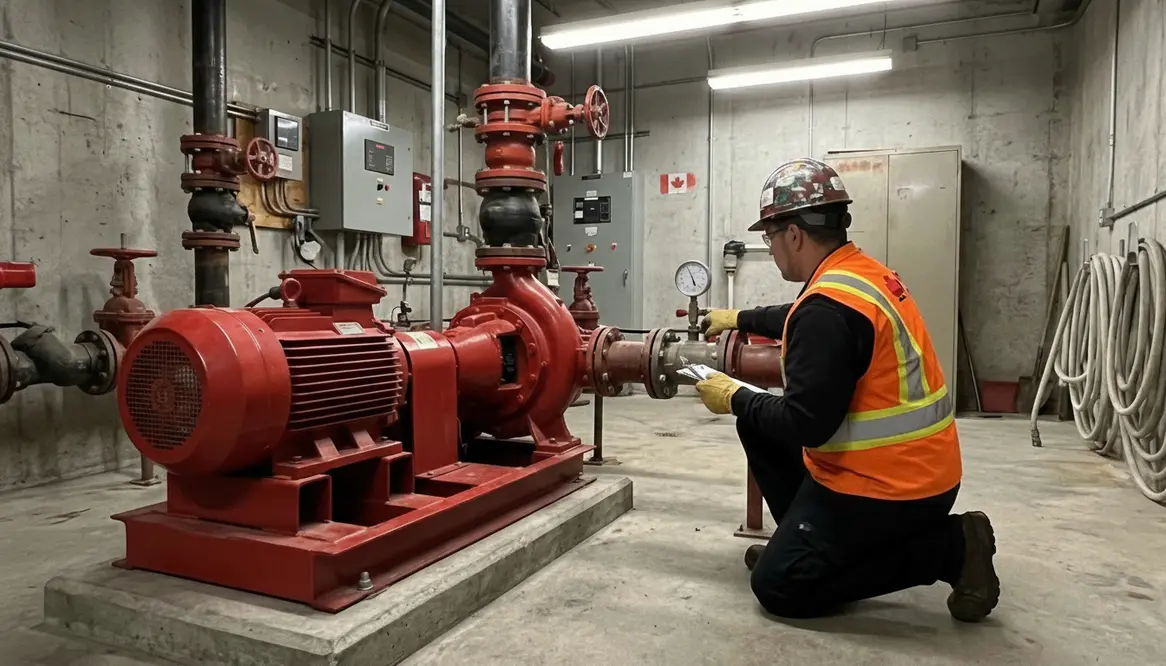
Canadian Fire Pump Testing and Maintenance Guide for Commercial and Industrial Buildings
I have seen enough fire pump rooms to know this: when a fire pump works, nobody cheers, because that usually means a bad day is already in motion. Still, for commercial and industrial buildings, Canadian fire pump testing and maintenance is not just a box to tick. It protects people, property, and business continuity. In Canada, I follow a simple rule: if the pump is part of your life safety system, I treat it like a main character. In this guide, I will walk through what matters, what to check, and how to keep your system ready without turning the process into a soap opera.
What Canadian fire pump testing actually covers
Canadian fire pump testing verifies that the pump can deliver the pressure and flow your building needs during a fire event. I always start with the basics: suction supply, driver condition, discharge pressure, controller status, and system integrity. Then I move into performance testing. This step tells me whether the pump still meets its design duty or if it has started to act like an old hockey player in the third period.
For commercial and industrial properties, I focus on documented results, repeatable methods, and clear follow up. Testing should not feel random. Instead, it should show a pattern over time. That way, I can spot weak seals, worn bearings, motor issues, fuel problems, or pressure drops before they become costly surprises.
How I build a maintenance schedule that works
I keep maintenance simple, regular, and tied to risk. A fire pump that sits untouched for months is not being “rested.” It is being ignored, and those two things are not the same. I build the schedule around weekly, monthly, and annual tasks, while also matching the manufacturer’s instructions and local code needs.
Here is the short version of what I check most often:
- Visual condition of the pump and controller
- Room temperature and ventilation
- Power supply or fuel supply status
- Leak signs, corrosion, or loose fittings
- Jockey pump performance
- Valve positions and tamper seals
Then I document everything. Good records matter because they show trend changes. Also, they make audits less painful. Nobody enjoys a paperwork chase that feels like a sequel nobody asked for.
Canadian fire pump testing step by step
When I perform Canadian fire pump testing, I follow a clear sequence so I can compare results over time and catch problems early. This keeps the test clean and helps me avoid guesswork, which is never a strong strategy in life safety work.
Practical testing checks at a glance
Test Step
Check suction and discharge pressure
Run churn test
Flow test at rated points
Inspect controller and alarms
Review vibration, heat, and noise
Why I Do It
Confirms the pump can move water at the needed level
Shows starting behavior and idle performance
Measures real output against design needs
Confirms the system responds the right way
Reveals hidden wear before it spreads
After that, I compare the results with the original design data and past reports. If the numbers drift, I treat that as a warning sign. Pumps do not usually fail with drama. They usually fail with small clues that people miss because they are busy doing “more urgent” things. That is how trouble sneaks in wearing a polite smile.
Common maintenance issues I watch for
In my experience, the most common problems are also the most preventable. Dirty strainers, low suction pressure, faulty controllers, battery trouble, and worn packing often show up long before full failure. I also watch for closed valves, damaged couplings, and poor room conditions. Heat, moisture, and dust can turn a reliable system into a grumpy one.
Another issue I see often is poor coordination between building teams and service providers. One team changes a setting, another team assumes the system is fine, and suddenly everyone is surprised. That is not a strategy. That is a workplace magic trick, and not the good kind.
Keeping responsibilities clear
So, I recommend a clear chain of responsibility. Someone must own the inspection calendar. Someone must review the logs. And someone must act when the data shows a shift. Simple structure saves time and money.
Why compliance and documentation matter
For Canadian commercial and industrial facilities, compliance is not just about passing an inspection. It is about proving that your fire pump can do its job when it counts. I keep detailed reports because they support audits, insurance reviews, and internal risk checks. More importantly, they help me spot patterns that a single test would never reveal.
If you want deeper standards context, I recommend reviewing the Canadian fire pump testing and maintenance resource for commercial buildings. It can help property teams stay aligned with best practices and service planning.
What good documentation includes
Good documentation should include test dates, readings, faults found, repairs completed, and the name of the person who signed off. That may sound like a lot, but it beats explaining a failure after the fact. And trust me, no one likes that meeting.
FAQ
Keep your system ready before the alarm ever sounds
I believe strong fire pump care comes down to steady testing, honest records, and quick action when something changes. For commercial and industrial buildings, that approach protects people and keeps operations moving. So, do not wait for a warning sign that arrives with sirens. Build a routine, review the data, and keep your system ready. If you want dependable support for Canadian fire pump testing, now is the time to plan your next inspection and maintenance review.