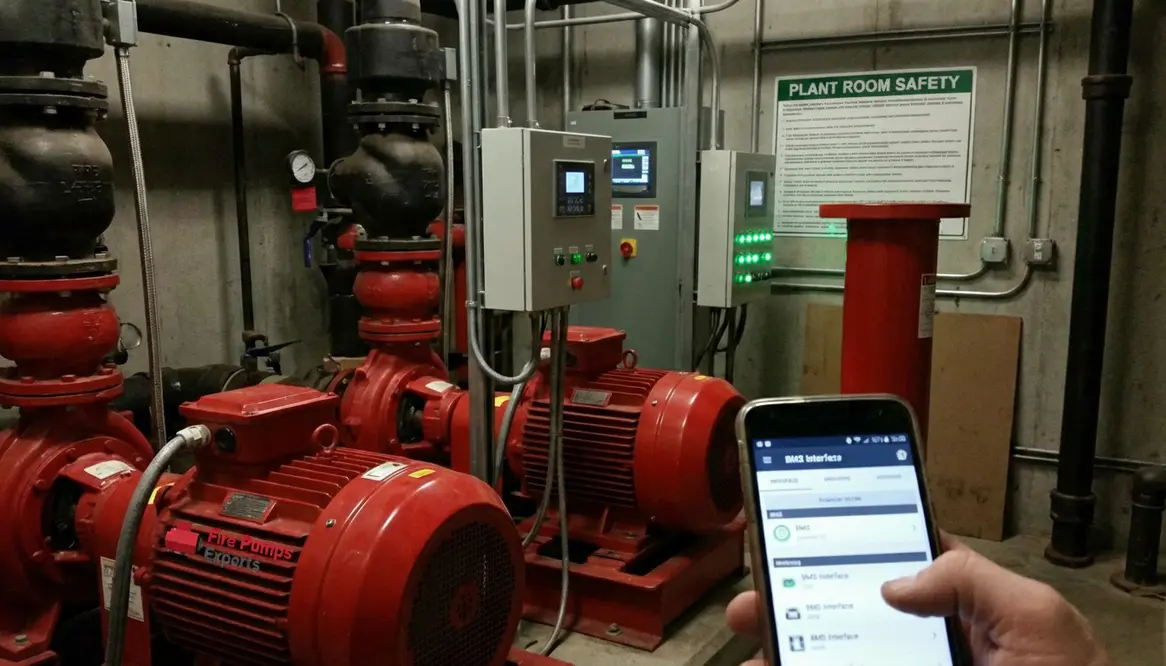
Fire Pump BMS Integration Australia Guide
I have spent enough time around plant rooms to know this simple truth. When a fire starts, nobody cares how beautiful your lobby looks. They care whether your systems talk to each other and respond without hesitation. That is where fire pump BMS integration Australia steps into the spotlight. In commercial towers, industrial plants, and large scale facilities, this integration is not just a technical upgrade. It is the quiet conductor ensuring every life safety system plays in perfect time.
And yes, it may not sound as exciting as a blockbuster film, but when things go wrong, this is the hero that does not need a cape. Just good wiring and smarter control logic.
What is Fire Pump BMS Integration Australia and why should I care?
I like to think of a Building Management System as the brain of a property. It monitors, controls, and keeps things running smoothly. Now, when I connect a fire pump system to that brain, I give the building awareness during an emergency.
With fire pump BMS integration, I can monitor pump status, pressure levels, faults, and alarms in real time. Instead of waiting for someone to physically inspect equipment, the system tells me exactly what is happening. More importantly, it allows faster response when something is off.
So why care? Because in large commercial and industrial buildings, seconds matter. A delay in pump activation or a hidden fault can turn a manageable incident into a disaster. Integration reduces that risk while also improving maintenance visibility.
In Australia, this becomes especially important in high-rise offices, hospitals, shopping centres, and industrial complexes. Fire safety infrastructure must not only meet code; it has to function as a connected ecosystem. That is the real value of fire pump BMS integration Australia when lives, assets, and business continuity are all on the line.
By tying the fire pump into the building’s central intelligence, fault finding, performance optimisation, and emergency readiness all move from guesswork to informed decision making. It turns a reactive fire safety posture into a proactive one.
How does integration actually work inside large facilities?
Let me paint a simple picture. The fire pump controller gathers data from sensors and system components. Then, through communication protocols, it sends that data to the BMS. From there, operators see everything on a central dashboard.
Meanwhile, alarms do not sit quietly in a corner. They trigger alerts, visual signals, and sometimes even automated responses. Because of this, facility managers do not have to play detective when something goes wrong.
Here is where it gets interesting. In modern Australian facilities, integration often includes:
Real time monitoring
I can see pump status, flow, and pressure instantly. Sudden drops, unusual cycling, or extended run times become visible at a glance rather than days later during a manual inspection round.
Alarm management
Faults trigger alerts that cannot be ignored or lost in paperwork. Critical alarms can be escalated through SMS, email, or on-screen prompts, making sure the right people get the right information at the right time.
Data logging
Every event gets recorded, which makes compliance audits far less painful. Run tests, fault conditions, start signals, and performance trends sit neatly in a digital history instead of scattered across clipboards.
Remote access
Yes, I can check system health without walking through ten levels of plant rooms. My knees appreciate that. For multi-site portfolios across Australia, remote oversight becomes one of the standout benefits of fire pump BMS integration Australia.
Benefits of fire pump BMS integration Australia for commercial buildings
Operational clarity
I gain full visibility into system performance. No guesswork, no surprises. When a pump starts, stops, or behaves oddly, the BMS view makes it obvious.
Faster response times
Because alerts reach the right people instantly, action happens sooner. In a real emergency, that speed is not just convenient; it is critical.
Preventative maintenance
Patterns in data reveal issues before they become failures. Bearings, seals, or valves that are misbehaving leave digital fingerprints long before they fully fail.
Compliance support
Australian standards require strict testing and reporting. Integration simplifies record keeping. Instead of chasing signatures on test sheets, I can produce reports directly from the BMS.
Reduced downtime
Early detection means fewer disruptions to business operations. Repairs can be scheduled sensibly rather than in the middle of peak trading hours.
Centralised control
Everything runs through one interface, which reduces complexity. For teams overseeing multiple systems, that centralised view is sanity saving.
And honestly, anything that replaces clipboards and guesswork deserves a quiet round of applause.
Common challenges and how I solve them
Now, I will not pretend this process is always smooth. Integration comes with its fair share of headaches. However, most of them are avoidable with the right approach.
First, compatibility issues often show up. Not all fire pump controllers speak the same language as a BMS. So, I make sure protocols align before installation begins.
Next, there is configuration. If points are mapped incorrectly, the system might report false data. That is about as helpful as a smoke alarm that goes off when you make toast.
Then, cybersecurity enters the chat. Once systems connect, they must be protected. I always ensure secure communication channels and restricted access.
Finally, staff training matters. A powerful system is useless if no one understands it. So, I make sure facility teams know how to read, respond, and act on the data they receive.
How do I ensure compliance with Australian standards?
Compliance is not optional. In Australia, fire protection systems must meet strict regulations, especially in commercial and industrial environments.
Therefore, I align integration with standards like AS 2419 for fire hydrant installations and relevant BMS guidelines. I also ensure that testing routines are logged automatically. This creates a reliable digital trail that auditors can review without digging through folders.
Additionally, I schedule regular system checks through the BMS itself. That way, nothing slips through the cracks. It is a bit like having a very disciplined assistant who never forgets a task.
Linking integration and compliance strategy
The smartest way to approach fire pump BMS integration Australia is to treat compliance as a design input, not an afterthought. That means planning points lists, test regimes, and reporting formats alongside cabling, controllers, and panels.
When integration, maintenance, and regulatory obligations are stitched together from day one, annual fire safety statements and audits become far less stressful for everyone involved.
Future trends in fire pump system integration
Technology keeps moving, and frankly, it does not wait for anyone. So, I keep an eye on what is coming next.
Smart analytics and predictive insights
Smart analytics is gaining traction. Systems can now predict failures before they happen. That means less downtime and more confidence in system reliability. For large campuses and portfolios, this transforms routine fire pump checks into data-driven strategies.
Cloud connectivity across portfolios
Cloud connectivity is also expanding. While it requires careful security planning, it allows broader access and better data sharing across large property portfolios. In the context of fire pump BMS integration Australia, that means a central team can keep an eye on assets spread across states.
AI-assisted monitoring (without the drama)
Then there is AI driven monitoring. And no, it is not here to replace engineers. It simply helps spot patterns faster than any human could. Think of it as having an assistant who never sleeps and does not drink all your coffee. When paired with a solid integration design, it turns raw BMS data into useful insights instead of just noise.
FAQ
Final thoughts and next steps
If you manage a commercial or industrial property, I would not treat integration as a luxury. It is a practical step toward safer operations and smarter control. With fire pump systems tied into your BMS, you gain clarity, speed, and confidence when it matters most.
If you are ready to move beyond isolated systems and into fully connected protection, now is the time to act and bring your building up to modern expectations. Thoughtful fire pump BMS integration Australia can quietly do more for safety and resilience than any shiny lobby ever will.