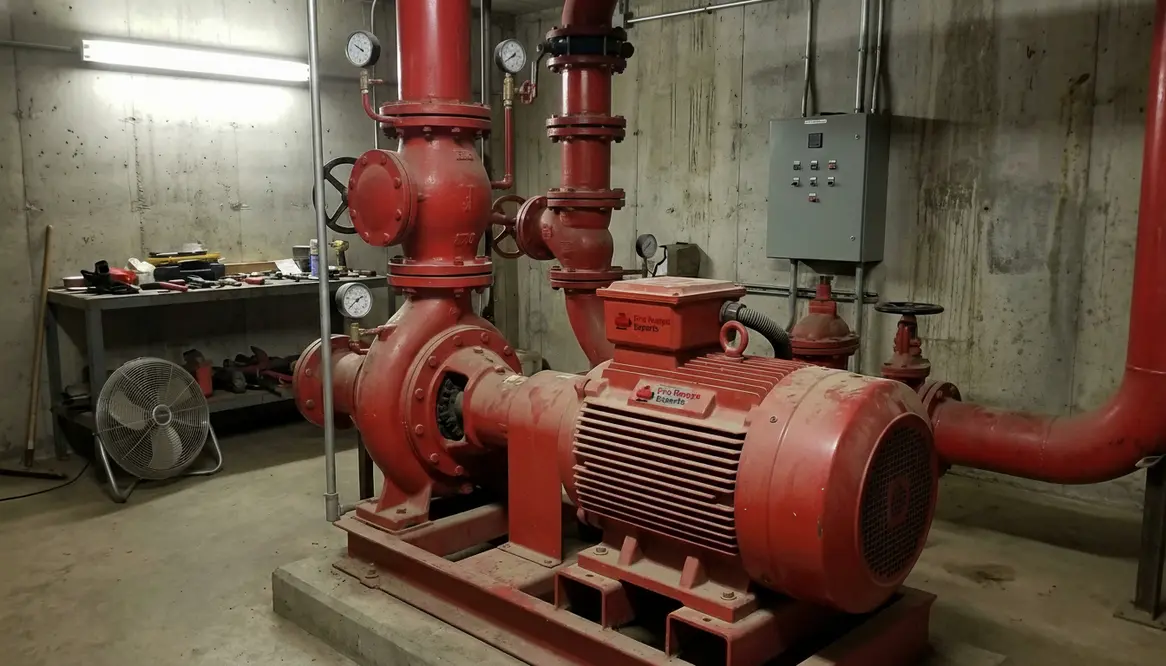
Fire Pump Installation Issues Australia Guide
I have spent years walking through plant rooms, high rise basements, and industrial facilities across Australia, and I can tell you this with a calm certainty: most catastrophic failures are not dramatic. They are quiet. They begin with small oversights. When we talk about fire pump installation issues Australia, we are not talking about rare events. We are talking about preventable conditions that slowly erode reliability until the day the system is finally asked to perform and simply… does not.
And yes, that moment tends to arrive like a plot twist no one asked for.
Why Proper Installation Conditions Matter More Than You Think
Fire pump systems are not decorative. They are not backup plans in the casual sense. They are mission critical infrastructure in commercial and industrial facilities. Yet, I often see installations treated like a rushed finale. As a result, poor environmental control, incorrect pipe alignment, and inadequate power supply conditions quietly undermine performance.
Moreover, Australian conditions add their own personality. Heat, dust, humidity, and even coastal corrosion all play a role. If the installation does not account for these factors, the system begins aging the moment it is commissioned. Consequently, what should be a robust asset becomes a liability.
It is a bit like casting a superhero and forgetting to give them powers. Looks impressive. Does nothing when it counts.
Common Fire Pump Installation Issues Australia Facilities Face
Let me be direct. The same problems show up again and again. Not because they are hard to avoid, but because they are easy to overlook.
Incorrect pump room conditions
Many pump rooms lack proper ventilation or temperature control. Therefore, engines overheat, electrical components degrade, and seals fail faster than expected.
Poor suction design
Improper pipe sizing or layout introduces air and turbulence. As a result, pumps struggle to maintain pressure, leading to cavitation and long term damage.
Unstable power supply
Electric fire pumps depend on consistent power. However, voltage drops or poorly configured backup systems can delay or prevent startup entirely.
Misaligned components
Even slight misalignment between pump and motor creates vibration. Over time, this wears down bearings and couplings. Eventually, failure becomes inevitable.
Each of these issues alone is manageable. Together, they create a system that looks compliant on paper but performs like a tired extra in an action movie.
What Happens When Installation Conditions Are Ignored?
I have seen systems fail within seconds of activation. Not because the equipment was defective, but because the environment and setup worked against it. For example, a poorly ventilated diesel pump room can cause overheating within minutes. Similarly, bad suction conditions can reduce flow right when demand peaks.
As a result, fire suppression efforts lose momentum at the worst possible time. In large commercial properties and industrial sites, that delay is not just inconvenient. It is costly and dangerous.
Meanwhile, compliance audits may still pass if the system was not tested under realistic conditions. That is where the illusion of safety becomes particularly risky.
How I Diagnose Installation Weak Points in Large Facilities
When I step into a facility, I do not start with the pump. I start with the environment around it. Because the truth is, the pump is only as reliable as the conditions it operates in.
Environmental Checks
I assess temperature control, airflow, and moisture levels. Additionally, I look for dust buildup and corrosion signs, especially in coastal or industrial zones.
Hydraulic Review
I examine pipe layout, suction conditions, and flow efficiency. Even minor design flaws can have major consequences under load.
Mechanical Integrity
I check alignment, mounting stability, and vibration levels. These details often reveal long term stress that is not visible at first glance.
Power Reliability
I evaluate electrical supply consistency and backup readiness. Because when power fails, hesitation is not an option.
This process allows me to identify the subtle installation flaws that often go unnoticed. And yes, sometimes it feels like detective work. Just with fewer trench coats and more pressure gauges.
Can Better Installation Practices Prevent Most Failures?
Short answer: absolutely.
However, it requires discipline. Proper planning, adherence to Australian standards, and a clear understanding of site specific conditions make all the difference. For instance, ensuring correct suction pipe design and stable foundations can eliminate a large percentage of mechanical failures.
Furthermore, aligning installation with long term operational demands rather than just initial compliance leads to systems that actually perform when needed. This is particularly important in large scale facilities where system demand is high and failure consequences are severe.
So yes, better practices do not just reduce risk. They build confidence. And in this field, confidence is everything.
FAQ: Fire Pump Installation and Performance
Final Thoughts and Next Steps
If there is one thing I want you to take away, it is this: fire pump reliability begins long before the switch is flipped. Addressing fire pump installation issues Australia facilities face is not about ticking boxes. It is about creating systems that perform under pressure. If your facility depends on fire protection, now is the time to assess, correct, and strengthen your installation conditions before they are tested for real.