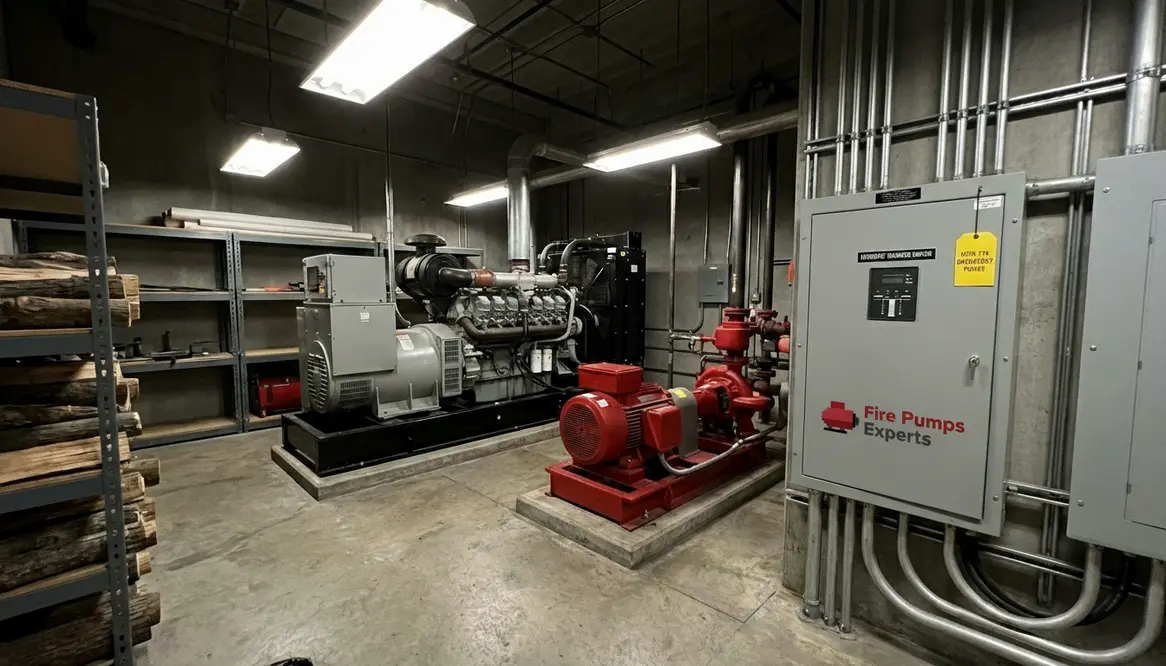
NFPA 110 Fire Pump Emergency Power Requirements Guide
I have spent enough time around mechanical rooms to know one thing for sure. When the lights go out, nobody wants to wonder if the fire pump will keep running. That is where NFPA 110 fire pump emergency power steps in, quiet, steady, and absolutely essential. In commercial and industrial buildings, this is not just a code requirement. It is the difference between controlled risk and total chaos. And yes, while it may not sound as exciting as a summer blockbuster, trust me, when it works, it deserves a standing ovation.
What Power Supply Does a Fire Pump Actually Need
I like to think of a fire pump as the heart of a building’s fire protection system. However, even the strongest heart needs a reliable energy source. Under NFPA 110, emergency power systems must support fire pumps with a level of reliability that borders on obsessive, and for good reason.
First, the power source must be independent from the normal utility supply. When the grid fails, the emergency system must take over without hesitation. Typically, this means an on site generator that meets strict performance criteria.
Additionally, transfer time matters. NFPA 110 requires that power restoration happens fast enough to keep fire protection systems fully operational. In most cases, that means within 10 seconds. Not eventually. Not when it feels like it. Immediately.
And here is the kicker. The system must be able to run continuously under load. This is not your backup phone charger. This is industrial grade endurance.
How NFPA 110 Fire Pump Emergency Power Supports Life Safety
Now let me slow this down for a moment. Because this is where things get serious.
NFPA 110 classifies emergency power systems by their critical role. Fire pumps fall under the highest level of importance. That means the system must perform during the worst conditions imaginable, including fires, storms, and utility failures.
Therefore, the generator, fuel supply, and distribution equipment must all meet strict installation and testing standards. For example, fuel supply sizing is not a guess. It is calculated to support extended operation, often for several hours or more depending on the facility.
Moreover, redundancy plays a key role. If one component fails, another must step in. Think of it like a well rehearsed band. If the drummer drops a stick, the rhythm does not stop.
Because of this, NFPA 110 fire pump emergency power systems are designed with layers of protection. Each layer ensures that water keeps flowing when it matters most.
Key Components That Keep the System Running
I have seen systems that look simple on paper but are incredibly sophisticated in practice. Each component has a job, and none of them can afford a bad day.
Core Equipment
- Emergency generator sized for fire pump load
- Automatic transfer switch for rapid switchover
- Dedicated fuel system with monitored levels
- Fire rated wiring and protected pathways
Support Systems
- Cooling and ventilation for generator rooms
- Battery systems for reliable startup
- Control panels with real time monitoring
- Routine testing and maintenance protocols
What stands out here is coordination. These components must work together seamlessly. Otherwise, you end up with a system that looks impressive but fails when it counts. And nobody wants their fire protection system to be all style and no substance.
Why Testing and Maintenance Are Non Negotiable
Let me be blunt. Installing a system is only half the job. Keeping it ready is where the real work begins.
NFPA 110 requires regular testing under load conditions. This ensures that the generator can handle the actual demand of the fire pump. It is not enough to flip a switch and hope for the best. You need proof.
In addition, routine inspections catch issues before they become failures. Fuel degradation, battery wear, and control faults can all creep in over time. However, with proper maintenance, these risks stay manageable.
I like to compare it to owning a classic car. It may look great in the garage, but if you never start it, do not expect it to perform on the highway.
Common Mistakes I See in Commercial Installations
Even in large facilities, mistakes happen. And unfortunately, they tend to show up at the worst possible moment.
One common issue is undersized generators. While it may save money upfront, it creates serious risk during operation. Another problem is poor coordination between electrical and fire protection teams. When systems are not aligned, performance suffers.
Also, I often see inadequate fuel planning. A generator without enough fuel is like a marathon runner who forgot breakfast. It will not end well.
By addressing these issues early, facilities can avoid costly corrections and ensure compliance with NFPA 110 fire pump emergency power requirements.
FAQ Quick Answers for Fire Pump Emergency Power
Before getting into specific questions, it helps to remember that NFPA 110 fire pump emergency power is all about reliability under stress. The details below shape how that reliability looks in real buildings, not just in the code book.
Final Thoughts and Next Steps
If you manage a commercial or industrial property, this is not the place to cut corners. A properly designed and maintained emergency power system protects lives, assets, and your reputation. I recommend taking a close look at your current setup and making sure it aligns with NFPA 110 requirements and recognized best practices for NFPA 110 fire pump emergency power. If you are unsure, bring in experts who live and breathe fire pump systems and understand how they tie into building operations as a whole.
Walk your equipment rooms. Verify that generator capacity, transfer switches, wiring, and fuel storage match what is shown in the design documents. Confirm that testing logs exist, are up to date, and include real load conditions. And if you discover gaps, treat them as an opportunity to strengthen your resilience long before the next storm, outage, or alarm event puts everything to the test.
When the lights go out and alarms start ringing, nobody in that building will be thinking about paragraph numbers or reference standards. They will only care that water is moving, pressure is steady, and suppression systems are working. That is the quiet promise behind a well designed NFPA 110 fire pump emergency power strategy: all the drama stays in the movie, not in your mechanical room.