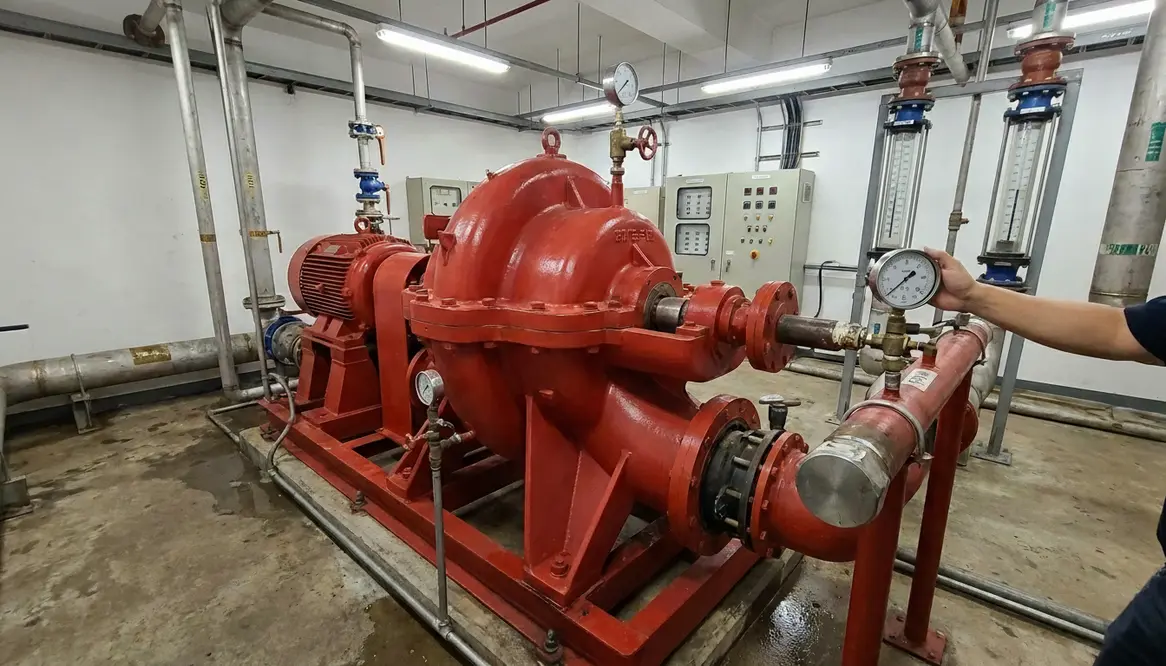
Horizontal Split Case Fire Pump Testing Guide
I have spent enough time around pump rooms to know one thing for certain. When things go wrong, they do not politely raise a hand first. That is exactly why horizontal split case fire pump testing matters so much in commercial and industrial facilities. Within the first few seconds of a fire event, performance is everything. So, I approach testing not as a routine checkbox, but as a quiet rehearsal for a moment we all hope never comes. And yes, while the equipment may look like something out of an industrial sci fi set, its job is refreshingly simple. Move water. Move it fast. Move it right.
What I check first during horizontal split case fire pump testing
When I walk into a pump room, I do not start by pushing buttons. Instead, I observe. First impressions often reveal more than instruments. I look for leaks, unusual vibration, and anything that feels off. It is a bit like meeting someone who says they are fine but is clearly not fine.
Next, I verify system readiness. That includes:
- Controller status and alarm history
- Valve positions to confirm proper alignment
- Fuel or power supply depending on motor type
Then, I move into performance checks. Flow, pressure, and churn conditions all tell a story. If those numbers drift outside expected ranges, I pay attention. Because while a pump will not complain out loud, it will absolutely leave clues.
Meanwhile, I always document everything. Not because paperwork is thrilling, but because trends matter. Today’s small deviation can become tomorrow’s failure headline. Consistent horizontal split case fire pump testing turns those small clues into early warnings instead of late surprises.
How do I test flow and pressure without disrupting operations?
This is the question I hear most, and for good reason. No facility manager wants a fire pump test to feel like a surprise water park opening.
So, I use a controlled approach. Typically, I rely on flow meters or test headers designed specifically for this purpose. These allow me to simulate demand without interfering with the building’s fire protection system.
As a result, I can safely measure:
- Rated flow capacity
- Net pressure output
- Performance at different demand levels
However, I do not rush this process. I gradually increase flow while monitoring system response. Think of it like stretching before a workout. You do not go from zero to sprint unless you enjoy regret.
At the same time, I compare real data to manufacturer curves. That comparison tells me whether the pump still performs as designed or if it has started to drift. And pumps do drift, just like plotlines in long running TV shows.
The key is to make horizontal split case fire pump testing feel almost invisible to building occupants while still pushing the system enough to reveal the truth about its performance.
Common issues I uncover and what they actually mean
Over time, patterns start to emerge. Some issues show up again and again, especially in large commercial properties where systems run for years with minimal interruption.
Mechanical signs I watch
- Seal leaks
- Bearing noise li>Excess vibration
- Coupling misalignment
Performance red flags
- Pressure drops under load
- Irregular flow readings
- Delayed startup
- Overheating during operation
Because these systems serve large scale facilities, even a small inefficiency can ripple into a major risk. Therefore, I treat every anomaly as worth investigating. Not panicking, just paying attention.
Additionally, I often recommend reviewing a commercial fire pump inspection program to keep systems aligned with real world demands. Prevention is not glamorous, but it is wildly effective.
Horizontal split case fire pump testing is where many of these warning signs first show up, long before they become the reason a system fails when it is needed most.
Why consistency matters more than intensity
It is tempting to think one thorough test solves everything. It does not. Fire pumps thrive on consistency, not occasional heroics.
I stick to scheduled testing intervals because they reveal trends over time. A single data point tells me what is happening now. A series of them tells me where things are heading. And frankly, I prefer to see problems coming rather than being introduced to them unexpectedly.
Moreover, regular testing helps maintain compliance with standards while keeping insurance requirements satisfied. That may not sound exciting, but neither is explaining preventable failures to stakeholders.
And yes, I keep the process efficient. No unnecessary steps. No dramatic flair. Just disciplined, repeatable execution. That steady approach is what makes horizontal split case fire pump testing such a powerful tool instead of just another item on a maintenance list.
Horizontal split case fire pump testing in large facilities
When I work in high rise buildings, manufacturing plants, or data centers, the stakes shift. These environments demand reliability at scale. So, I adjust my approach accordingly.
For instance, I coordinate closely with facility teams to avoid disruptions. I also verify integration with building systems such as alarms and backup power. Everything must work together, not just independently.
In addition, I look beyond the pump itself. I evaluate how it interacts with the entire fire protection system. Because in reality, a pump that performs perfectly in isolation but struggles under system demand is not doing its job.
It is a bit like a lead actor who shines in auditions but forgets their lines on opening night. Impressive, but not helpful.
That is why I treat horizontal split case fire pump testing as part of a larger performance check for the whole protection strategy, not just a standalone ritual for one piece of equipment.
FAQ quick answers for busy facility managers
The same questions appear in almost every pump room conversation. Here are the ones that come up most often, along with the short answers facility managers usually need on the spot.
Final thoughts and next steps
If you manage a commercial or industrial property, do not treat your fire pump like background noise. Give it attention before it demands it. I recommend scheduling consistent testing, reviewing performance data, and working with experienced professionals who understand system behavior at scale.
When everything runs smoothly, nothing happens. And in this case, that is the best possible outcome. Horizontal split case fire pump testing is one of the quiet habits that keeps that outcome possible every day the building is occupied.
Reach out, stay prepared, and keep your system ready for the moment it matters most. The work is not flashy, but in the few seconds when performance truly counts, it makes all the difference.