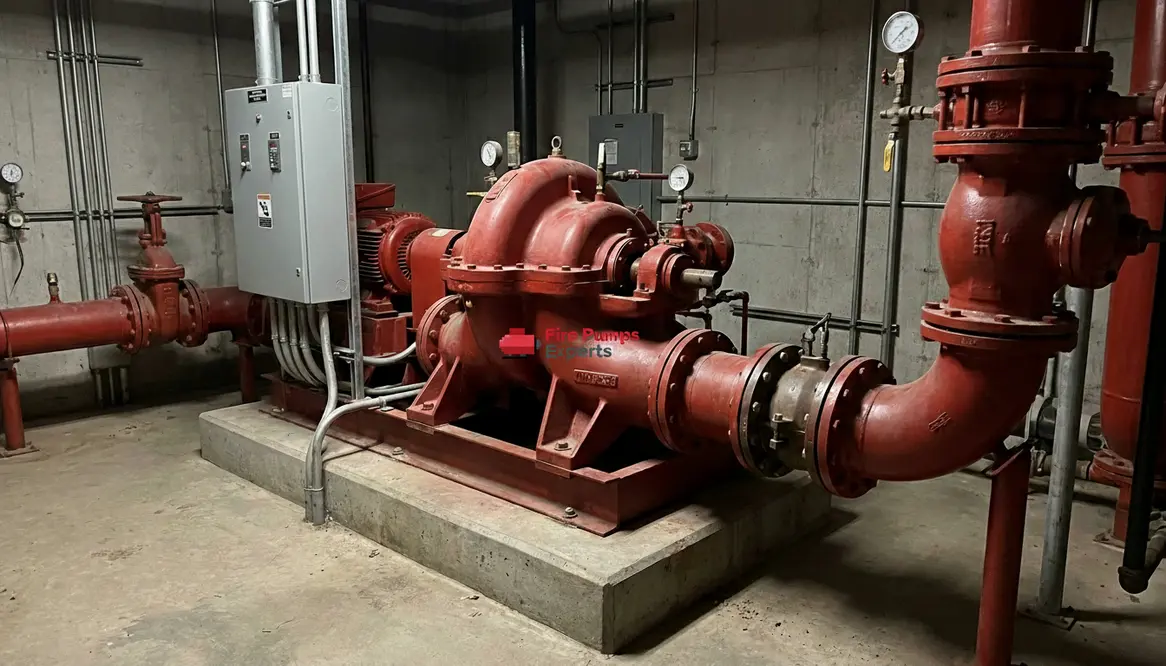
Split Case Fire Pump Installation for Large Buildings
I have spent enough time around pump rooms to know one thing for certain. When water needs to move, it does not ask politely. It demands power, precision, and planning. That is exactly why split case fire pump installation matters so much in large commercial and industrial buildings. Within the first few minutes of a fire event, everything depends on whether that pump system performs as expected. No drama. No hesitation. Just water moving where it should. So let me walk you through what actually matters, without the fluff, and maybe with a few laughs along the way.
What makes a split case fire pump the go to choice in large facilities
I like to think of a split case pump as the heavyweight champion of fire protection. It is strong, balanced, and built for endurance. Unlike smaller systems, this pump uses a horizontally split casing, which makes maintenance easier and operation more stable.
Because of that design, I can access internal components without dismantling the entire system. That saves time, and in a commercial setting, time is money. More importantly, these pumps handle high flow rates with efficiency. So when a high rise building or industrial plant demands serious water supply, this is the system I trust.
Also, they tend to vibrate less. And trust me, in a mechanical room, less vibration means fewer headaches and fewer calls at 2 AM.
Split case fire pump installation requirements I never ignore
Now we get into the part where things can go very right or very wrong. A proper split case fire pump installation is not just about placing equipment on a concrete pad and calling it a day.
First, alignment is everything. The pump and driver must sit perfectly aligned. Even a small deviation can lead to wear, noise, and eventual failure. It is like trying to run in shoes that are two sizes off. You can do it, but not for long.
Next, I always check the foundation. It must be solid, level, and capable of handling both static and dynamic loads. Concrete inertia bases are not optional here. They are essential.
Then comes suction piping. This is where many installations stumble. I keep suction lines short and straight, avoiding unnecessary bends. Why? Because turbulence is the enemy of performance. Water should flow like a calm river, not a chaotic action scene.
Finally, I ensure proper clearance. Maintenance teams need space to work. If you install a pump like it is packed into a subway at rush hour, future servicing becomes a nightmare.
How do I size and configure the system correctly
Short answer. I follow demand, not guesswork.
Every building has unique fire protection needs. So I start with hazard classification, system demand, and required flow rates. From there, I match the pump curve to the system requirements.
However, it is not just about peak demand. I also consider churn conditions and minimum flow. A pump that performs well only at one point is not a reliable pump.
Driver selection matters too. Electric motors are common, but diesel engines bring reliability when power supply is questionable. It is a bit like choosing between streaming and owning a DVD. One depends on the grid, the other does not.
Critical components that support long term performance
Even the best pump cannot perform alone. It needs a supporting cast, and yes, this is where I channel my inner director.
Essential Components
- Controller systems for automatic operation
- Relief valves to prevent overpressure
- Flow meters for performance testing
- Check valves to stop reverse flow
Why They Matter
- Ensure immediate startup during fire events
- Protect system integrity under stress
- Provide data for compliance and testing
- Maintain directional flow and efficiency
Each component plays a role in keeping the system reliable. Skip one, and you introduce risk. And in fire protection, risk is not something I am willing to negotiate with.
Compliance standards I always follow in commercial buildings
I never treat codes as suggestions. Standards like NFPA 20 define how these systems should be installed and tested. Following them is not about paperwork. It is about performance when it matters most.
Additionally, I rely on trusted resources like commercial fire pump system guidelines to ensure installations meet industry expectations for large scale properties. These guidelines help align design, installation, and ongoing maintenance.
Inspections also play a role. Regular testing confirms that the pump delivers the required flow and pressure. Because let us be honest, a fire pump that only works on paper is about as useful as a superhero who forgot their powers.
Common mistakes I avoid during installation
I have seen enough installations to know where things go sideways. So I stay ahead of these issues.
First, improper pipe support. Unsupported piping can strain the pump casing. That leads to misalignment over time.
Second, ignoring air pockets in suction lines. Air is not your friend here. It reduces efficiency and can cause cavitation.
Third, poor room ventilation. Pumps generate heat, especially diesel driven units. Without proper airflow, performance drops.
Lastly, skipping thorough testing. I always conduct acceptance tests under real conditions. Because if something is going to fail, I would rather it happen during testing than during an emergency.
Why split case fire pump installation shapes real world protection
In large properties, split case fire pump installation is not a background detail. It determines whether water actually reaches sprinklers and standpipes with the volume and pressure the design promised.
When I plan split case fire pump installation, I treat the pump room as the heart of the fire protection system. Everything from suction piping to controllers needs to work together, with enough redundancy and robustness to survive a real emergency, not just pass an inspection.
FAQ
Conclusion
If you are planning a fire protection upgrade, I would not leave something this critical to chance. A properly executed system protects lives, assets, and operations. So take the next step and work with experts who understand the demands of large scale facilities. Because when the moment comes, your system should not hesitate. It should perform exactly as designed. And that peace of mind is worth every ounce of effort.