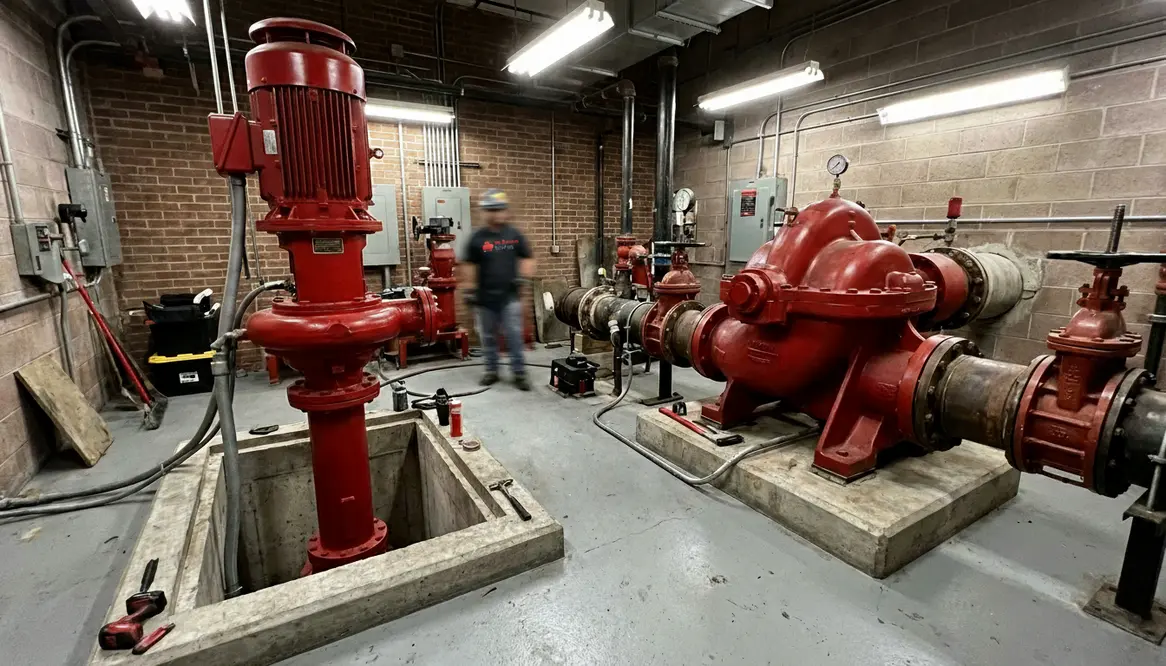
Vertical Turbine Fire Pump vs Split Case Pump Guide
I have spent enough time around pump rooms to know one thing. When water needs to move fast and without excuses, the choice between a vertical turbine fire pump vs split case pump is not just technical. It is strategic. In commercial towers, industrial plants, and sprawling facilities, that decision quietly determines whether a system performs like a hero or hesitates like someone buffering on bad WiFi.
So let me walk you through it in a way that feels less like a manual and more like a conversation you would actually stay awake for.
Understanding Vertical Turbine Fire Pump vs Split Case Pump in Real Terms
First, I like to strip away the jargon. A vertical turbine pump pulls water from a deep source like a well or underground tank. It works vertically, stacked in stages, lifting water upward with steady force. On the other hand, a split case pump sits above ground, splitting horizontally for easy access, and pushes large volumes of water efficiently across wide systems.
Now, here is where it gets interesting. While both serve fire protection systems, they live very different lives. One dives deep. The other stands its ground.
Because of that, your facility layout often makes the decision before you even realize it. If your water source sits below grade, a vertical turbine pump steps in like a seasoned diver. Meanwhile, if you have a reliable above ground water supply, the split case pump becomes the dependable workhorse.
Why the choice feels bigger than just equipment selection
When people compare a vertical turbine fire pump vs split case pump on paper, the conversation usually centers on specs. Flow rates. Pressures. Curves. All important, absolutely. But in real facilities, the questions sound more like this: Will this work with the space I actually have? Can my team maintain it at 3 a.m. during a system alarm? Will it still be dependable fifteen years from now when budgets are tighter and everyone is busier?
When Should I Choose a Vertical Turbine Fire Pump?
I hear this question a lot, usually from engineers staring at site constraints like they just opened a puzzle box.
Here is the simple answer. Choose a vertical turbine pump when your water source is not easily accessible at ground level.
More specifically
- Deep wells or underground tanks require vertical lift capability
- Limited floor space benefits from its compact footprint
- High rise or large industrial sites often rely on consistent pressure from staged pumping
However, there is a tradeoff. Maintenance can feel like assembling furniture without instructions. Since much of the pump sits below grade, access takes more planning. Still, when space is tight or water is buried, nothing else quite matches its efficiency.
Situations where vertical turbine quietly becomes the only practical option
If the fire protection water supply is a deep well, a lake below grade, or a buried tank with limited access, a vertical turbine setup often becomes less of a nice-to-have and more of a non-negotiable. When designers start mapping elevations and suction limits, the vertical turbine typically steps forward as the option that respects physics instead of trying to argue with it.
Split Case Pumps Explained Without the Boring Parts
Now let us talk about the split case pump, the equivalent of that reliable coworker who shows up early and never complains.
It splits horizontally, which means technicians can open it without dismantling the entire system. That alone saves time, money, and probably a few headaches.
Additionally, these pumps shine in high flow situations. Think large commercial complexes, data centers, and manufacturing plants where water demand spikes fast and hard.
What I appreciate most is the balance. You get strong performance, easier maintenance, and long term durability. It is not flashy, but then again, neither is a fire system. And that is kind of the point.
Where split case pumps feel most at home
In a comparison of vertical turbine fire pump vs split case options, split case pumps usually become the natural favorite in campuses with roomy pump rooms, dedicated above ground tanks, or municipal feeds. When you can walk around the equipment, swing tools comfortably, and open the casing without a small construction project, life for the maintenance team improves noticeably.
Key Differences That Actually Matter in Facilities
Vertical Turbine Pump
- Best for underground water sources
- Smaller footprint
- Complex installation
- Maintenance requires planning
- Handles deep suction conditions
Split Case Pump
- Best for above ground water supply
- Larger footprint
- Simpler installation
- Easy maintenance access
- High flow efficiency
While both options meet fire protection standards, the environment ultimately decides the winner. It is less about preference and more about physics refusing to negotiate.
How to think through the decision practically
Instead of asking which pump is “better,” a more useful question is which pump matches the water source, site constraints, and the people who will live with it every day. When you frame vertical turbine fire pump vs split case discussions that way, clarity comes faster, and costly redesigns show up less often.
Vertical Turbine Fire Pump vs Split Case Pump for Industrial and Commercial Sites
In large scale facilities, I always look at three things first. Water source, available space, and maintenance access.
For example, a refinery pulling from a deep reservoir will naturally lean toward a vertical turbine system. Meanwhile, a logistics hub with a dedicated water tank above grade will benefit from a split case pump.
Also, lifecycle cost plays a role. While vertical systems may solve space challenges, split case pumps often reduce downtime during servicing. Over time, that difference can add up in operational savings.
If you want a deeper dive into system design standards, I recommend reviewing guidance from fire pump system experts for commercial and industrial facilities. It gives context that goes beyond product specs.
And yes, I have seen facilities try to force the wrong pump into the wrong role. It usually ends the same way. With upgrades, retrofits, and someone quietly saying, we should have chosen differently.
Translating design choices into long term reliability
In an industrial setting, the comparison of vertical turbine fire pump vs split case is not a one-time decision. It sets the tone for inspection routines, spare parts strategies, and how confidently the operations team can respond when alarms sound and everyone expects water on demand, not excuses.
Performance, Reliability, and the Human Factor
Here is something people do not always say out loud. The best pump is the one your team can maintain confidently.
Because even the most advanced system loses its edge if technicians struggle to service it. Split case pumps often win here due to accessibility. However, vertical turbine pumps remain unmatched when site conditions demand them.
So while specs and charts matter, the human factor quietly shapes long term reliability. After all, a system that is easy to maintain tends to stay ready.
And in fire protection, ready is everything.
Matching equipment to the people who use it
When you are weighing a vertical turbine fire pump vs split case solution, imagine the team that will open, inspect, and test it over the coming decades. If the layout, access, and complexity line up with their skills and resources, the system is far more likely to be exercised properly, documented correctly, and trusted when it is truly needed.
FAQ Quick Answers
What is the main difference between vertical turbine and split case fire pumps?
Vertical turbine pumps pull water from deep underground sources, while split case pumps move water from above ground supplies.
Which pump is easier to maintain?
Split case pumps are easier to maintain due to their accessible design.
Which is better for high rise buildings?
It depends on the water source, but vertical turbine pumps often support deep supply needs in large structures.
Are split case pumps more efficient?
They are highly efficient for high flow applications, especially in large commercial systems.
Can both pumps meet fire safety standards?
Yes, both meet industry standards when properly specified and installed.
Final Thoughts That Actually Help You Decide
If I had to sum it up, I would say this. Choosing between these pumps is less about which is better and more about which fits your reality. A vertical turbine thrives where water hides below. A split case excels where access and flow take priority. Match the pump to your site, your team, and your long term maintenance plan. If you get that right, the system will do exactly what it was built to do. Show up strong when it matters most.