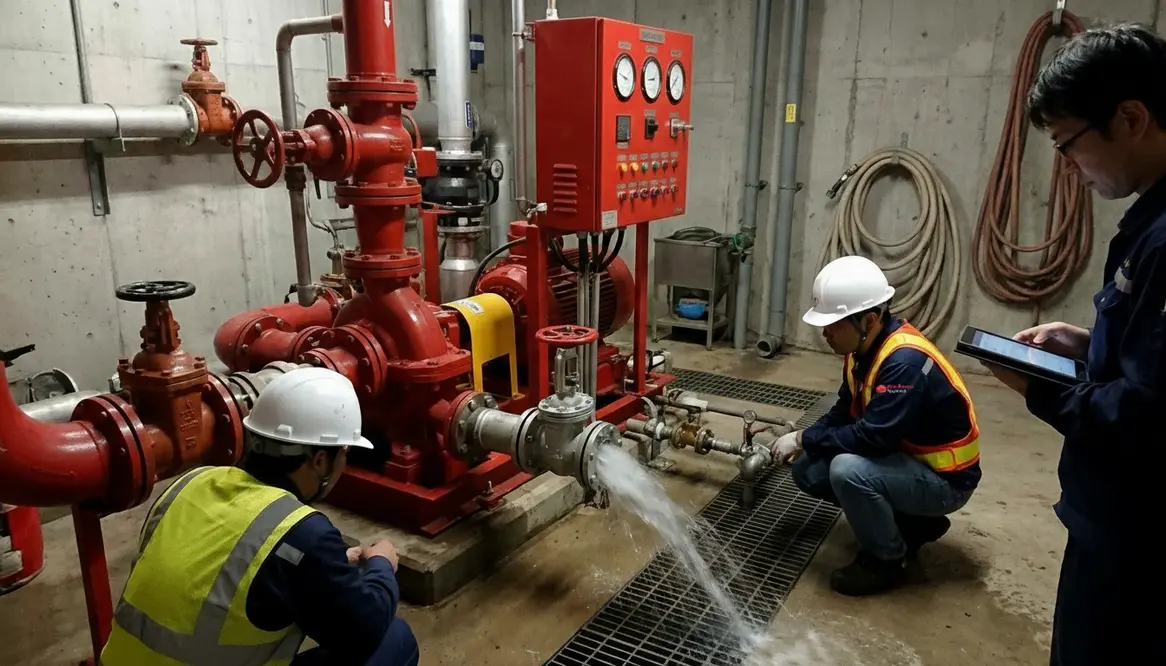
EN 12845 Fire Pump Acceptance Testing Guide
When I talk about EN 12845 testing, I am talking about the moment when theory meets pressure. This is the point where a fire pump proves it can do the job for a commercial or industrial property when it matters most. In plain words, the pump must not just look ready. It must perform. And yes, this is one of those tests that can make a quiet pump room feel a lot like a movie set, minus the popcorn and dramatic music.
For major buildings, warehouses, plants, and other large sites, acceptance testing is not a box ticking exercise. It confirms that the installed pump, controls, valves, and water supply work together as designed. So, if I want confidence in a fire protection system, I start here. Then I check the details, because details are where systems either shine or stall.
What EN 12845 acceptance testing means for a fire pump
Acceptance testing verifies that the fire pump meets the design intent and the EN 12845 standard before the system goes into service. I use this test to prove that the pump can deliver the required flow and pressure under real conditions. That matters because a paper design does not stop a fire. Water does.
In practice, I look at the pump set, the jockey pump, the driver, the controller, the suction and discharge layout, and the water source. I also confirm that alarms, sensors, and changeover functions operate correctly. If the pump is diesel driven, I pay close attention to fuel supply, engine speed, battery health, and cooling. If it is electric, I check power supply stability and controller response. Either way, the system must act like a reliable backup, not a nervous intern on its first day.
For commercial and industrial facilities, this process protects people, assets, operations, and compliance. It also reduces the risk of costly delays later. After all, it is far better to find a fault during testing than during an actual emergency. That would be the kind of surprise nobody wants.
How I prepare a fire pump system before testing
Before I begin testing, I make sure the site is ready. Good preparation saves time, reduces false readings, and helps the result mean something real. First, I confirm that the installation matches the approved design documents. Then I inspect the pump room, pipework, valves, power supply, and drainage. I want clean access, clear labels, and no mystery settings left behind by someone who meant well.
I also check that the water source can support the test. A fire pump needs a stable supply, so I verify suction conditions, tank levels, and any relevant isolation valves. If the system uses a test line or flow meter arrangement, I confirm that it is installed and ready for use.
Next, I review safety controls. I make sure the team knows the test plan, the shutdown steps, and the emergency actions. In large facilities, coordination matters because one careless move can affect operations across a wide area. That is why I treat the pre test stage with the same respect I would give a live performance at a packed arena. No one wants the stage to collapse before the show starts.
What I check during EN 12845 testing
During the test, I focus on performance, response, and stability. I want to see the pump start correctly, build pressure, and maintain flow under load. I record pressure readings, flow rates, start times, and any changes in speed or output. I also confirm that the pump starts automatically when demand calls for it and that the controller behaves as expected.
Here is how I usually split the main checks:
Core performance checks
Test area
Start up
Pressure output
Flow delivery
Controller response
Suction conditions
Driver performance
What I verify
The pump starts on demand without delay or fault
The pump reaches the required pressure for the system
The pump delivers enough water to meet the design need
Signals, alarms, and status changes work correctly
The pump draws water properly without cavitation or instability
The motor or engine runs smoothly during the test
I also watch for vibration, noise, leaks, and unstable pressure. These small signs often reveal larger problems. For example, a pump may pass the headline numbers but still show signs of poor alignment or suction trouble. And that is where experience matters. I do not just want a pass. I want a dependable system.
When the test includes a full flow run, I check how the pump performs across the working range. That gives me a clearer view of how the system will behave in a real emergency. A pump that only looks good at one point in the curve can still disappoint when the pressure drops or demand rises. Like a sequel that had too much budget and not enough plot.
Why acceptance results matter for compliance and risk
Acceptance results do more than satisfy paperwork. They tell me whether the system is ready to protect a live site. If the pump meets the standard, the owner gains confidence, the design team gains proof, and the facility team gains a baseline for future checks. If the pump fails, I get an early warning that something needs correction before the building depends on it.
For major properties, this matters even more because the stakes are higher. A fire pump supports not just safety, but business continuity. A failed EN 12845 testing outcome can delay handover, affect insurance discussions, and put operations at risk. Therefore, I treat every result as part of a larger risk picture. Good data helps me make the next move with confidence.
For further reading and technical support, I recommend reviewing the EN 12845 fire pump testing guidance on https://firepumps.org/. It is a useful reference for commercial and industrial fire pump systems, and it helps keep the focus on proper verification for large properties.
FAQs about EN 12845 fire pump acceptance testing
These quick answers help clarify how EN 12845 testing fits into acceptance, risk, and ongoing protection for larger properties.
My final take on EN 12845 fire pump testing
If I want a fire pump system to earn trust, I test it properly and I document every step. That is how I turn an installed asset into a proven layer of protection. For commercial and industrial properties, acceptance testing is not optional theatre. It is the moment truth shows up and checks the numbers. So, if your site needs confidence, compliance, and a pump that performs when the pressure rises, now is the time to act. Schedule your EN 12845 fire pump acceptance testing and make sure your system is ready. Treat EN 12845 testing as a core part of commissioning, not an afterthought, and it will pay you back the first time the system is called on to perform.