DIN Fire Pump Requirements for German Facilities
When I talk about fire protection in German commercial and industrial buildings, I always start with one plain truth: DIN requirements are not there to make life harder, they exist to keep people safe and operations moving. In a warehouse, factory, office tower, or major property building, a fire pump is the quiet hero in the basement, waiting for the worst day of the year. And yes, unlike most heroes, it gets tested on purpose. That is the German way. Precise, practical, and just a little bit stricter than your average office coffee policy.
What I look for first in DIN fire pump requirements
I begin with the system’s purpose, because that shapes everything else. A fire pump must support the sprinkler or hydrant system with enough pressure and flow to do its job during a real fire. In German facilities, DIN fire pump requirements focus on reliability, steady performance, and safe installation. I do not treat the pump as a stand alone machine. I treat it as part of the full fire protection chain, from water supply to control panel to final discharge point.
That means I check whether the pump can meet the demand of the building under real conditions, not just on paper. I also look at the water source, backup power, suction conditions, and the layout of the pump room. If any of those parts fail, the whole system can wobble like a bad movie sequel.
Why DIN requirements shape every design decision
When I apply DIN requirements in practice, I use them as a checklist for real-world performance, not as a box-ticking exercise. I want to see how the pump, the water source, and the control logic behave when things go wrong, not just when a consultant’s spreadsheet is perfectly filled out.
DIN requirements also force me to think through failure paths: What happens if power drops, if a valve sticks, or if demand spikes? If I cannot answer those questions confidently, the design is not ready, no matter how impressive the equipment brochure looks.
How I apply DIN requirements to commercial fire pump design
In commercial and industrial sites, I focus on four core areas. These are the points that usually decide whether a system passes review smoothly or turns into a long, expensive drama.
- Capacity: The pump must deliver the required flow and pressure for the protected area.
- Reliability: The system must start fast and work under emergency conditions.
- Power supply: I verify the main supply and the backup supply, because fire does not wait for convenient hours.
- Installation: The pump room must allow safe access, ventilation, maintenance, and inspection.
Matching the pump to the real fire load
Moreover, I make sure the design fits the building’s use. A logistics center, a manufacturing hall, and a high rise property each create different risks. Therefore, the pump size, control logic, and storage setup must match the actual fire load. I also keep an eye on documentation. German compliance culture loves a clean paper trail, and honestly, so do I when the inspector shows up with that “show me everything” look.
DIN fire pump room setup for German facilities
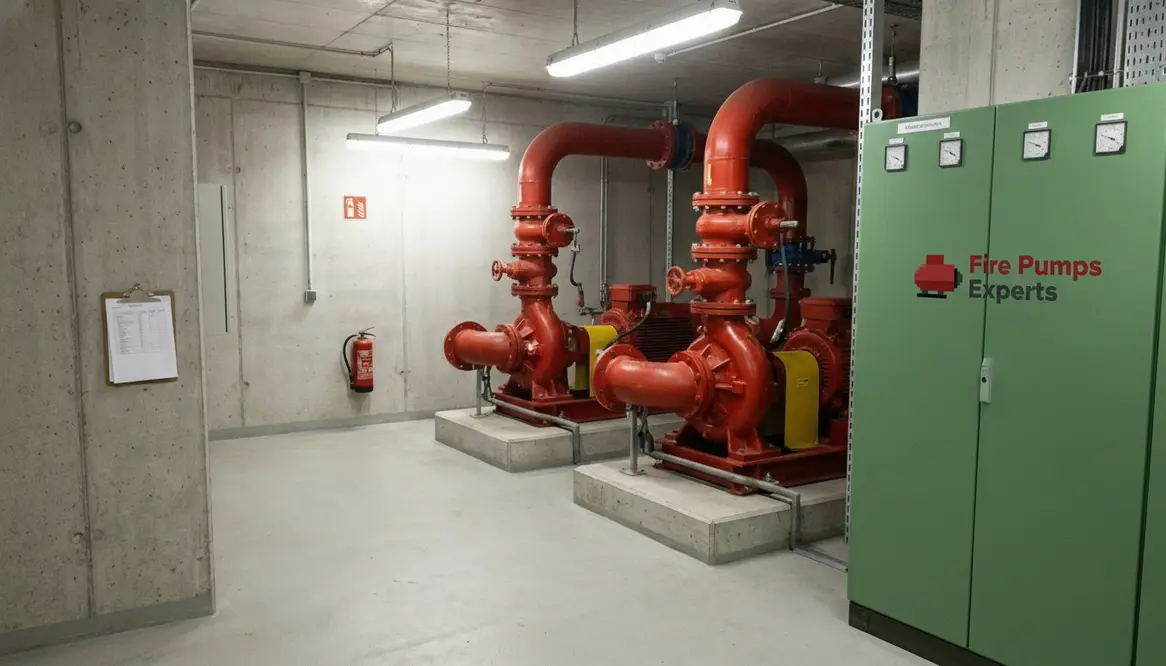
The pump room matters more than many owners think. A strong pump in a poor room is like putting a race car in a muddy field and hoping for the best. I look for clear space around the equipment, proper lighting, dry conditions, safe drainage, and easy access for inspection teams. I also check that the room stays protected from freezing, overheating, and accidental damage.
Noise and vibration control also matter in major properties. In large commercial buildings, a poorly placed pump can disrupt nearby operations. So I make sure the room supports both safety and daily use. In addition, I confirm that alarms, gauges, and controls sit where staff can see them quickly during an emergency. A fire pump should not require a treasure hunt.
Room layout under DIN requirements
When I compare real pump rooms to DIN requirements, I pay attention to escape routes, separation from other technical areas, and how easy it is for a technician to work without climbing over pipework. If the room feels like an obstacle course, it will not age well under daily use or emergency conditions.
What I check during testing, inspection, and maintenance
Testing is where theory meets reality. I always advise owners to plan regular checks so the system stays ready. The goal is simple: the pump should start, run, and hold performance when needed. During testing, I look at startup behavior, pressure levels, leaks, electrical signals, and any warning signs from the control unit.
Maintenance also keeps the system alive over time. Seals wear out, sensors drift, and valves can stick. Therefore, I treat maintenance as a routine job, not an emergency reaction. This saves money, reduces downtime, and helps the facility stay aligned with DIN expectations. It also keeps the system from becoming a very expensive metal sculpture.
Routine checks under DIN requirements
When I align a facility’s routine with DIN requirements, I make sure test intervals are realistic, results are recorded, and any deviation triggers corrective action instead of a shrug. A test log that only exists to impress auditors is useless; it should help the team notice weak trends before they turn into failures.
Dual column view: key compliance focus
Area
Pump output
Power backup
Room conditions
Service routine
What I verify
Flow and pressure match the building demand
Emergency supply supports the pump during outages
Access, ventilation, drainage, and protection stay in place
Testing, inspection, and maintenance happen on schedule
How I keep German facilities ready for audit
When I prepare a facility for audit, I start with documentation and end with proof. I want the drawings, test logs, service records, and component data all in one place. Then I compare the installed system against the approved design. If the building changed use, expanded storage, or added production lines, I check whether the fire pump still matches the real risk. This step matters a lot in industrial sites, where one layout change can rewrite the whole fire strategy.
I also recommend working with a team that understands German standards and major property systems. That way, the facility stays ready not just for one inspection, but for the long run. If you want to explore more on system planning and compliance, I suggest reviewing fire pump solutions for commercial and industrial facilities as a useful starting point.
Using DIN requirements as an audit roadmap
For me, DIN requirements act as a roadmap for audits: they show where evidence is needed, where records must be precise, and where design assumptions should be tested against the current reality of the building. When the pump, the documentation, and daily operation all follow the same rules, audits stop being stressful and start becoming routine.
FAQ about DIN fire pump requirements
DIN requirements for fire pumps raise similar questions across warehouses, factories, and office towers. These are the points that come up most often when I walk a site with owners and technical teams.
My final take on DIN fire pump compliance
If I want a German commercial or industrial facility to stay safe, I do not treat the fire pump as a side note. I treat it as a core life safety asset that needs the right design, the right room, and the right upkeep. So, if you manage a major property or plant, now is the time to review your system, close the gaps, and get expert support. A solid plan today can prevent a very costly surprise tomorrow.