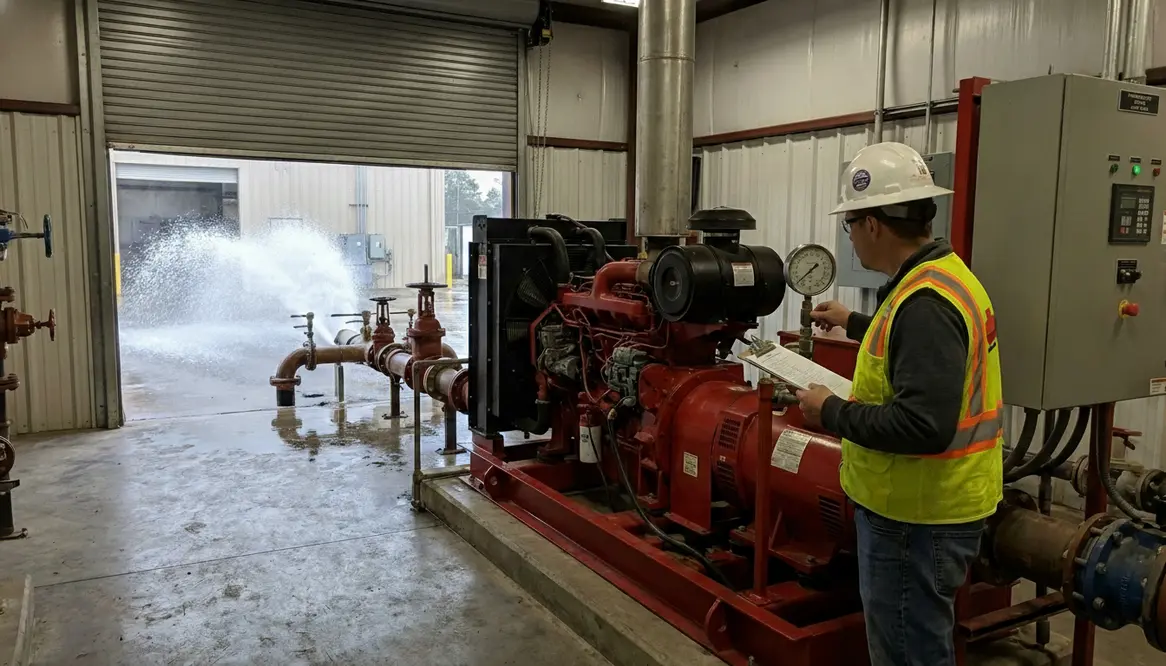
CEA Fire Pump Testing and Commissioning Guide
When I talk about CEA fire pump testing, I am talking about the moment a system proves it can do its job when the pressure turns real. In a commercial tower, industrial plant, or major property building, that test is not a box to tick. It is the calm before the storm, the rehearsal before the curtain rises. And yes, it matters a great deal more than the average safety meeting coffee break.
In this guide, I will walk through the full testing and commissioning process, from setup to final sign off. I will keep it practical, clear, and focused on large properties that rely on dependable fire protection performance.
What CEA Fire Pump Testing Means
CEA fire pump testing checks whether the pump, driver, controls, and water supply work as one system. I use it to confirm the pump can meet the flow and pressure needed for the building design. That means the system does more than start. It must perform under load, hold steady, and respond the way engineers expect.
For commercial and industrial facilities, this step protects people, property, and operations. A pump may look ready on paper, but paper does not fight fires. Testing shows the truth. It also helps identify weak valves, bad wiring, air issues, low suction pressure, or control faults before an emergency does the revealing for us.
How I Prepare For Fire Pump Testing
Good results start before the pump ever runs. First, I review the design documents, acceptance criteria, and site conditions. Then I check that the installation matches the approved layout. If the piping is wrong, the test will not save the day. It will only expose the mess faster.
I also confirm these points before commissioning begins:
- Power supply and phase rotation are correct
- Suction and discharge valves are open and tagged
- Jockey pump settings are in place
- Relief valves, gauges, and sensors are installed properly
- Fuel, lubrication, and cooling systems are ready for diesel units
Next, I make sure the test area is safe and controlled. For large sites, that means coordination with building management, contractors, and fire protection staff. Everyone needs to know when the system will run. Otherwise, a surprise test can feel like a scene from a disaster movie, and nobody wants that on a Tuesday.
Step-by-Step Commissioning Process
1. Room and Component Checks
I treat commissioning as a full system check, not a quick start up. First, I inspect the pump room for build quality, access, lighting, drainage, and signage. Then I verify each component. The pump must align properly. The driver must start without delay. The controller must respond cleanly. Also, all safety devices must function as designed.
2. Operational Testing
After that, I move into operational testing. I start with no flow testing, then progress to full flow conditions. This helps me see how the pump behaves at different demand levels. I record suction pressure, discharge pressure, speed, current draw, and run time. Since fire pumps are built for pressure and consistency, I watch for sudden drops, unstable readings, or unusual vibration.
Dual View Of The Test Process
From a compliance view, CEA fire pump testing confirms the installation meets design intent and site standards. From a performance view, it tells me whether the building can trust the system under real demand. Both matter. One keeps the project on the books. The other keeps the building in business.
What I Look For During Performance Checks
Core Performance Signs
During the test, I focus on a few key signs. First, the pump must start on demand. Second, it must reach the required pressure and flow. Third, it must stay stable during the test duration. If the pump hesitates, surges, or shuts down, I dig deeper right away.
Controls, Alarms, And Signals
I also check the controller alarms and signals. A modern fire pump system should tell the operator what it is doing. Quiet failure is not a feature. It is a problem wearing a neat uniform. I confirm that remote signals, fault messages, and phase loss responses all work as intended.
Diesel Driven Pump Checks
For diesel driven pumps, I also monitor engine temperature, battery health, exhaust, and fuel supply. These systems need close attention because a weak battery or poor fuel delivery can spoil an otherwise solid installation. In other words, the pump may be a hero, but the support cast still matters.
Common Issues I Find And How I Handle Them
Typical Technical Problems
Over the years, I have seen a few repeat offenders. Low suction pressure often comes from poor water supply conditions or closed valves. Electrical faults may point to wiring issues, bad settings, or control panel errors. Mechanical problems often show up as vibration, seal leaks, or misalignment.
My Response And Retesting Approach
When I find a fault, I document it clearly and recommend corrective action. Then I retest the system after the fix. That last step matters. A repair means little until the pump proves it can perform again. This is especially true in industrial and high rise settings, where downtime and risk both run high.
What I Include In The Final Report
At the end of commissioning, I prepare a clear report with readings, results, notes, and any issues found. The report should show what I tested, how I tested it, and what happened. It should also confirm whether the system passed, needs work, or requires a follow up test.
For teams managing major commercial properties, this record becomes valuable for audits, maintenance planning, and future inspections. It also helps owners stay confident that the system is ready for service. If you want a solid industry reference, I recommend reviewing this fire pump testing and commissioning resource for commercial facilities.
A thorough report also sets a baseline for ongoing CEA testing on the site. When future results drift from that baseline, the data points back to where performance started to change, and that makes troubleshooting faster and more accurate.
Why CEA Testing Matters For Large Facilities
Risk, Reliability, And Operations
In large commercial and industrial buildings, the fire pump is not just another mechanical asset. It is the backbone of the fire protection strategy. CEA testing brings structure and repeatability to how that backbone is verified, recorded, and maintained over time.
A well-run CEA testing program turns raw test runs into a story of reliability: how the pump started, how it carried the load, and how it responded when conditions were pushed closer to design limits. That story is what keeps insurers, auditors, and building owners aligned on risk.
FAQ
Conclusion
If I want a fire pump system to do its job, I cannot guess. I have to test it, verify it, and document it with care. That is how I protect commercial and industrial facilities, reduce risk, and support long term reliability. If your building needs expert help with CEA fire pump testing and commissioning, now is the time to act. Make the system prove itself before the emergency makes the point for you.