Dubai Fire Pump Requirements Guide for Compliance
Dubai Fire Pump Requirements Explained
When I look at fire protection in Dubai, I see one thing very clearly: there is no room for guessing. Dubai fire pump requirements exist to protect commercial and industrial facilities, along with major property buildings, where a small fault can turn into a very large problem. That is why I treat these rules as more than paperwork. They guide how a fire pump system gets selected, installed, tested, and kept ready. And yes, this is the kind of topic that sounds dry until you imagine a pump failing during an emergency. Nobody wants that plot twist.
What I check first in Dubai fire pump requirements
I always start with the building type, water demand, and fire risk. In Dubai, fire pump systems must support the fire strategy for the site, not just sit in a plant room looking important. For commercial towers, warehouses, factories, and large developments, the pump must deliver enough pressure and flow to serve sprinklers, hydrants, or both. That means I review the full demand before I talk about equipment.
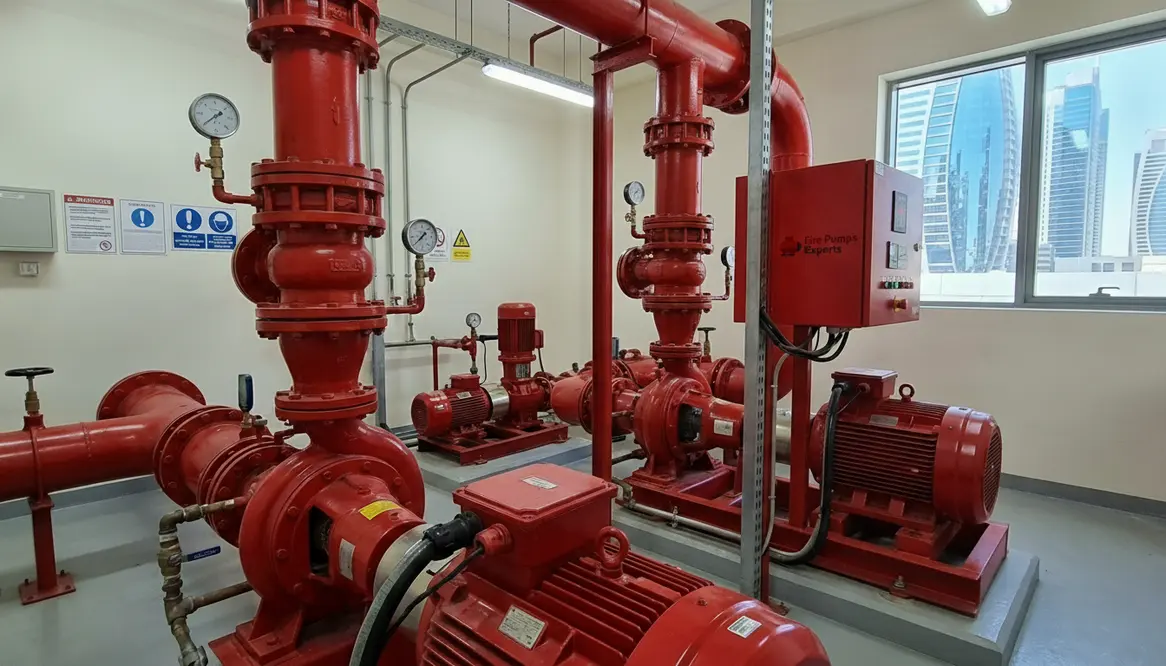
In practice, the system usually includes a main fire pump, a backup pump, and a jockey pump. The main pump handles the firefighting load. The backup pump steps in if the main one fails. The jockey pump keeps pressure stable and stops the main units from cycling too often. It is a bit like a good supporting cast in a movie. You may not praise them first, but without them the whole show gets awkward fast.
How I size the fire pump system for a site
Proper sizing matters because an undersized pump can leave part of the building under protected, while an oversized pump can create pressure issues and waste money. I look at the highest demand point, pipe losses, elevation, and the required fire flow from the design standard. Then I confirm that the pump can meet that demand with enough margin.
For Dubai fire pump requirements, the final setup must match the approved fire protection design for the property. I also check whether the site needs electric or diesel driven pumps. Electric pumps often suit sites with strong power reliability, while diesel pumps add another layer of backup. In many large properties, the safe move is to use both. Because when fire safety is on the line, “I think it will be fine” is not a strategy. That is a shrug wearing a tie.
Here is the basic flow I follow:
Column 1
- Confirm building use and risk level
- Check required flow and pressure
- Select pump type and driver
- Verify tank and power support
Column 2
- Review suction and discharge arrangement
- Confirm controls and alarm links
- Test the full system under load
- Keep service records for compliance
Dubai requirements for installation and compliance
Once I know the size and type of system, I move to installation details. Dubai fire authorities expect fire pump rooms to stay accessible, secure, and protected from heat, flooding, and damage. The room should allow safe maintenance and clear access for inspection. I also make sure the suction source, usually a water tank, can support the required duration of operation.
Another key point is reliability. The pump must start automatically when pressure drops. It also needs proper controls, alarms, and monitoring. If the system uses a diesel pump, I check fuel supply, ventilation, and exhaust routing. If it uses electric power, I check the power feed and backup arrangements. Small issues here can grow into serious failures later, and the fire code does not enjoy surprises.
For larger properties, I also pay close attention to documentation. Authorities and consultants want test reports, commissioning records, and maintenance logs. So I keep the paperwork clean, because compliance is not just about what I install. It is also about what I can prove. In Dubai, that matters a lot.
How I keep the system ready after approval
Approval is not the finish line. It is the start of regular care. I test fire pumps on a routine basis to confirm pressure, flow, start time, vibration, and general condition. I also inspect valves, gauges, controllers, and the tank level. If the system sits unused for too long, parts can still age, stick, or fail. Machinery, like people, gets grumpy when ignored.
Maintenance should fit the site’s activity level. A busy warehouse or industrial plant may need tighter inspection control than a lower risk office building. I also recommend keeping spare parts on hand for critical items when the property depends on fast recovery. That saves time, money, and a few headaches that nobody asked for.
For owners and facility teams, the smart habit is simple: test early, fix fast, document everything. That approach keeps the system ready and reduces the chance of noncompliance during inspection or an actual emergency.
Why I suggest specialist help for Dubai fire pump requirements
Fire pump design and compliance can get complicated quickly. One project may need coordination with civil works, electrical systems, tank design, and authority approval. Another may need a redesign because the site use changes. That is why I suggest working with specialists who focus on commercial and industrial properties, as well as major buildings. They understand the code, the equipment, and the real world pressure that comes with large sites.
If you want a useful next step, I recommend reviewing a trusted resource like https://firepumps.org for guidance on systems built for large properties. The right support helps you avoid delays, reduce risk, and keep the project moving without drama worthy of a soap opera.
When you line up your project against the key Dubai requirements that apply to your building type, risk profile, and fire strategy, those specialist teams help you close gaps before they turn into costly corrections. They are also used to working with authorities, which makes the approval path less stressful for everyone involved.
FAQ
These are some of the most common questions that come up when people look at Dubai fire pump requirements and try to match them with real projects and existing buildings.
Conclusion
If you manage a commercial, industrial, or major property in Dubai, I strongly suggest treating fire pump compliance as a core safety task, not a side note. The right system protects people, property, and business continuity. So, if you are planning a new installation, review your current setup, check your approval path against the Dubai requirements that apply to your category of building, and speak with a specialist who knows the local rules well. It is the calm, smart move, and in fire safety, calm usually wins.