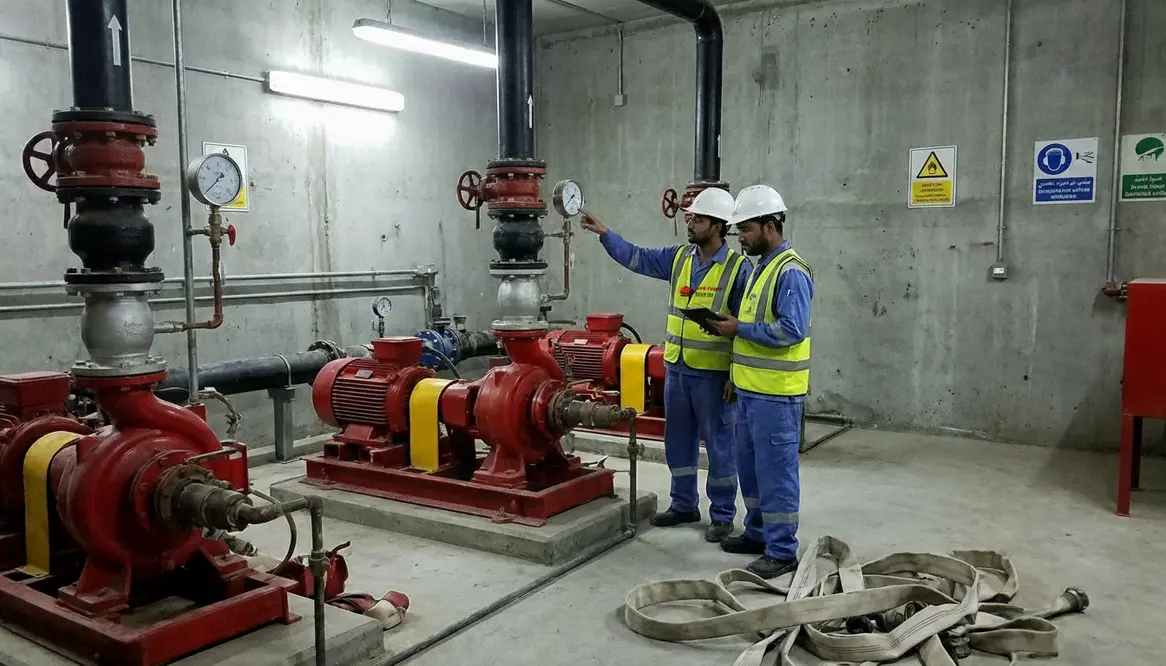

Abu Dhabi Fire Pump Testing Requirements Guide
A practical walk-through of what Abu Dhabi testing for fire pumps involves, how it is done, and what building owners need to keep compliant and ready for real emergencies.
Abu Dhabi Fire Pump Testing Requirements Explained
When I talk about Abu Dhabi testing for fire pumps, I am talking about one of the quiet heroes of building safety. It sits in the background, does not ask for applause, and still has to work the moment a fire alarm wakes the building from its calm little nap. For commercial and industrial facilities, and for major property buildings, this testing is not a nice extra. It is a core safety duty, and in Abu Dhabi, that means the system must meet clear rules, stay ready, and prove it can perform under pressure. Literally.
In this guide, I will walk through what the testing covers, why it matters, how often it happens, and what building owners should expect. I will keep it practical, direct, and as smooth as a good emergency pump should be. Because when safety gear fails, the drama is not fun in a Hollywood way. It is just expensive.
What Fire Pump Testing Checks In Abu Dhabi
Fire pump testing checks whether the pump can deliver the right water flow and pressure during a real emergency. In simple terms, I want to know that the pump will start fast, run steady, and support the fire protection system without hesitation. Abu Dhabi authorities and project teams usually expect testing to confirm the pump set, driver, controls, alarms, valves, and water supply all work together.
During Abu Dhabi testing, I focus on more than just whether the pump turns on. I look at suction pressure, discharge pressure, flow performance, electrical or diesel starting response, and any sign of vibration, leak, or weak performance. If the pump sounds tired, I pay attention. Machines have moods too, apparently.
Core Performance Checks
- Start-up response time from alarm signal
- Pressure at no-flow (churn) and at test flow
- Jockey pump function and cut-in / cut-out points
- Controller alarms and indicators
- Diesel engine or motor performance
System Support Checks
- Water supply stability during operation
- Valve position, accessibility, and condition
- Temperature and battery status
- Run time performance under load
- Signs of wear, leaks, or unusual sound
How Often Testing Should Happen
Testing does not happen once and then disappear like a side character after season one. Instead, it follows a routine. In most commercial and industrial buildings, fire pumps need regular weekly, monthly, and annual checks based on the system type, site risk, and the relevant authority or standard applied to the project. The exact schedule can vary, so I always recommend checking the approved maintenance plan and the site compliance documents.
For daily use, teams may inspect the pump room and make sure nothing obvious is wrong. Then, on a set cycle, I would run the pump test and record results. Regular testing helps catch problems early, such as low suction pressure, battery issues, fuel trouble, or a controller fault. And yes, those tiny problems love to become huge ones at the worst possible moment. Classic.
Abu Dhabi Testing Requirements For Commercial And Industrial Sites
Abu Dhabi buildings in the commercial and industrial category face higher safety pressure because the risk is often greater, the systems are larger, and the people depending on them are many. So, the testing process has to be careful and well documented. I pay close attention to the approved design, the pump duty point, the building’s fire strategy, and the local civil defence expectations tied to the asset.
In most cases, I expect the following:
- First, the fire pump must match the approved design flow and pressure.
- Second, the test records must show that the pump actually performs within the accepted range.
- Third, the results should be available for review by facility management, consultants, or authority inspectors.
- Finally, any fault must lead to repair and retesting. A pump that fails a test and still gets a thumbs up would be the safety version of “trust me, bro.” Not acceptable.
What Documents I Keep For Compliance
I always keep clean records because paper trails matter in compliance work. A strong testing file should include the test date, the equipment ID, the observed readings, the name of the technician or engineer, and any correction work carried out after the test. If the site uses a maintenance contractor, I also want service reports and calibration details for the test instruments.
These records do more than satisfy an auditor. They show a pattern. If the pump keeps losing pressure every month, the records will tell that story before the problem turns into a headline nobody wants.
For more background on fire pump maintenance approaches that align well with Abu Dhabi testing practices, you can review reference material at https://firepumps.org.
How I Approach The Actual Test
Step-by-step Process
I start with a visual inspection. Then I confirm water supply, fuel or power status, controller readiness, and valve positions. After that, I run the pump and monitor the readings at each stage. I look for smooth startup, stable pressure, and proper shutoff behavior. Next, I compare the results with the approved design and the expected operating curve.
Listening For Trouble
I also listen. Seriously. A healthy pump has a sound, and an unhealthy pump has a different one. The difference can be subtle, but it matters. If I hear knocking, strain, or odd cycling, I stop and investigate. This is not the place for guesswork, because fire protection systems do not reward optimism.
Common Problems I Find During Testing
In Abu Dhabi fire pump testing, I often see a few repeat issues. Poor battery health can delay diesel pump starts. Low suction supply can reduce performance. Dirty strainers can choke flow. Control panel faults can block automatic operation. Also, sometimes the issue is simple neglect, which is never glamorous but very common.
However, most of these problems show warning signs long before a major failure. That is why routine testing matters. It gives building owners a chance to fix the problem while the system still has time to recover. In other words, testing is cheaper than panic. Well-managed Abu Dhabi testing turns “we hope it works” into “we know it works,” which is a much better sentence in a fire pump room.
Abu Dhabi Testing, Readiness, And Responsibility
Behind every signed test sheet there is a simple question: will this pump actually protect people and property when it is needed? That is what Abu Dhabi testing is really about. The point is not to create paperwork for its own sake. The point is to prove, in a measured and documented way, that the system will stand up to real heat, real smoke, and real pressure without hesitating.
Good routines, accurate records, and honest retesting when something fails are what keep a quiet piece of equipment ready for the loudest possible day in the building’s life.
FAQ
Conclusion
If you manage a commercial, industrial, or major property building, I suggest treating fire pump testing as a routine part of protection, not a box to tick and forget. Strong records, regular checks, and fast repairs keep the system ready when it matters most. If you want your fire pumps to stay compliant and dependable in Abu Dhabi, speak with a qualified testing team and keep the maintenance cycle moving. Safety likes consistency, and frankly, so do I.