Abu Dhabi Industrial Fire Pump Requirements Guide
Abu Dhabi Fire Pump Requirements for Industrial Facilities
In Abu Dhabi industrial zones, fire safety is not a “nice to have.” It is the quiet giant in the room, the one that keeps every warehouse, plant, and heavy duty site from turning a small problem into a very expensive headline. I have seen how the right fire pump setup can make the difference between control and chaos. And yes, no one wants to explain to management why the pump that should have roared to life decided to take the day off like a lazy extra in a sitcom.
So, if I am planning fire protection for an industrial facility in Abu Dhabi, I start with one rule: the fire pump system must match the risk, the water demand, and the local code requirements. That means I do not guess, and I do not copy a setup from another project just because it “looked fine.” In this guide, I will walk through the key requirements, the practical checks, and the things that matter most for safe, code aware performance.
What I must check first in an industrial site
I begin with the building use, hazard level, and water supply. Industrial sites often need more than a simple pump and tank. For example, a storage yard, process plant, or large workshop may need a stronger flow, a bigger reserve, and a more robust backup plan. Also, the local fire authority and civil defense rules shape the design from the start, so I treat compliance as part of the design, not a nice little bonus at the end.
Next, I look at the required system pressure and flow. Fire pumps must support sprinklers, hydrants, hose reels, or a mix of these systems. Therefore, I calculate demand based on the worst case scenario the site can face. If I under size the pump, the system will not perform under fire conditions. That is like bringing a water pistol to a dragon fight. Fun in a movie, less fun in a factory.
How I size the pump and water supply
Proper sizing comes from a full review of the site layout, the number of protected areas, and the height and distance of the highest demand point. I also check the static and residual pressure from the water source. If the public supply is weak, I may need a fire water tank with enough stored volume to cover the full design demand.
In many industrial projects, I also recommend a backup power source or a pump arrangement that keeps the system alive during a power loss. Fires do not care if the electricity bill is due. They show up uninvited, and the pump has to answer the call. In a busy Abu Dhabi industrial operation, that call cannot go to voicemail.
Key fire pump setup points I review
I always focus on the parts that decide whether the system works in real life, not just on paper.
Dual column layout overview
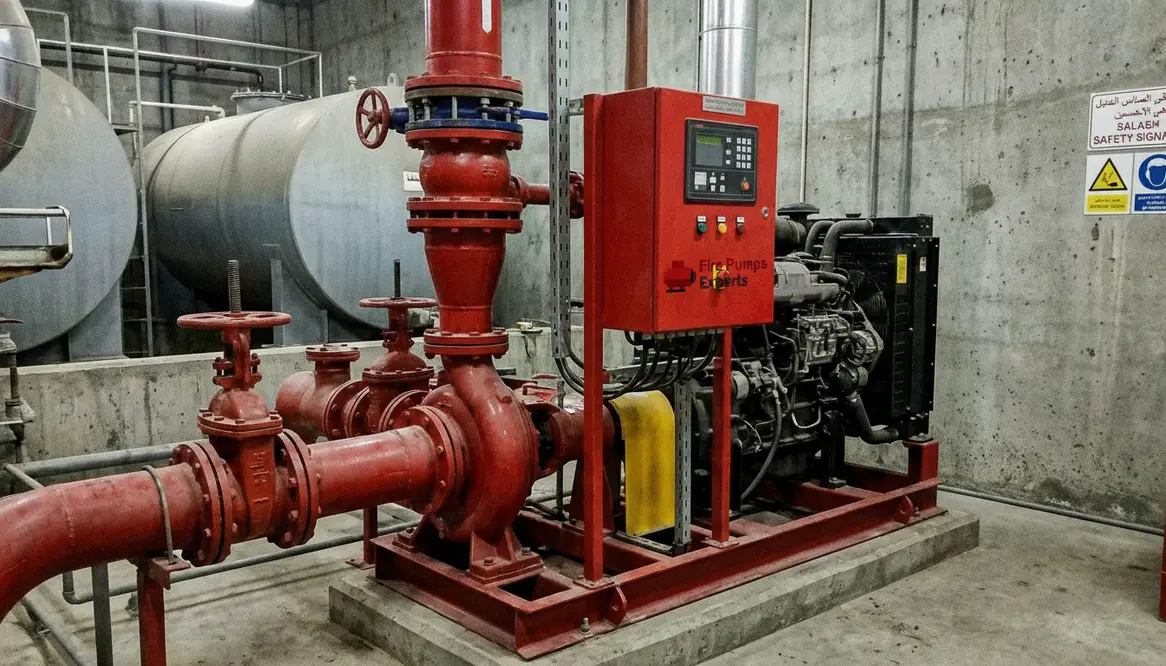
Main fire pump for the required flow and pressure
Backup pump such as a diesel driven or electric standby unit
Jockey pump to hold pressure and stop nuisance starts
Dedicated fire water tank with proper capacity
Control panel with alarm and fault signals
Test line and valves for inspection and flow testing
Each part has a job. If one part is weak, the whole system can wobble. And yes, even a tiny pressure drop can become a big problem when a full fire system needs instant response.
Which standards and approvals matter most
Local rules and industrial expectations
For industrial and commercial facilities, I always align the design with local Abu Dhabi requirements and widely used fire safety standards. That includes checking the rules for pump performance, installation, testing, and maintenance. I also make sure the system supports inspection by the relevant authorities before handover.
Practical design checks
In practice, this means I confirm pump curves, rated flow, shutoff pressure, controller type, and the arrangement of suction and discharge piping. I also look at room access, ventilation, drainage, and separation from other hazards. A fire pump room should not feel like a storage closet for spare parts and forgotten promises. It should stay clear, reachable, and ready, especially in a busy Abu Dhabi industrial setting where every minute counts.
How I keep the system ready after installation
Routine testing and care
A fire pump is not a “install it and forget it” piece of equipment. It needs testing, service, and close attention. I schedule routine checks for start up, pressure, vibration, fuel level, battery health, and valve position. I also make sure the jockey pump works properly, because it protects the main pump from needless starts.
Training the site team
Furthermore, I train site teams to spot warning signs early. Strange noise, slow start, leaks, or weak pressure all deserve fast action. A small issue today can become a costly shutdown tomorrow. In an industrial setting, that can hit production, safety, and compliance all at once. Not exactly the kind of three way partnership anyone wants. For an Abu Dhabi industrial facility, that also means unwanted attention from authorities who expect the system to perform on demand.
How I choose the right partner for compliance support
Specialized experience for industrial sites
When I need expert support, I look for a provider that works only with commercial and industrial properties, because that focus matters. Industrial sites need deeper planning, stronger system logic, and a better grip on code driven design. For more guidance on compliant system planning, I would review fire pump solutions for industrial and commercial facilities as a useful reference point.
The quiet power of documentation
I also value clear documentation. Drawings, calculations, test records, and maintenance logs make approvals easier and reduce risk later. Good paperwork may not sound thrilling, but it can save the day when someone asks, “Was this really designed for the site load?” Trust me, that question lands with all the charm of a sequel nobody asked for. In a regulated Abu Dhabi industrial environment, having the right answer in writing is non negotiable.
FAQ
Conclusion
If I want real fire safety in an industrial site, I treat the pump system like critical infrastructure, not background noise. The right design, proper approval, and steady maintenance keep the facility ready when it matters most. So, if you are planning or upgrading a site in Abu Dhabi, take the time to get the pump requirements right from the start. I invite you to review your fire pump plan now and make sure it stands up to both code and reality.